

How to Read Robert Kroese's Mercury Series
If you have ever wondered what would happen if the apocalypse were run by a dysfunctional, red-tape-heavy corporate office, Robert Kroese’s Mercury series has the answer. Mixing speculative fiction, theology, and laugh-out-loud satire, the series centers on Mercury, a rogue, ping-pong-loving angel who is supposed to be arranging the end of the world but would really rather do almost anything else. Alongside Christine Temetri, a jaded reporter who finds herself dragged into cosmic schemes, and Karl Grissom, a film-school dropout who is unfortunately the Antichrist, Mercury navigates a universe where Armageddon is just another bureaucratic headache.
Because the series includes both full-length novels and prequel novellas, readers often wonder whether they should tackle the books in chronological order or stick to how they were published. Fortunately, the path is relatively straightforward, but having a clear guide makes the journey through the end of times much smoother.
The Recommended Reading Order
For first-time readers, the absolute best way to experience the series is in publication order. While there are prequels set in ancient Troy and Babylon, these stories rely on the reader already understanding Mercury's personality, humor, and the rules of the universe established in the first novel. Starting with the prequels can make the overall narrative arc feel disjointed and may spoil some of the character development.
Here is the recommended reading path:
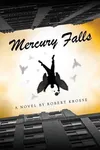
- Mercury Falls (2009) – The core entry point where you meet Mercury, Christine, and Karl.
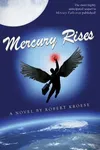
- Mercury Rises (2011) – The second main novel, ramping up the cosmic stakes.
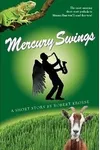
- Mercury Swings (2011) – A fun prelude novella that fits best right after the second book.
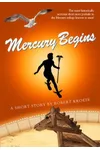
- Mercury Begins (2012) – A prequel novella exploring Mercury's antics in ancient Troy.
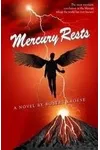
- Mercury Rests (2012) – The conclusion of the original trilogy.
- Mercury Revolts (2014) – The fourth main novel, shifting focus to new conspiracies and surveillance.
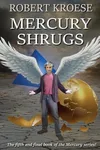
- Mercury Shrugs (2016) – The fifth main novel, wrapping up major plotlines.
- Mercury Returns and Other Stories (2025) – A compilation of short fiction and new updates.
The Complete Mercury Book List in Detail
Mercury Falls (2009)
This is where the madness starts. Christine Temetri is a reporter who is sick of her job and looking for a real story. Instead, she gets Mercury, an angel who has spent the last few thousand years avoiding his actual responsibilities at the Apocalypse Bureau. When Christine and Mercury accidentally prevent the assassination of Karl Grissom (the slacker Antichrist), they throw the divine plan into complete chaos. Instead of a glorious final battle, heaven and hell are forced to scramble, leaving a handful of humans and one lazy angel to decide the fate of the earth. It is the perfect introduction to Kroese's dry, witty style.
Mercury Rises (2011)
With the apocalypse temporarily delayed, Christine and Mercury are back. This time, they are dealing with an eccentric billionaire who has figured out how to tap into the fundamental code of the universe. The sequel expands the lore of the series, introducing more corporate-style angels and demons while keeping the pacing fast and the humor sharp. It builds directly on the events of the first book, so reading them back-to-back is highly recommended.
Mercury Swings (2011)
Often designated as book 0.6 or 1.5 in the reading sequence, this novella takes a step back in time to ancient Mesopotamia. We find Mercury on an early assignment for the Apocalypse Bureau, trying to prevent the Jazz Age from arriving thousands of years too early. The plot is delightfully absurd, featuring a saxophone-playing historical figure named Enoch, a funk-weed-smoking bouncer, and a goat named Taco. While not essential to the main plot, it is a hilarious addition that showcases the author's love for historical anachronisms.
Mercury Begins (2012)
Classified as book 0.5, this prequel novella takes place during the Trojan War. Mercury is sent to ancient Troy to ensure the war ends on schedule. Naturally, he decides the best way to do this is by orchestrating a famous sneak attack involving a wooden horse, though his personal involvement is far more chaotic than history books suggest. It is a quick, fun read that provides excellent backstory on Mercury's long-standing frustration with the bureaucracy of heaven.
Mercury Rests (2012)
This book serves as the epic conclusion to the original trilogy. Lucifer is finally tired of the delays and decides to take matters into his own hands by storming the gates of heaven. Mercury and Christine must find a way to stop a full-scale interdimensional war while dealing with the ultimate bureaucratic nightmare: a universe that is slowly running out of memory. The book wraps up the main character arcs beautifully and delivers a satisfying payoff to the build-up of the first two novels.
Mercury Revolts (2014)
After the events of the original trilogy, Kroese returned to the universe to explore the aftermath. Mercury Revolts takes a slightly different tone, leaning into themes of anti-surveillance, governmental overreach, and the rise of technology. Mercury finds himself dealing with a new set of conspiracies, proving that even after saving the world, a rogue angel's job is never truly done.
Mercury Shrugs (2016)
The fifth full-length novel continues the satirical critique of modern societal systems. The title itself is a nod to Ayn Rand's famous novel, and Kroese uses the backdrop of a cosmic crisis to poke fun at political philosophies, corporate cults, and the general absurdity of human organization. It represents the final major novel in the main timeline, leaving the characters in a memorable place.
Mercury Returns and Other Stories (2025)
Released nearly a decade after the fifth book, this collection compiles various short stories, side adventures, and new vignettes featuring the beloved cast. For long-time fans, it is a welcome return to the universe, offering extra depth to the lore and checking in on what Mercury has been up to since his last major rebellion.
Chronological Order vs. Publication Order
For those who want to read the series strictly in the order of historical events, the chronological order looks slightly different. Because Mercury is immortal, his adventures span millennia:
- Mercury Swings (Set in Ancient Mesopotamia)
- Mercury Begins (Set during the Trojan War)
- Mercury Falls
- Mercury Rises
- Mercury Rests
- Mercury Revolts
- Mercury Shrugs
While this chronological path is an interesting option for a re-read, it is generally discouraged for newcomers. The prequels assume a familiarity with Mercury's cynical worldview and the mechanics of the Apocalypse Bureau, which are only fully explained in the first book, Mercury Falls.
What to Know Before You Start
Robert Kroese’s writing style is frequently compared to Douglas Adams (The Hitchhiker’s Guide to the Galaxy) and Christopher Moore (Lamb). If you enjoy dry, sarcastic humor, puns, and characters who react to cosmic horror with mild annoyance, you will feel right at home. The series does not take itself too seriously, yet it manages to raise interesting philosophical questions about free will, destiny, and the value of individual choice over rigid systems.
It is also worth noting the publishing history. Kroese initially self-published Mercury Falls, building a dedicated fanbase through social media and word-of-mouth. Its success caught the attention of Amazon's 47North imprint, which published several of the sequels before Kroese eventually transitioned back to independent publishing. This independent spirit is reflected in the books themselves, which remain proudly quirky and free from standard genre formulas.