
The Recommended Reading Path
For the best experience, readers should follow the Michele Ferrara series in its publication order. Because author Michele Giuttari writes from his first-hand experience as Florence's former police chief, the series unfolds with an authentic, realistic passage of time. As Ferrara solves cases, his career progresses from local police chief to high-stakes investigator with the DIA (Direzione Investigativa Antimafia). Reading the books sequentially allows you to follow Ferrara's ongoing battles against institutional corruption, his personal growth, his relationship with his wife Germana, and the overarching threat of the Mafia that looms larger with each installment.
Publication Order vs. Translation Order
While the English translations follow the chronological order of the narrative, there is a slight gap between the original Italian publication dates and their English counterparts. The first book, Scarabeo, was published in Italy in 2004, but did not receive its English translation, A Florentine Death, until 2007. Additionally, the titles for the final two books can sometimes cause confusion due to publisher differences. Below, we list the books in their narrative sequence, matching the English titles with their original Italian releases and publication years to help you keep track.
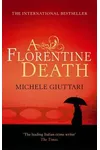
1. A Florentine Death (2007)
Originally published in Italian as Scarabeo (2004). This debut novel introduces Chief Superintendent Michele Ferrara of the Florence Squadra Mobile. When a series of bizarre and gruesome murders strikes Florence, Ferrara is drawn into a complex web of high-society secrets, occult rituals, and political cover-ups. The novel establishes Ferrara’s signature investigative style—blending meticulous forensic procedure with sharp, instinctive detection—and introduces his supportive wife, Germana.
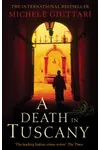
2. A Death in Tuscany (2008)
Originally published in Italian as La loggia degli innocenti (2005). The discovery of a young girl’s body in the picturesque Tuscan hills of Scandicci pulls Ferrara into a dark investigation. What initially looks like an isolated tragedy exposes a decades-old conspiracy involving elite members of Tuscan society. This installment highlights the contrast between the beautiful Tuscan landscape and the corruption hidden beneath the surface.
3. The Death of a Mafia Don (2009)
Originally published in Italian as Il basilisco (2007). The stakes escalate dramatically as Ferrara takes on the Sicilian Mafia. After a bomb blast nearly claims his life, Ferrara finds himself targeting a powerful Cosa Nostra boss known as 'The Basilisk.' This thriller showcases Giuttari's deep understanding of anti-mafia police tactics and the dangerous realities of Italian organized crime.
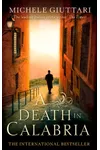
4. A Death in Calabria (2010)
Originally published in Italian as La donna della 'ndrangheta (2009). Following a brutal multi-person homicide in New York with ties to southern Italy, Ferrara’s investigation takes him to the rugged terrain of Calabria. Here, he must confront the 'Ndrangheta, the secretive and incredibly powerful Calabrian organized crime syndicate. The book expands the series' scope beyond Tuscany, detailing international drug trafficking networks.
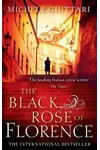
5. The Black Rose of Florence (2013)
Originally published in Italian as Le rose nere di Firenze (2010). Ferrara returns to Florence to investigate a series of deaths linked to dark, esoteric groups and occult practices. The atmospheric mystery showcases the historical and gothic side of Florence, with Ferrara navigating a maze of religious symbolism and hidden sects to find a killer.
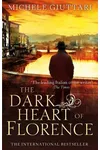
6. The Dark Heart of Florence (2013)
Originally published in Italian as I sogni cattivi di Firenze (2012). In this sixth book, Ferrara digs into cold cases and internal police politics. As he attempts to uncover secrets hidden deep within the department, he finds that his enemies are not just on the streets, but within the very institutions he serves. This installment is highly praised for its realistic depiction of bureaucratic struggles.
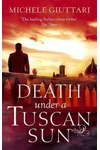
7. Death Under a Tuscan Sun (2015)
Originally published in Italian as Il cuore oscuro di Firenze (2013). This novel serves as a powerful culmination of Ferrara's career conflicts. Ferrara must untangle a web of past cases, old grudges, and persistent threats from the Mafia. The book brings many of the series' long-running personal and professional subplots to a head, offering satisfying development for long-time readers.
Practical Reader Advice and Standalone Potential
While the central mystery in each novel is fully resolved by the final page, the Michele Ferrara series is not recommended as a collection of standalones. Ferrara's career progression, his evolving relationships with his colleagues, and the rising threats against his family build directly from one book to the next. If you jump in mid-series, you will miss the critical context of Ferrara's transfer to the DIA and the personal toll of his anti-mafia campaigns.
For readers who appreciate true crime, Michele Giuttari’s non-fiction works provide excellent companion reading. Before turning to fiction, Giuttari co-authored Compagni di sangue (2005) with Carlo Lucarelli and wrote Il mostro. Anatomia di un'indagine (2006), detailing his real-life investigations into the notorious 'Monster of Florence' serial killer. These non-fiction accounts offer a fascinating look at the real-life police procedures that Giuttari adapted for Ferrara's fictional cases.
What to Know Before You Start
The defining characteristic of the Michele Ferrara series is its profound realism. Because Giuttari lived this life, the novels eschew Hollywood-style action in favor of realistic procedural work, interrogations, and forensic detail. Readers should expect a slow-burn pace that focuses heavily on the atmosphere of Florence and the complex, often corrupt mechanics of the Italian justice system. The series is perfect for fans of Donna Leon's Commissario Brunetti or Andrea Camilleri's Inspector Montalbano, but with a grittier, more procedural edge.