
How to Read the Mickey Rawlings Series
The Mickey Rawlings series, penned by baseball historian and former research physicist Troy Soos, is a delight for anyone who loves historical detail, classic ballpark atmosphere, and traditional whodunits. The series consists of seven full-length novels and one short story. Because the protagonist progresses through his career year-by-year, the best way to read the series is in chronological order of setting, which closely aligns with the publication order.
Chronological Reading Order
To follow Mickey Rawlings from his rookie season in 1912 to the height of the Roaring Twenties in 1923, read the works in this order:
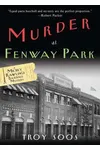
- Murder at Fenway Park (Set in 1912 / Published in 1994)
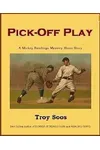
- Pick-Off Play (Set in 1913 / Published in 2012) — Short Story
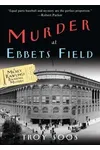
- Murder at Ebbets Field (Set in 1914 / Published in 1996)
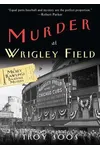
- Murder at Wrigley Field (Set in 1918 / Published in 1997)
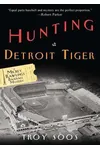
- Hunting a Detroit Tiger (Set in 1920 / Published in 1998)
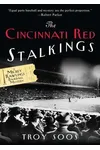
- The Cincinnati Red Stalkings (Set in 1921 / Published in 1998)
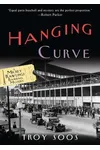
- Hanging Curve (Set in 1922 / Published in 1999)
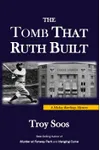
- The Tomb That Ruth Built (Set in 1923 / Published in 2014)
Publication Order vs. Chronological Order
For readers who prefer to read the series in the order the books were printed, the sequence remains identical with only one exception: the short story Pick-Off Play. Though set early in Mickey's career (1913), it was published as an e-book in 2012, late in the series' run. If you read strictly by publication order, you will read Pick-Off Play between the sixth novel, Hanging Curve, and the seventh novel, The Tomb That Ruth Built. However, reading it second matches the chronological flow of Mickey's life and career.
The Mickey Rawlings Catalog: Book-by-Book
1. Murder at Fenway Park (1912)
Mickey Rawlings begins his journey as a 21-year-old rookie utility infielder for the Boston Red Sox. The backdrop is the opening of the brand-new Fenway Park. Mickey's career is put in jeopardy when he discovers a dead body hidden behind the center-field wall. To clear his name and survive the tough streets of Boston, Mickey must navigate local political corruption, class divisions, and the high-stakes world of early professional baseball.
2. Pick-Off Play (1913)
This short story finds Mickey playing in the minor leagues for the Beaumont Oilers in the Texas League. Set during the hot summer of 1913, the story functions as a bridge between his rookie year in Boston and his return to the majors. It packs a quick, atmospheric mystery into a minor league game day, showing how Mickey's observant nature helps him solve problems off the diamond.
3. Murder at Ebbets Field (1914)
Now playing for the New York Giants, Mickey finds himself in Brooklyn facing off against the rival Dodgers. The central mystery involves the death of a silent film starlet who had close ties to the baseball team. Troy Soos expertly weaves the early history of the American film industry in Brooklyn into this mystery, showing the collision between the burgeoning worlds of cinema and professional sports.
4. Murder at Wrigley Field (1918)
Set during the final months of World War I, this novel highlights the tense home-front atmosphere of Chicago in the summer of 1918. Mickey, now playing for the Chicago Cubs, must deal with anti-German sentiment, the government's "work or fight" order, and the murder of a teammate during a patriotic July 4th parade. It is a darker installment that reflects the heavy social pressures on athletes who remained on the field while their peers fought overseas.
5. Hunting a Detroit Tiger (1920)
Mickey moves to the Detroit Tigers for the 1920 season, a period defined by post-war industrial changes and growing labor movements. While attending a players' union rally, Mickey witnesses the murder of an organizer and finds himself accused of the crime. To clear his name, he has to navigate the hostility between wealthy baseball franchise owners and labor unionizers, all under the shadow of the legendary, short-tempered Ty Cobb.
6. The Cincinnati Red Stalkings (1921)
Now a member of the Cincinnati Reds, Mickey Rawlings gets caught up in a mystery that links the present day with the historic legacy of the 1869 Cincinnati Red Stockings — the world's first fully professional baseball team. This novel explores how historical secrets can catch up with the present, resulting in a dangerous conspiracy that Mickey must untangle using baseball lore.
7. Hanging Curve (1922)
Mickey is traded to the St. Louis Browns for the 1922 season. This installment takes a serious look at the racial segregation of the era, the Ku Klux Klan's influence in the Midwest, and the talented players of the Negro Leagues. When a black semi-pro pitcher is lynched, Mickey crosses racial boundaries to investigate, risking his career and safety to uncover the truth in a heavily divided city.
8. The Tomb That Ruth Built (1923)
The final novel in the series places Mickey with the powerhouse New York Yankees during the inaugural season of Yankee Stadium in 1923. Mickey discovers the body of a murdered bootlegger hidden within the new concrete stands. The story captures the energy of the Roaring Twenties, the rise of Babe Ruth, and the dangers of Prohibition-era gangsters and bootlegging.
What to Know Before You Start
Unlike many sports mysteries where the protagonist is a superstar, Mickey Rawlings is a journeyman utility infielder. He is a marginal Major Leaguer who is frequently traded or sent down, hitting single-digit home runs and fighting to keep a spot on the roster. This is a brilliant structural device by Troy Soos: because Mickey is constantly traded, the reader gets to travel to different cities, experience different ballparks, and explore different historical events in each volume.
While the murder mysteries are self-contained and can technically be read as standalones, Mickey's life, his career struggles, his aging, and his relationships develop incrementally across the series. Reading the books in order allows you to appreciate Mickey's development as both a ballplayer and a detective.