
The Recommended Reading Order for Mission Earth
Unlike many science fiction series where you can skip around, read prequels, or explore standalone spin-offs, L. Ron Hubbard’s Mission Earth is a single, continuous story. Originally written as one massive 1.2-million-word manuscript, it was split into ten individual volumes for publication. Reading them out of order is highly discouraged because each book begins exactly where the previous one ended, forming a giant cliffhanger-driven serial.
Here is the exact reading order for the Mission Earth dekalogy:
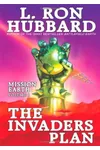
- The Invaders Plan (1985) – The series kicks off with the Voltarian Confederacy planning to conquer Earth (known to them as Blito-P3) to use as a staging ground. However, Earth is destroying itself with pollution and conflict. Royal Officer Jettero Heller is sent on a top-secret mission to save the planet from itself, but he faces sabotage from Soltan Gris, a corrupt officer in the Voltarian secret police (the Apparatus).
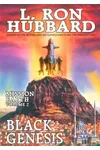
- Black Genesis (1986) – Jettero Heller arrives on Earth, landing in Turkey. As Heller attempts to implement clean energy and scientific advancements, Soltan Gris works behind the scenes to destroy his efforts. This volume was nominated for the Hugo Award for Best Novel in 1987.
- The Enemy Within (1986) – The battleground shifts to New York City. Heller tries to clean up the city's corruption and pollution, while Gris operates from a hidden base, manipulating the mafia and drug cartels to compromise Heller.
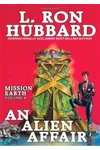
- An Alien Affair (1986) – Romantic and political complications arise as Heller's fiancée, Countess Countess Krak, arrives on Earth. Gris attempts to use her presence to distract and ruin Heller, leading to chaotic spy-thriller antics.
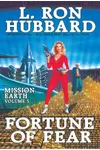
- Fortune of Fear (1986) – With Heller making significant progress in neutralizing the planet's self-destructive path, Gris escalates his conspiracies. He uses his connections to corrupt industrialists and media outlets to paint Heller as a public menace.
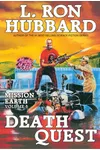
- Death Quest (1986) – The espionage goes global. Heller is forced to dodge hitmen, government agents, and corrupt corporate executives who profit from Earth's decline, while Gris continues his narration of failed sabotage attempts.
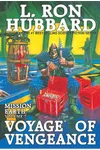
- Voyage of Vengeance (1987) – Tensions reach a boiling point. The narrative follows Heller's struggle to survive and complete his environmental mission while the internal political struggles of the Voltarian Empire start catching up with the operatives on Earth.
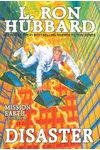
- Disaster (1987) – Natural and man-made disasters threaten to wipe out the mission entirely. As Earth faces ecological collapse, Heller and Krak make a desperate stand to keep the planet stable despite the continuous interference of the Apparatus.
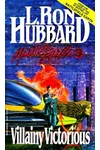
- Villainy Victorious (1987) – Soltan Gris appears to get the upper hand as the corrupt forces of the Voltarian Confederacy attempt to secure their grip on both Earth and the home empire. The satirical critique of corporate greed and government surveillance peaks.
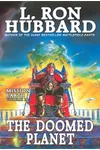
- The Doomed Planet (1987) – The grand finale of the dekalogy. The fate of both Earth and the Voltarian Confederacy is decided in a dramatic, fast-paced resolution that ties up all the espionage, romance, and political satire threads.
Publication Order vs. Chronological Order
Because the series is a single serialized novel, the publication order and chronological order are identical. There are no prequels, side stories, or short story collections set in this universe. If you read the books in the order they were published, you are reading them in the correct chronological order. The original release schedule was remarkably fast, with the first book appearing in late 1985 and the remaining nine books released roughly every few months throughout 1986 and 1987.
The Unique Narrative Perspective
One of the most distinctive aspects of Mission Earth is its narrative framing. The entire story is told from the perspective of the villain, Soltan Gris. Gris is a corrupt, cowardly, and self-serving officer of the Voltarian Apparatus. He writes the narrative as an official confession or report to his superiors while imprisoned. Because of this, the reader sees the heroic deeds of Jettero Heller and Countess Krak through the eyes of someone who hates them and is actively trying to destroy them. This framing provides the engine for the series' satirical tone, as Gris constantly misinterprets noble intentions and complains about his own failures to corrupt the heroes.
The Edgar Winter Soundtrack Tie-In
In 1989, a unique companion project was released for the series: a rock concept album titled Mission Earth, performed by legendary musician Edgar Winter. Although Winter produced and arranged the album, the words and music were composed by L. Ron Hubbard before his death in 1986. Hubbard left behind detailed notes and demo tapes for the project. The album features eight tracks, including the title track "Mission Earth" and "Cry Out," which was used in promotions for the 20th anniversary of Earth Day. While not reading material, this album serves as an interesting historical artifact and a musical companion for fans of the books.
What to Know Before You Start
Before diving into this 10-book saga, it is helpful to understand its tone and context. Mission Earth is not a serious, hard science fiction series like Hubbard’s earlier work, Battlefield Earth. Instead, it is a broad, pulpy, and often crude satire aimed directly at 1980s American society. Hubbard uses the alien perspective to mock corporate monopolies, government agencies, the pharmaceutical industry, and the media. Because of this satirical intent, the series features exaggerated, caricatured characters, slapstick comedy, and highly provocative adult themes. New readers should expect a style reminiscent of classic 1930s pulp space opera mixed with cynical, Swiftian social commentary.