

The Recommended Reading Order
For the best reading experience, both author Philip Reeve and long-time fans recommend reading the books in publication order. While chronological order is possible, starting with the original quartet allows you to experience the world exactly as it was originally envisioned. Reading the prequels first can spoil the mystery of the Traction Era and dilute the impact of the world's unique concepts.
Here is the recommended reading path for the entire saga:
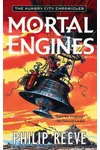
- Mortal Engines (2001) — The essential starting point that introduces the concept of Municipal Darwinism and the main protagonists, Tom and Hester.
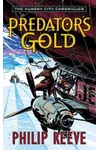
- Predator's Gold (2003) — The second book in the core quartet, following Tom and Hester on an airship adventure to the icy north.
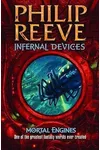
- Infernal Devices (2005) — Set sixteen years after the events of the previous book, focusing on Tom and Hester's teenage daughter, Wren.
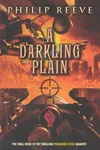
- A Darkling Plain (2006) — The epic conclusion to the original quartet, bringing the conflicts of the mobile cities to a dramatic close.
- Fever Crumb (2009) — The first prequel novel, set hundreds of years before the main quartet at the dawn of the Traction Era.
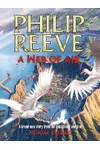
- A Web of Air (2010) — The second Fever Crumb book, taking the story to the ruins of a coastal city.
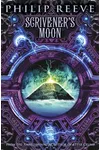
- Scrivener's Moon (2011) — The final installment of the Fever Crumb prequel trilogy, detailing the early conflicts between mobile cities and land-dwellers.
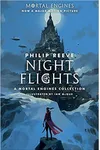
- Night Flights (2018) — A collection of three short stories focused on the popular character Anna Fang.
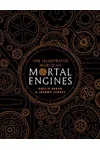
- The Illustrated World of Mortal Engines (2018) — An official companion guide co-authored with Jeremy Levett, providing deep lore and artwork.
- Thunder City (2024) — A prequel novel set approximately 100 years before the original quartet, following a new cast of characters during the mid-Traction Era.
- Bridge of Storms (2026) — The sequel to Thunder City, focusing on the academic city of Museion and its journey to be absorbed by London.
Publication Order vs. Chronological Order
If you prefer to read the series in the order the events occur within the universe's timeline, you will have to jump around the publication dates significantly. Chronological reading is recommended primarily for fans embarking on a re-read who want to trace the historical evolution of London and the Traction Era from the ground up.
Chronological Reading Sequence
- Fever Crumb (2009) — Set at the very beginning of the mobile city era, showing how London first began to move.
- A Web of Air (2010) — Follows Fever Crumb's journey shortly after the first prequel.
- Scrivener's Moon (2011) — Concludes the initial prequel trilogy as the first Traction Cities begin to hunt.
- Thunder City (2024) — Set roughly a century before the main quartet, showing the mid-Traction Era.
- Bridge of Storms (2026) — Continues the story of the mid-Traction Era directly after Thunder City.
- Night Flights (2018) — The stories 'Frozen Heart', 'Traction City Blues', and 'Teeth of the Sea' follow Anna Fang's early life and activities prior to the events of the main quartet.
- Mortal Engines (2001) — The start of the main narrative arc.
- Predator's Gold (2003) — Picks up two years after the first book.
- Infernal Devices (2005) — Jumps sixteen years into the future.
- A Darkling Plain (2006) — Concludes the main timeline.
The Core Quartet: Hungry City Chronicles
The heart of Philip Reeve’s universe lies in the original four novels, known internationally as the Mortal Engines Quartet or the Hungry City Chronicles. The story takes place thousands of years in the future, following a devastating global conflict known as the Sixty Minute War. Humanity has rebuilt society around 'Municipal Darwinism'—a system where giant, motorized cities roam the wasteland and devour smaller towns for scrap metal, fuel, and labor.
The narrative centers on Tom Natsworthy, a low-class apprentice historian in London, and Hester Shaw, a scarred young woman seeking vengeance against the man who killed her parents. Their partnership evolves from reluctant allies to a deep emotional bond that spans decades, driving the political and military fate of the entire planet.
The Prequels and Companion Books
After completing the main story, readers can delve deeper into the rich history of the world through several prequel projects:
The Fever Crumb Trilogy
Set hundreds of years before the events of Mortal Engines, this trilogy stars Fever Crumb, a young girl raised by the Order of Engineers who discovers she has a mysterious connection to the city's past. The trilogy explores the transition period where stationary cities first began to implement mobile technology to escape nomadic invaders.
The Traction Era Duology
Revisiting the world in the 2020s, Philip Reeve introduced a new era of stories set between the Fever Crumb trilogy and the main quartet. Thunder City and Bridge of Storms show a world already dominated by traction cities but featuring a lighter, more adventure-focused tone with an entirely new cast of characters led by the fighter Tamzin Pook.
Short Stories and Guides
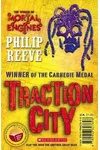
The collection Night Flights provides essential background on Anna Fang, the charismatic Anti-Traction League pilot and rebel leader. Notably, the story 'Traction City Blues' within this collection is a revised and expanded version of Reeve's 2011 World Book Day novella, Traction City. For lore enthusiasts, The Illustrated World of Mortal Engines, co-written with Jeremy Levett, compiles historical details, maps, and technical drawings illustrated by diverse artists such as Ian McQue and David Wyatt.
What to Know Before You Start
The Mortal Engines universe is a unique fusion of steampunk aesthetics, post-apocalyptic survival, and young adult adventure. Philip Reeve's writing is characterized by its dark, dry humor and a willingness to explore complex themes like the futility of war, the cycle of empires, and the costs of unchecked technological greed. While marketed to young adults, the series does not shy away from tragic outcomes, moral ambiguity, and high stakes, making it highly rewarding for adult readers as well.