
The Recommended Reading Order for Mortalis
For readers diving into David Morrell's celebrated espionage universe, the path forward is straightforward. Because the narrative builds chronologically and character arcs overlap, the best way to read the series is in publication order. The main trilogy is followed by a late-career short story that serves as an essential epilogue to the saga.
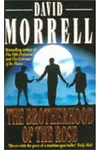
- The Brotherhood of the Rose (1983/1984) — Introduces Saul Grisman and Christopher Kilmoonie, two elite orphans trained by the CIA.
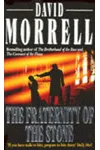
- The Fraternity of the Stone (1985) — Introduces Drew MacLane, a former top-tier assassin attempting to find sanctuary in a monastery.
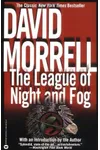
- The League of Night and Fog (1987) — The ultimate crossover novel that unites the surviving characters from the first two books to solve a global conspiracy.
- The Abelard Sanction (2006) — A sequel/epilogue short story that wraps up unresolved character threads from the end of the trilogy.
Understanding the Mortalis Universe: Key Books and Storylines
1. The Brotherhood of the Rose
Published in late 1983 (with widely circulated editions dated 1984), this novel establishes the foundations of the Mortalis universe. The story centers on Chris and Saul, two orphans raised as brothers by a cold, calculating CIA master manipulator named John Eliot. Eliot trains them to be the ultimate black-ops specialists. However, when a mission goes wrong and they realize their father figure has targeted them for elimination, the brothers must use their training to survive and seek retribution. The novel introduces the concept of the 'Rose' as a symbol of absolute secrecy in international intelligence operations.
2. The Fraternity of the Stone
The second installment, published in 1985, shifts focus to a new protagonist: Drew MacLane. MacLane is an elite assassin who decides to leave his deadly trade behind. He seeks spiritual peace and safety inside a remote Vermont monastery. However, when a mysterious team of killers breaches his sanctuary and slaughters the monks, MacLane is forced out of retirement. As he investigates the breach, he uncovers a massive conspiracy that links modern intelligence services to the ancient history of the Catholic Church.
3. The League of Night and Fog
In this 1987 conclusion to the core trilogy, David Morrell delivers the ultimate crossover. Christopher (from the first book) and Drew (from the second) are brought together when a series of mysterious kidnappings targeting elderly men sweeps the globe. When a high-ranking Vatican cardinal disappears, the two operatives join forces. They uncover a conspiracy of vengeance dating back to World War II, forcing them to confront their pasts and the high price of the violence they have committed.
4. The Abelard Sanction
For nearly two decades, fans of the series wondered about a dangling plot thread at the end of The League of Night and Fog concerning Saul Grisman and his wife, Erika Bernstein. In 2006, Morrell finally provided closure by writing the short story 'The Abelard Sanction' for James Patterson's anthology Thriller: Stories To Keep You Up All Night. It has since been included in modern paperback editions of the third novel and can be read as a final epilogue to the series.
What to Know Before You Start
David Morrell is widely known as the creator of John Rambo in his 1972 novel First Blood. However, while Rambo brought him fame, the Mortalis series cemented his reputation as a master of espionage tradecraft and psychological suspense. The series is characterized by its gritty realism, high-stakes action scenes, and an unexpected emphasis on themes of religion, moral ambiguity, guilt, and the search for absolution.
A critical piece of lore in this universe is the concept of Abelard. Named after the medieval theologian Peter Abelard, it represents a global network of safe houses established by the world's intelligence agencies. Inside an Abelard sanctuary, weapons and violence are strictly prohibited; any operative who violates this sanctuary is subject to 'The Abelard Sanction'—meaning they will be hunted down and eliminated by all agencies cooperatively.
Can the Books Be Read as Standalones?
Yes and no. You can easily read The Brotherhood of the Rose and The Fraternity of the Stone as completely standalone novels, as they feature different main characters and separate plotlines. However, you should not read The League of Night and Fog without reading the first two books. The final installment assumes you are already familiar with the backstories, trauma, and motivations of Chris, Saul, and Drew, making the emotional stakes of the crossover much higher if read in sequence.
The 1989 TV Miniseries
The popularity of the series led to a massive television adaptation. NBC adapted The Brotherhood of the Rose into a highly successful two-part miniseries that premiered on January 22, 1989. In a major television event, the first part aired as the lead-out program immediately following the Super Bowl XXIII broadcast. The miniseries starred Robert Mitchum as the manipulative John Eliot, with Peter Strauss as Saul, David Morse as Chris, and Connie Sellecca as Erika. It was filmed in New Zealand and became the highest-rated television movie of that broadcast season.