
The Recommended Reading Order for the Neapolitan Novels
If you are planning to dive into Elena Greco and Lila Cerullo’s world, there is only one way to do it: in order of publication. Because author Elena Ferrante conceived the Neapolitan Novels as a single, continuous narrative, skipping ahead or reading them out of sequence will ruin the experience and spoil the plot. Here is the recommended path through the series:
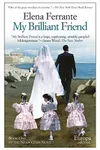
- My Brilliant Friend (Published in Italian as L'amica geniale in 2011; English translation by Ann Goldstein in 2012) – Introduces the childhood and adolescence of Elena (Lenù) and Lila in an impoverished, violent neighborhood of post-war Naples during the 1950s. The two girls are classmates who recognize each other’s intelligence; Lila is fierce and bold, while Elena is studious and motivated by a desire to keep up with Lila. When Lila's father refuses to pay for her middle school education, their paths diverge: Elena continues her studies, while Lila goes to work in her family's shoe-repair shop. The book covers their childhood and adolescence, culminating in Lila's wedding at age sixteen, a celebration marred by betrayal.
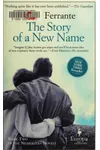
- The Story of a New Name (Published in Italian as Storia del nuovo cognome in 2012; English translation in 2013) – Picking up immediately after the wedding, this volume covers Lila's unhappy marriage to the local grocer, Stefano Carracci, and her struggle against domestic violence and confinement. Meanwhile, Elena continues her academic path through high school and eventually university in Pisa, struggling with feelings of inadequacy and class alienation. The central drama of the book revolves around a summer the two women spend on the island of Ischia, where their relationship is tested by a shared infatuation with Nino Sarratore, a charismatic young intellectual.
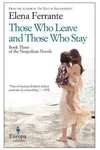
- Those Who Leave and Those Who Stay (Published in Italian as Storia di chi fugge e di chi resta in 2013; English translation in 2014) – Set during the late 1960s and 1970s, this book follows the women as they navigate adulthood against the backdrop of Italy's intense political turmoil, characterized by labor strikes, student protests, and political violence. Elena becomes a published novelist, marries a young academic from a prominent family, and moves to Florence, entering the intellectual elite. Lila, having left her husband, works in a grueling sausage factory to support her son, eventually finding solace in the early computing industry. The book highlights how class, gender, and geographical distance test their bond.
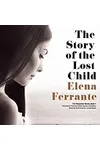
- The Story of the Lost Child (Published in Italian as Storia della bambina perduta in 2014; English translation in 2015) – The final volume brings both women back to Naples in the 1980s. Elena abandons her marriage to be with Nino Sarratore, though she soon realizes his true nature. She moves back to the neighborhood, where Lila has established herself as a successful entrepreneur. The two women become pregnant at the same time and raise their daughters side-by-side, rekindling their intense childhood bond. However, a sudden, tragic disappearance changes the course of their lives forever, leading to the eventual estrangement and Lila's disappearance in old age.
Why the Neapolitan Novels Are Actually a Single Book
While publishers released the series as four distinct books over several years, Ferrante herself has stated in interviews that she views the entire project as a single, unified work. The division into four volumes was a practical choice driven by length and publication timelines rather than narrative structure. The narrative of the second book picks up exactly where the first one ends, and this seamless continuity remains throughout the entire quartet. Reading them with significant gaps in between or out of order is highly discouraged, as the character relationships and political backdrop evolve incrementally.
Chronological and Narrative Structure Caveats
The chronological order of the story aligns almost perfectly with the publication order, but there is a major framing device you should keep in mind before you start. The series begins with a prologue set in the late 2000s, where an elderly Elena Greco learns that her lifelong friend, Lila Cerullo, has vanished without a trace, even cutting her face out of family photographs. This prompts Elena to sit down at her computer and write down everything she remembers about their friendship, starting from their meeting in primary school in the 1950s. Consequently, the entire story is told as a massive, retrospective memory, with Elena acting as an unreliable narrator looking back on their six-decade bond.
What to Know Before You Start: Setting and Tone
The Neapolitan Novels are not light, escapist reading. They offer an unflinching, gritty, and often violent look at working-class life in post-war Italy. You will witness the constraints of patriarchy, domestic abuse, organized crime (the Camorra), and the intense psychological competition between two highly intelligent women. Ferrante’s writing style, rendered into English by translator Ann Goldstein, is direct, conversational, and emotionally raw. The prose moves rapidly, mirroring the chaotic thoughts and feelings of its narrator, Lenù.
Other Books by Elena Ferrante: Thematic Connections
Once you finish the Neapolitan Quartet, you might crave more of Ferrante's distinct voice. While she has not written a direct sequel or spin-off featuring Lenù and Lila, several of her other works exist in a similar thematic universe and share the Neapolitan setting:
- The Lying Life of Adults (2019) – A standalone novel set in a more divided Naples of the 1990s. It focuses on a young girl named Giovanna who discovers family secrets and the stark contrast between the upper-class heights and working-class depths of the city. It explores similar themes of female coming-of-age, identity, and the lies adults tell.
- The Lost Daughter (2006) – A psychological novella exploring the darker sides of motherhood. Because of the title, some English-speaking readers confuse it with The Story of the Lost Child (the fourth Neapolitan book), but it is a separate standalone work. It was adapted into an acclaimed 2021 film directed by Maggie Gyllenhaal.
- Troubling Love (1992) and The Days of Abandonment (2002) – These are Ferrante's earlier novels. Both are brief, intense, and deal with women facing sudden crises in Naples and Turin, offering a great precursor to the psychological depth of the Neapolitan Novels.
- Frantumaglia: A Writer's Journey (2003/2016) – A collection of letters, essays, and rare interviews where the anonymous author talks about her writing process, her childhood in Naples, and why she chose to remain pseudonymous. It is a must-read for fans who want to understand the origins of the quartet.
The Acclaimed HBO and RAI Screen Adaptation
For readers who enjoy watching adaptations, the television series My Brilliant Friend (co-produced by HBO and Italy's RAI network) is widely considered one of the most faithful literary adaptations ever made. The series runs for 4 seasons and a total of 34 episodes, with each season corresponding directly to one of the four books in the quartet. The show is filmed in the Neapolitan dialect and Italian language, preserving the authenticity and gritty atmosphere of Ferrante's original text.