

The Recommended Reading Order
For readers diving into the Near Space series (often affectionately called the "Rude Astronauts" universe), the best path is also the simplest one: publication order. Because Allen M. Steele wrote these stories as a evolving history of near-Earth commercialization and colonization, the order in which they were published perfectly tracks the chronological expansion of humanity into the solar system. Reading them in sequence allows you to watch the technology, political landscape, and social structures grow from orbital construction platforms to lunar factories and, eventually, Martian expeditions.
The Core Novels in Reading Order
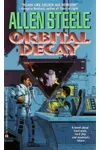
- Orbital Decay (1989) — Start here. Set in the near future, it follows a crew of blue-collar workers ("beamjacks") building Olympus Station who discover an NSA surveillance conspiracy. It won the Locus Award for Best First Novel.
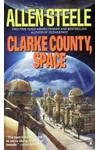
- Clarke County, Space (1990) — Moves the action to a massive orbital habitat struggling with corporate control, criminal syndicates, and a bid for independence.
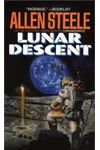
- Lunar Descent (1991) — Takes you to Descartes Station on the Moon, where exploited miners ("moondogs") stage a labor strike and rebellion against their corporate overlords.
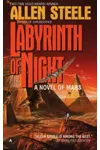
- Labyrinth of Night (1992) — An ambitious shift in scope that takes the series to Mars, where scientists investigate ancient, mysterious alien artifacts in the Valles Marineris.
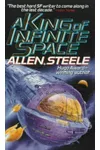
- A King of Infinite Space (1997) — The final core novel, focusing on a writer who flees his past and ends up involved in a web of cryopreservation, corporate exploitation, and redemption.
Understanding the Shorter Fiction and Collections
Steele's Near Space universe isn't limited to the core novels. He wrote numerous short stories and novellas that flesh out the background, side characters, and technological details of this future history. If you want to experience the complete mythos, incorporating these shorter works will enrich your reading journey.
Key Collections and Novellas
- Rude Astronauts: Real and Imagined Stories (1993) — Steele's first major collection. It introduces the term "Rude Astronauts" and contains early short fiction set in the same universe, alongside some of his non-fiction essays about space exploration.
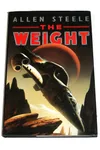
- The Weight (1995) — Originally published as a standalone chapbook/novella, this story details the journey of a commercial freighter navigating the hazards of the solar system. It is also included in later comprehensive collections.
- Sex and Violence in Zero-G: The Complete "Near Space" Stories (1999) — The definitive collection for Steele's short fiction. It includes the Hugo Award-winning novella The Death of Captain Future and the Hugo-winning novelette The Emperor of Mars.
- Sex and Violence in Zero-G (Expanded Edition) (2012) — The absolute best version to track down. It adds five extra stories, a new author's introduction, detailed technical diagrams of the stations and spacecraft, and an updated Near Space future-history timeline.
What to Know Before You Start
Steele's Near Space is a hallmark of hard science fiction, but it is unique for its focus. Instead of elite scientists or military officers, the protagonists are construction workers, technicians, smugglers, and union organizers. Steele, a former journalist, brings a grounded, realistic eye to the logistics of living in zero gravity, from the physics of construction to the mundane realities of drinking beer in orbit.
Can the books be read as standalones?
Yes. While they share a single continuity, recurring characters (like Popeye Hooker), and a shared timeline of corporate exploitation, each of the five novels is a self-contained story. You do not need to worry about cliffhangers, though reading them in order enhances the world-building and shows the long-term consequences of events like the lunar rebellion or the construction of the orbital habitats.
Common Confusions: Separating Other Universes
Because Steele is a prolific space-adventure writer, several of his other popular works are frequently misidentified as part of the Near Space series on retail sites and fan blogs. Here is how to keep them separate:
The Coyote Series
Steele's most famous work is the Coyote series, which begins with a group of colonists fleeing a dystopian Earth to settle a distant moon. While it shares Steele's signature realistic tone and political themes, the Coyote universe is entirely separate from the Near Space timeline. Do not look for crossover characters or plotlines between them.
Standalone Space Novels
- The Jericho Iteration (1994) — A near-future thriller set in a post-earthquake St. Louis. It is a standalone work and does not take place in the Near Space continuity.
- The Tranquillity Alternative (1996) — An alternate history novel depicting a universe where the space race was militarized in the 1960s. It shares thematic elements of lunar colonization but exists in a completely different timeline (which connects to his 2014 novel V-S Day).