

The Recommended Reading Order
For the best reading experience, it is highly recommended to read G. Michael Hopf’s New World series in chronological order, integrating the crucial novella Exit where it fits narratively. Because the main series follows a tightly serialized, multi-perspective plot, reading the books out of order will lead to major spoilers and confusion regarding the fate of the United States and the rise of the Republic of Cascadia.
Here is the recommended chronological reading order for the series:
1. The End (2013)
The series begins with a devastating blow: a super-EMP attack shuts down the entire electrical grid of the United States, followed quickly by a nuclear strike on Washington, D.C. This book introduces Gordon Van Zandt, a haunted former U.S. Marine and bodyguard who must immediately put his survival skills to the test to protect his family in San Diego. It sets the stage for a society in freefall, exploring the immediate psychological and physical shock of a modern country losing all technology.
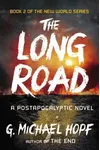
2. The Long Road (2013)
Picking up six weeks after the initial collapse, this installment follows Gordon and a group of survivors as they leave the ruins of San Diego behind. They embark on a perilous cross-country journey toward the relative safety of Idaho. The book highlights the breakdown of law and order, showing how quickly marauding gangs and desperate citizens turn to violence when resources run dry.
Exit: The Van Zandt Chronicles, Book 1 (2015)
Though published later, this standalone novella is a vital piece of the chronological puzzle. It details the tragic events that occur immediately after the ending of The Long Road. During their journey, Gordon's family is attacked, resulting in the death of his son, Hunter. Exit tracks Gordon's dark, solitary quest for vengeance as he hunts down Rahab, the warlord responsible. It bridges the emotional and narrative gap before the events of the third main novel.
3. Sanctuary (2014)
After the grueling journey, the survivors attempt to build a permanent, fortified safe haven. However, their peace is short-lived as external forces—including a ruthless warlord invading California and creeping anarchy—threaten to destroy what they have built. The book expands the scope of the story, introducing larger political dynamics and the beginning of regional conflicts.
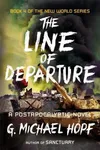
4. The Line of Departure (2014)
As the nation plunges deeper into full-scale civil war and lawlessness, the stakes escalate from local survival to national destiny. Gordon is forced to make brutal choices to protect his community, aligning with military remnants and political factions. This book features a heavy emphasis on military strategy and highlights the tragic realities of combat in a collapsed nation.
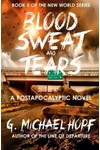
5. Blood, Sweat & Tears (2015)
The fifth book shifts its focus to the grueling process of rebuilding and defending territory. The surviving factions are now more organized, leading to structured, bloody conflicts over resources and sovereignty. Gordon's role transitions from a simple survivalist to a key military and political leader trying to shape a new government.
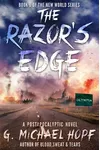
6. The Razor's Edge (2016)
With the establishment of new borders and governing bodies, tension reaches a boiling point. The thread of stability is incredibly thin, and ideological differences between the survivors threaten to spark another massive war. The narrative moves quickly, building momentum toward the final confrontation.
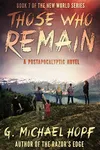
7. Those Who Remain (2016)
The epic conclusion to the main saga. Gordon Van Zandt leads the forces of the newly formed Republic of Cascadia in a final, decisive conflict against a rogue state occupying the Idaho panhandle. With the backing of U.S. President Cruz, the battle determines whether Cascadia will survive or fall. The book provides a definitive resolution to the main narrative arc, showing the heavy cost of survival and the hope for a structured future.
Publication Order vs. Chronological Order
G. Michael Hopf wrote the main series in chronological sequence, but he released the spin-off novella Exit after the fifth book. While purists may prefer reading the books exactly as they were published, inserting Exit chronologically provides a more seamless emotional arc for Gordon Van Zandt's character. Alternatively, you can read the core seven books first and return to the spin-offs afterward as companion pieces.
Here is the list of works in their official publication order:
- The End (2013)
- The Long Road (2013)
- Sanctuary (2014)
- The Line of Departure (2014)
- Blood, Sweat & Tears (2015)
- Exit: The Van Zandt Chronicles, Book 1 (2015)
- The Razor's Edge (2016)
- Those Who Remain (2016)
- Lockdown: Tales from the New World (2020)
The Expanded Universe and Co-Authored Works
For readers who want to dive deeper into the world without power, G. Michael Hopf has expanded the universe with collaborative projects. The most notable is Lockdown: Tales from the New World, published in 2020 and co-authored with L. Douglas Hogan. This novel follows Freddy "Fritz" Becker, a parole officer convicted of murder, who is caught in a prison facility when the super-EMP strikes. Fritz must navigate the sudden collapse of prison security and the lawless landscape outside to survive and clear his name. Because it focuses on a different set of characters during the onset of the apocalypse, it can be read as a standalone at any point, though it is best enjoyed after you have a grasp of the universe from the main books.
Additionally, Hopf has collaborated on other post-apocalyptic projects outside the New World continuity. He co-authored the standalone novel Hope with popular survivalist author A. American, and worked with John W. Vance on The Death Trilogy. These collaborations share the same gritty, realistic survival themes that define his primary series.
What to Know Before You Start
The defining characteristic of the New World series is its chilling realism. Hopf is a former U.S. Marine and executive bodyguard, and his background heavily influences the tactical details, military maneuvers, and logistical realities of survival portrayed in the books. Rather than focusing on fantastical elements, the series reads like a plausible warning about the fragility of modern infrastructure and the threat of electromagnetic pulse attacks.
The series utilizes a multi-perspective narrative. While Gordon Van Zandt is the central anchor, the books also follow high-level political figures, including the President of the United States, and rogue military leaders. This structure allows readers to see both the boots-on-the-ground struggle for food and water, and the grand geopolitical moves to rebuild a shattered nation.