
Recommended Nic Costa Reading Order
For the best experience, readers should follow the series in its publication order. While each mystery is a standalone investigation, the personal relationships, emotional scars, and career trajectories of Nic Costa and his colleagues develop continuously from one book to the next. The core cast—including seasoned detective Gianni Peroni, pathologist Teresa Lupo, and their superior Leo Falcone—experiences significant character growth, triumphs, and devastating tragedies that will not make sense if the books are read out of sequence.
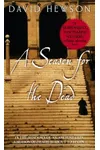
- A Season for the Dead (2003) – The debut novel introduces Nic Costa, a young, art-loving Roman detective. Costa is thrown into a high-stakes case near the Vatican when a killer obsessed with martyrdom and the works of Caravaggio begins targeting academics.
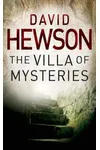
- The Villa of Mysteries (2003) – When the mummified body of a young girl is discovered, the team is led into the dark world of a modern-day cult mimicking ancient Roman Dionysian rituals, testing Nic’s resolve as he copes with early personal trauma.
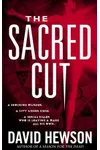
- The Sacred Cut (2005) – Set during a rare, freezing winter in Rome, a serial killer leaves cryptic markers under the historic Pantheon. Nic and partner Gianni Peroni must unravel a conspiracy with international ties.
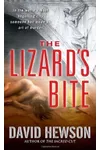
- The Lizard's Bite (2006) – Sidelined from their usual Rome beat, Costa and Peroni are temporarily exiled to Venice. There, they investigate a fatal fire at a glass foundry on the island of Murano, uncovering dark family secrets in the insular community.
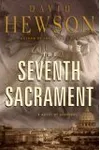
- The Seventh Sacrament (2007) – Returning to Rome, the team descends into the city's ancient subterranean tunnels, catacombs, and Mithraic temple ruins to solve a decades-old kidnapping and a fresh series of ritualistic murders.
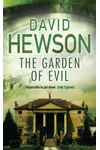
- The Garden of Evil (2008) – A French art expert is murdered in front of a previously unknown Caravaggio painting. The investigation quickly becomes deeply personal for Costa when the prime suspect strikes close to home, protected by a wealthy, untouchable cult.
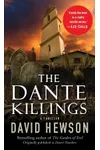
- Dante's Numbers / The Dante Killings (2008) – Sidelined and grieving, Costa tracks the production of a controversial film adaptation of Dante’s Inferno from Rome to San Francisco, following a trail of codes based on Dante's numerology and Alfred Hitchcock’s movies.
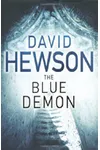
- The Blue Demon / City of Fear (2010) – Set against a tense G8 summit in Rome, the city is terrorized by the return of the "Blue Demon," a radical group mimicking ancient Etruscan ritualistic crimes.
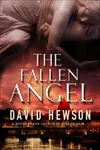
- The Fallen Angel (2011) – The suspicious death of a British academic in Rome leads Costa to investigate the victim's secretive family, uncovering tragic parallels to the historical 16th-century execution of Beatrice Cenci.
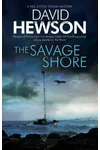
- The Savage Shore (2018) – After a long hiatus, the final novel sends Nic Costa on a perilous undercover mission to the lawless Calabrian coast. Costa must infiltrate the powerful 'Ndrangheta mafia by working with a crime boss who offers to turn state witness.
The Teresa Lupo Spin-Off and Short Stories
In addition to the ten main novels, David Hewson has written supplementary works that enrich the universe of the Roman police department:
- Carnival for the Dead (2011) – This standalone spin-off novel puts the spotlight on the series' popular forensic pathologist, Teresa Lupo. When her bohemian aunt vanishes in Venice during the freezing annual Carnival, Teresa travels there to investigate, only to receive cryptic stories predicting her own movements.
- Dead Men's Socks (circa 2010) – A short story featuring Nic Costa and Gianni Peroni. Peroni investigates a strange connection between two bodies pulled from the River Tiber: a wealthy psychiatrist and a young street thief, who have nothing in common except wearing the exact same pair of odd socks.
Publication Order vs. Chronological Order
Because the chronological events of the series match their publication order, there is no need to read the books out of sequence. David Hewson structured the timeline linearly, allowing the characters to age and evolve naturally over fifteen years. Notably, there is a seven-year publication gap between The Fallen Angel (2011) and The Savage Shore (2018). While The Savage Shore functions as a direct continuation, it reflects a shift in setting and tone as Costa leaves his familiar Roman streets for the rugged, insular mafia territory of Calabria.
What to Know Before You Start
Before diving in, readers should know that the Nic Costa books are as much about the settings as they are about the crimes. David Hewson, a former journalist, extensively researched Italy's historical underpinnings. Rather than presenting a postcard version of Italy, the series highlights the friction between ancient pagan traditions, Catholic history, and modern political corruption.
The series is highly recommended for fans of Donna Leon’s Guido Brunetti mysteries and Michael Dibdin’s Aurelio Zen books, but it carries a slightly darker, more visceral edge. Hewson does not shy away from the gritty reality of police work, combining detailed forensics (led by Teresa Lupo) with high-concept historical conspiracies.