



Where to Start Reading Nigel Strangeways
For readers diving into the classic detective mysteries of Nigel Strangeways, there are two primary entry points depending on what style of mystery you prefer:
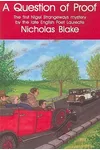
- A Question of Proof (1935): This is the absolute best starting point for purists. As the debut novel, it introduces Nigel Strangeways as a slightly disheveled, tea-drinking, Oxford-educated amateur detective who gets dragged into a murder investigation at a boys' preparatory school. Starting here allows you to see the organic development of Nigel's personality, his investigative methods, and his key relationships from the very beginning.
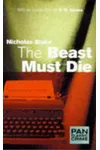
- The Beast Must Die (1938): If you want to start with the most famous, critically acclaimed, and suspenseful book in the series, pick up this masterpiece. It features a gripping plot about a crime writer who plans to murder the hit-and-run driver who killed his son. It functions perfectly well as a standalone story and highlights the psychological depth that author Nicholas Blake brought to the Golden Age mystery genre.
The Complete Nigel Strangeways Publication Order
Nicholas Blake (the pseudonym of British Poet Laureate Cecil Day-Lewis) published exactly 16 novels featuring Nigel Strangeways between 1935 and 1966. While many of the mysteries function as self-contained puzzles, reading them in publication order is highly recommended. The background lives of Nigel and his companions progress chronologically across the books.
- A Question of Proof (1935) - Nigel investigates a strangling in a haystack at a boys' school and falls in love with the headmaster's wife, Georgia Cavendish.
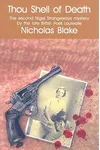
- Thou Shell of Death (1936) - Also published as Shell of Death. A retired World War I flying ace receives death threats predicting his murder on Christmas Day. Nigel is called in to protect him.
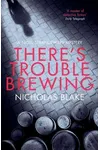
- There's Trouble Brewing (1937) - A bunsen-burner mystery set in a Dorset brewery, where a tyrannical business owner goes missing and a dog's odd behavior sparks a search.
- The Beast Must Die (1938) - Widely considered the peak of the series. A father infiltrates the home of the man he believes killed his son in a hit-and-run, plotting the perfect murder.
- The Smiler with the Knife (1939) - A tense political thriller where Nigel's wife, Georgia Cavendish, takes center stage to infiltrate a rising fascist conspiracy in pre-war England.
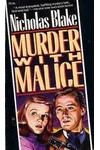
- Malice in Wonderland (1940) - Also published as The Summer Camp Mystery or Murder with Malice. Nigel investigates malicious practical jokes that escalate to murder at a holiday camp.
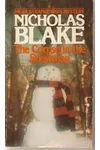
- The Corpse in the Snowman (1941) - Also published as The Case of the Abominable Snowman. A winter house party turns deadly when a body is discovered hidden inside a melting snowman.
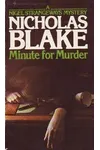
- Minute for Murder (1947) - Set in the wartime Ministry of Morale (reflecting Day-Lewis's own war work), where a beautiful secretary is poisoned with cyanide.
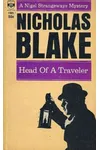
- Head of a Traveler (1949) - Nigel is called to a countryside estate after a headless corpse is found in a local river near the home of an eccentric poet.
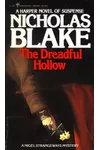
- The Dreadful Hollow (1953) - A village is plagued by a series of poison-pen letters, leading to an apparent suicide that Nigel believes is actually murder.
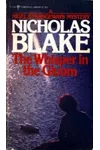
- The Whisper in the Gloom (1954) - Also published as Catch and Kill. A conspiracy thriller involving children, kidnappings, and global plots. This book introduces Nigel's second major love interest, sculptor Clare Massinger.
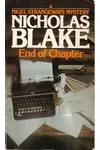
- End of Chapter (1957) - Nigel is hired by a prestigious London publishing house to investigate who is leaking libelous changes to a controversial memoir.
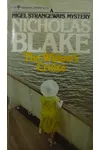
- The Widow's Cruise (1959) - Set during a holiday cruise through the Greek islands, where Nigel and Clare deal with family secrets and a double murder at sea.
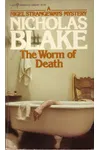
- The Worm of Death (1961) - Nigel and Clare move to Greenwich, where they are drawn into the disappearance and murder of a wealthy patriarch in the London fog.
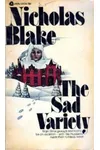
- The Sad Variety (1964) - Nigel is tasked with protecting a nuclear scientist's daughter during a snowy Christmas holiday, but things go wrong when she is kidnapped.
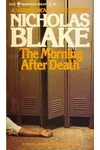
- The Morning After Death (1966) - The final book in the series. Nigel travels to an academic university town in New England, USA, where he is forced to solve a campus murder.
Chronological Continuity and Key Character Eras
Unlike many Golden Age detectives who remain frozen in time, Nigel Strangeways ages and experiences significant life changes. His journey is divided into three distinct eras, which makes chronological reading highly rewarding:
The Early Years & Georgia Cavendish (1935–1941)
In the early books, Nigel is a eccentric, highly intellectual detective whose quirks—such as drinking massive amounts of tea and quoting classical literature—were inspired by Day-Lewis's friend, the poet W.H. Auden. During his debut in A Question of Proof, he meets the adventurous explorer Georgia Cavendish. They marry, and Georgia becomes his active partner in sleuthing, even taking the lead role in the pre-war thriller The Smiler with the Knife.
The War & Post-War Transition (1941–1949)
World War II significantly changes the tone of the series. Georgia dies off-screen during the Blitz while working as an ambulance driver, a tragedy revealed to the reader in Minute for Murder (1947). This loss leaves Nigel more somber and grounded. He works for the Ministry of Morale, dealing with wartime secrets and the psychological fallout of the conflict.
The Clare Massinger Era (1954–1966)
In The Whisper in the Gloom (1954), Nigel meets the independent sculptor Clare Massinger. They form a long-term partnership, and Clare joins him in later investigations, such as the nautical mystery The Widow's Cruise and the Greenwich-based The Worm of Death. The final novel, The Morning After Death (1966), sees Nigel solving a crime at an American university, showing how far he has traveled from the cozy British school of his 1935 debut.
What to Know Before You Start
Before you begin reading, there are a few useful context clues to keep in mind:
- The Author's Identity: Nicholas Blake was the pen name of Cecil Day-Lewis, a highly regarded Anglo-Irish poet who served as Britain's Poet Laureate from 1968 until his death in 1972. He wrote these detective novels to supplement his income, but his high literary standards ensured that the mysteries are filled with rich prose, psychological depth, and complex moral dilemmas.
- Wartime and Social Realism: Unlike the static village cozies of Agatha Christie, Blake's novels actively reflect the changing social landscape of mid-20th-century Britain, including the rise of fascism in the late 1930s, the grim atmosphere of post-war London, and the shifting dynamics of class.
- Spin-offs and Standalones: While Cecil Day-Lewis wrote under the Nicholas Blake name for his crime fiction, he also penned a few non-series standalone crime novels, such as A Tangled Web (1956) and Penknife in my Heart (1958). These do not feature Nigel Strangeways and should be read separately.
- Adaptations: The most famous adaptation is the 2021 BritBox television series The Beast Must Die, which modernized the story and changed the detective character. Additionally, French New Wave director Claude Chabrol directed a highly regarded loose film adaptation of the same novel in 1969 under the title This Man Must Die (French: Que la bête meure).