


The Recommended Reading Order: Start Here
For readers diving into the gritty, morally gray urban fantasy of Sergei Lukyanenko, the best way to experience the saga of the Others is in publication order. The main story follows the personal and magical evolution of Anton Gorodetsky, a Light magician working for the Night Watch. Reading the books out of order will spoil major character developments, shifts in the magical treaty, and the global stakes that escalate with each installment.
Unlike traditional fantasy series, each book in the main series is structured as three interconnected novellas. This unique formatting keeps the pacing brisk and allows the author to explore multiple cases that build toward a grander overarching plot. Here is the core reading sequence:
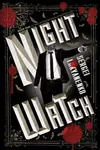
- Night Watch (1998) - Introduces Anton Gorodetsky, the mechanics of the Twilight, the fragile balance between Light and Dark, and the central character Svetlana.
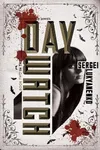
- Day Watch (2000) - Co-authored with Vladimir Vasilyev. This novel shifts focus to the perspective of the Dark Others, giving readers a deeper understanding of the moral ambiguity of their rivals.
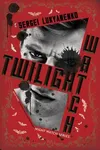
- Twilight Watch (2004) - Also published under the title Dusk Watch. It delves deeper into the mysteries of the Twilight itself and introduces new complexities within Anton's family.
- The Last Watch (2006) - Also known as Final Watch. The narrative moves beyond Moscow to places like Edinburgh and the depths of the layers of the Twilight as a mysterious murder threatens the global status quo.
- New Watch (2012) - Set years after the events of the initial tetralogy, Anton faces a new threat involving a mysterious creature known as the Tiger, which hunts down those who attempt to predict the future.
- Sixth Watch (2014) - The grand finale of Anton Gorodetsky's journey, where Light, Dark, and the Inquisition must unite against a threat that could destroy the world of the Others entirely.
Chronological vs. Publication Order
Fortunately for readers, the publication order of the main six novels aligns perfectly with the chronological order of the narrative. The books trace Anton's progression from a mid-level analyst and field agent to one of the most powerful and influential Light Magicians in Russia. Reading them chronologically is as simple as following the release dates of the core books.
However, if you choose to integrate the co-authored spin-offs and the expanded universe stories (often referred to as the World of Watches or Dozory franchise), the timeline becomes slightly more complex. These side stories are not essential to understanding Anton's main arc, but they expand the lore of other cities, such as Saint Petersburg or Kyiv, and highlight the actions of other Watch agents around the globe.
The Extended "World of Watches" and Spin-Offs
Because of the massive popularity of the series in Russia, Sergei Lukyanenko opened up his sandbox to other fantasy authors, creating a shared universe with numerous tie-in novels. While most of these have not received official English translations, a few notable co-authored books and spin-offs are highly regarded by fans:
- Day Watch (2000) - Co-authored with Vladimir Vasilyev. Although it is part of the core six books, it is technically a collaboration. Vasilyev wrote portions focusing on the Dark Watch's perspective, introducing characters like the Dark magician Alisa Donnikova.
- Face of Black Palmyra (2003) - Written solely by Vladimir Vasilyev. This is a direct spin-off set in Ukraine (Kyiv) and features Edgar, a prominent Dark Mage from the main series, as he deals with regional factions of Others.
- School Supervision (2013) - Also known as School Watch, co-authored with Arkady Shushpanov. This spin-off shifts focus away from the main conflict to a specialized boarding school run by the Inquisition for troubled teenage Others of both Light and Dark alignments.
- The Seal of Twilight (2014) - Co-authored with Ivan Kuznetsov. This book further explores the magical boundary lines and rules governing the Moscow Inquisition.
If you want the purest experience, stick to the six main novels written primarily by Sergei Lukyanenko. If you crave more lore and world-building, look into the translations of the co-authored works.
What to Know Before You Start: Setting and Lore
Sergei Lukyanenko’s world is built on a few core concepts that set it apart from Western urban fantasy classics like The Dresden Files. Understanding these concepts will make your entry into Moscow's supernatural underworld much smoother:
The Others: Light and Dark
Others are humans born with magical potential who can enter the Twilight. Upon reaching maturity, every Other must choose an alignment. Light Others believe in selflessness, the collective good, and guiding humanity toward a better future. Dark Others value individual freedom, personal desire, and self-gratification. Crucially, Lukyanenko avoids simple good-versus-evil dynamics. Light Others can be cold, calculating, and willing to sacrifice individuals for the "greater good," while Dark Others are capable of genuine love, loyalty, and honor.
The Twilight
The Twilight is a parallel dimension of shadows that sits just beneath the surface of our reality. It has multiple layers, and entering it drains a magician’s energy. Only powerful Others can descend past the first layer, with each deeper layer presenting stranger physics, ancient dangers, and greater magical strain.
The Inquisition
Because an all-out war between Light and Dark would destroy humanity (which serves as the source of their power), the two sides signed the Great Treaty. The Night Watch polices the Dark Others by day, and the Day Watch polices the Light Others by night. The Inquisition is a neutral judicial body composed of former Light and Dark Others who have renounced their alignments to ensure the Great Treaty is strictly enforced.
Adaptations and Where to Find Them
In 2004, director Timur Bekmambetov adapted the first book into a visual masterpiece of Russian cinema, Night Watch, followed by Day Watch in 2006. The movies were praised for their stylish editing and unique visual effects. However, readers should note that the films diverge drastically from the books. The movies merge and alter characters, change family relationships, and create a much more action-focused narrative. They are excellent companion pieces, but they should not be used as a substitute for reading the novels if you want to understand the actual book continuity.