
The Recommended Reading Path
For readers diving into the Nightlord series, the best starting point is simple: start at the beginning and read in publication order. Garon Whited’s multiverse saga is written as a sequence of journals by the main character, Eric. Because the narrative relies on Eric's expanding understanding of magic, physics, alternate dimensions, and time loops, skipping ahead or attempting a non-linear reading will immediately spoil major plot points and render the complex lore impossible to follow.
While the main series is highly sequential, there is a key companion spin-off series, Phoebe's Tale, which focuses on Eric's companion Phoebe. These spin-off books should be woven directly into the main series chronological progression to get the complete picture before moving on to the final main volumes.
The Nightlord Books in Order
Below is the complete reading order for the Nightlord series, combining the mainline books and the companion spin-offs in their optimal reading sequence.
1. Nightlord: Sunset (2006 / Revised 2014)
The series begins with Sunset. Eric, a depressed physics professor, wakes up after a wild night to discover he has been turned into a vampire. Unlike standard horror vampires, Eric retains his mind and moral compass, but he must quickly learn to navigate his new dual existence. After a sudden tragedy, he finds himself transported to a medieval fantasy world where magic is real but lacks logical structure—until he applies his understanding of thermodynamics and physics to it. (Note: The book was originally self-published in 2006 and received a major revised edition in 2014.)
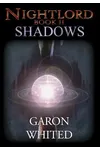
2. Nightlord: Shadows (2015)
In the second installment, Eric has assumed the identity of King Halar of Karvalen. He struggles to build a stable kingdom while balancing his undead urges and defending his people from magical threats. This book establishes the progression fantasy elements of the series, showing how Eric systematically constructs magical items, defenses, and spells using modern scientific principles.
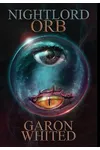
3. Nightlord: Orb (2016)
Eric's journeys expand beyond the boundaries of his kingdom as cosmic and demonic threats begin to target him. Orb delves much deeper into the underlying metaphysics of Whited's universe, pitting Eric against ancient deities and forcing him to come to terms with the scale of his responsibilities as a dimension-traveling entity.
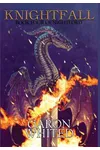
4. Nightlord: Knightfall (2017)
In Knightfall, Eric faces the consequences of his actions across multiple planes of existence. He clashes with powerful religious factions, paladins, and rival sorcerers who view him as a monster. The boundaries between hero and villain blur as Eric is pushed to his absolute limits to protect those he cares about.
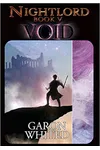
5. Nightlord: Void (2018)
This entry introduces heavier science fiction elements into the fantasy landscape. Eric is cast into a dying world with a fading sun, where he must utilize both advanced physics and magical arrays to survive. The tone shifts toward survivalist science-fantasy as the multiverse's scale becomes even more apparent.
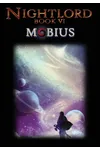
6. Nightlord: Mobius (2019)
Time travel and temporal paradoxes take center stage in Mobius. Eric finds himself caught in complex causal loops, forcing him to manipulate history and his own timeline. The journal format shines here, as the reader watches Eric struggle to maintain his sanity while keeping track of multiple timelines and past decisions.
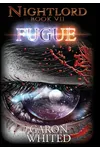
7. Nightlord: Fugue (2020)
Continuing the themes of memory, identity, and temporal confusion, Fugue finds Eric dealing with the psychological fallout of his long, recursive life. He must piece together fragmented memories and navigate a landscape where allies and enemies are not always who they seem.
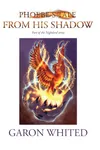
8. Phoebe's Tale: From His Shadow (2022) — Book 7.1
This is the first essential spin-off. Written from the perspective of Phoebe, Eric's companion and literal shadow-clone who has grown into her own independent entity, this book covers events occurring in the timeline after the conclusion of Fugue. Reading this book before Penumbra is highly recommended, as it fills in crucial details about what occurred during Eric's temporal absence.
9. Phoebe's Tale: Into the Light (2025) — Book 7.2
The second volume of Phoebe's journey continues directly from where her first tale left off, further bridging the gap in perspectives and showcasing her growth as she navigates the dangerous worlds Eric left behind.
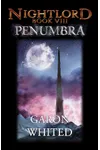
10. Nightlord: Penumbra (2023) — Book 8
The eighth main novel, Penumbra, reunites the storylines. Eric, acting as a time-traveling wizard and cosmic protector, faces apocalyptic stakes. Having read the two volumes of Phoebe's Tale beforehand will provide the ideal context for the state of the universe when Eric returns to the main narrative stage.
Chronological Caveats and Time Mechanics
Because the series heavily incorporates time travel and temporal loops, there is a theoretical "chronological order" of events that differs from the publication order. However, attempting to read the books chronologically is highly discouraged for first-time readers. The timeline bends back on itself in books like Mobius and Fugue, and the narrative is structured so that the reader learns about the rules of time alongside Eric. A chronological reading would require constantly jumping between chapters across different books, resulting in major spoilers and an incoherent reading experience.
What to Know Before You Start
- The Scale of the Books: Garon Whited does not write short novels. Each book in the Nightlord series is a massive tome, often running between 700 to over 1,000 pages. If you are listening to the audiobooks, expect between 35 to 50 hours of narration per book.
- The Audiobook Experience: The series has achieved cult-classic status in the audiobook community, largely thanks to the narration of Sean Runnette. His dry, sarcastic delivery perfectly captures Eric's voice as a cynical but ultimately good-hearted physics professor.
- A Fusion of Genres: Nightlord is a unique blend of progression fantasy, hard magic (explained through real-world physics), urban fantasy, portal fantasy, and high fantasy. It appeals to readers who enjoy logical magic systems where the protagonist must engineer solutions rather than relying purely on raw power or convenient plot devices.