
How to Read the Op-Center Series
Created by military thriller icon Tom Clancy and former State Department official Steve Pieczenik, the Op-Center universe has kept readers on the edge of their seats since 1995. The series focuses on the National Crisis Management Center (NCMC)—commonly referred to as the "Op-Center"—a highly secretive agency designed to handle domestic and international crises too delicate for traditional military or diplomatic channels.
Because the series spans nearly three decades, multiple ghostwriters, and a major franchise reboot, deciding where to start can feel daunting. Fortunately, the reading path is straightforward.
The Two Main Eras of Op-Center
The series is divided into two distinct eras:
- The Original Era (Books 1–12): Published between 1995 and 2005, this run is led by Director Paul Hood. These books focus heavily on the geopolitics of the post-Cold War era, detailing how the high-tech Washington command center coordinates with the elite military STRIKER team in the field.
- The Reboot/Revival Era (Books 13–22): Starting in 2014 after a nine-year hiatus, the series was revived. The old Op-Center has been disbanded due to budget cuts, but a new U.S. President reactivates the agency as a leaner, more agile cyber-and-tactical defense team under the leadership of retired Admiral Chase Williams.
The Recommended Reading Path
If you want to experience the complete evolution of the agency, characters, and technology, we recommend reading the series in Publication Order. Because the books' internal timelines mirror the years they were published, the publication order is also the chronological order. Reading this way allows you to follow character arcs, political shifts, and technological upgrades naturally.
However, because most novels are written as standalone missions with self-contained storylines, you can also opt for alternative starting points:
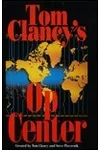
- Start with the Original: Grab the self-titled first book, Op-Center (1995), to meet the original cast, including Paul Hood, Mike Rodgers, and Bob Herbert. This is the best option for fans of classic 1990s military thrillers.
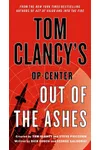
- Skip to the Reboot: If you prefer modern storylines featuring cyber warfare, drones, and contemporary geopolitical threats, start directly with Out of the Ashes (2014). You will not miss critical plot points from the original run, as the reboot serves as a fresh start with a new cast of characters.
Publication Order of Tom Clancy's Op-Center Books
Here is the complete bibliography of the Op-Center novels. While Tom Clancy and Steve Pieczenik created the concept and franchise, the books themselves were written by talented co-authors and ghostwriters.
The Original Series (Written by Jeff Rovin)
- Op-Center (1995): The debut thriller. Director Paul Hood must stop renegade soldiers from triggering a nuclear war on the Korean Peninsula.
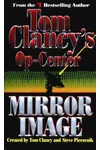
- Mirror Image (1995): Op-Center faces off against Russian hardliners attempting to orchestrate a coup and halt democratic reforms.
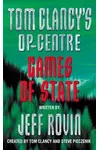
- Games of State (1996): The team travels to Germany to dismantle a rising neo-Nazi faction exploiting digital communications.
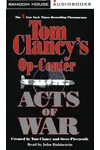
- Acts of War (1996): A Kurdish extremist group threatens global stability, putting the STRIKER team to the ultimate test.
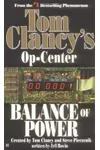
- Balance of Power (1998): Civil war in Spain threatens to pull in global powers, forcing the Op-Center to intervene.
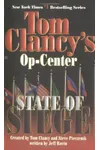
- State of Siege (1999): Operatives must defend the United Nations headquarters in New York after it is seized by terrorists.
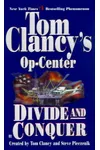
- Divide and Conquer (2000): The sanity of the U.S. President is called into question, leading to internal chaos and external threats.
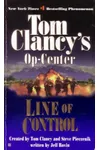
- Line of Control (2001): A border clash between India and Pakistan threatens to escalate into a full-scale nuclear conflict.
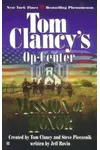
- Mission of Honor (2002): The team must handle a crisis involving the Vatican and international cyber criminals.
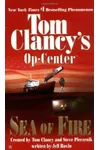
- Sea of Fire (2003): Op-Center tracks stolen radioactive waste being used to threaten major cities.
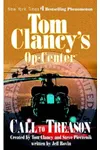
- Call to Treason (2004): A domestic corruption plot threatens to dismantle the Op-Center from the inside out.
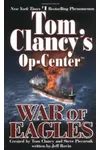
- War of Eagles (2005): The final book of the original run follows a high-stakes crisis along the borders of China and Taiwan.
The Reboot Series (Co-Authored & Written by Various Authors)
- Out of the Ashes (2014) – Written by Dick Couch and George Galdorisi: The agency is brought back to life under Admiral Chase Williams to stop a domestic terrorist plot.
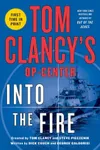
- Into the Fire (2015) – Written by Dick Couch and George Galdorisi: Tensions explode in the Sea of Japan as the modernized Op-Center coordinates a defense against North Korean aggression.
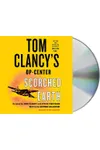
- Scorched Earth (2016) – Written by George Galdorisi: A terrifying bioterror threat emerges, forcing Chase Williams to deploy his team to prevent a domestic pandemic.
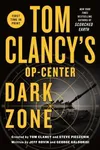
- Dark Zone (2017) – Written by Jeff Rovin and George Galdorisi: A mysterious cyber-attack targets European infrastructure, drawing the team into a digital shadow war.
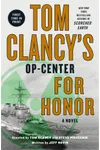
- For Honor (2018) – Written by Jeff Rovin: The agency must defuse a crisis involving stolen nuclear weapons and rogue military officers.
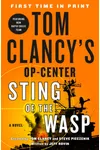
- Sting of the Wasp (2019) – Written by Jeff Rovin: A deadly new black ops cell, "Black Wasp," is deployed to handle extreme terrorist cells abroad.
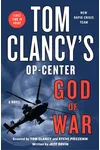
- God of War (2020) – Written by Jeff Rovin: A high-tech crisis involving advanced AI and automated drone warfare.
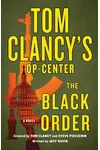
- The Black Order (2021) – Written by Jeff Rovin: The team faces a shadowy international network plotting a series of synchronized global assassinations.
- Call of Duty (2022) – Written by Jeff Rovin: Op-Center races against time to stop an extremist group from disabling the global internet infrastructure.
- Fallout (2023) – Written by Jeff Rovin: The team deals with the radioactive fallout of a nuclear threat, marking the latest high-stakes entry.
Chronological Order & Continuity Caveats
Because the Op-Center timeline matches its publication schedule, there is no need to jump around the list. However, readers should be aware of a few continuity details:
- Standalone Missions: Unlike Tom Clancy's core Jack Ryan series, which features tight, multi-book character development, Op-Center is highly episodic. Each novel presents a self-contained crisis that is resolved by the final page.
- The Shift in Tone: The original 12 novels focus on bureaucratic challenges, command room strategy, and high-tech satellite tracking of the late 90s. The reboot books are faster-paced, leaning heavily into modern tactical military action, drone warfare, and state-sponsored cyber espionage.
- The Disbanding Hiatus: The nine-year gap between War of Eagles (2005) and Out of the Ashes (2014) is reflected in the lore. The agency was officially shut down during this period, explaining why the reboot starts fresh with a modern structure and a new team.
What to Know Before You Start
Before diving into the series, keep these practical points in mind:
It was also a TV Show: The franchise launched simultaneously as a novel and a 1995 NBC television miniseries starring Harry Hamlin. The show was later edited together and released as a movie. While the first book shares the name and basic premise, the novel dives much deeper into the political logistics and character backstories.
Ghostwriters and Creators: Tom Clancy and Steve Pieczenik created the outlines and characters, but Jeff Rovin penned the original novels. When the reboot launched in 2014, veteran military writers Dick Couch and George Galdorisi took over. Rovin later returned to the franchise to write the subsequent entries starting with Dark Zone.
Pacing: If you are used to the heavy administrative focus of standard espionage procedurals, you will appreciate Op-Center. However, those expecting the nonstop tactical shootouts of traditional military thrillers should know that the team spends a significant amount of time in briefing rooms analyzing intelligence before the STRIKER team is sent to pull the trigger.