
The Recommended Reading Order for Oxford Medieval Mysteries
For the best reading experience, the Oxford Medieval Mysteries should be read in publication order. Because the author, Ann Swinfen, wrote the books in a tight, sequential timeline, the publication order matches the chronological order perfectly. Reading them in this sequence allows you to experience the natural progression of the characters' lives, the changing seasons of 1353 and 1354, and the slow-burn romance between Nicholas Elyot and Emma Thorgold.
Here is the recommended reading path for the series:
- The Bookseller's Tale (2016)
- The Novice's Tale (2016)
- The Huntsman's Tale (2017)
- The Merchant's Tale (2017)
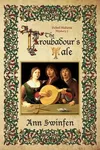
- The Troubadour's Tale (2018)
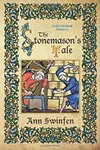
- The Stonemason's Tale (2018)
Detailed Book-by-Book Breakdown
1. The Bookseller's Tale (2016)
Set in the spring of 1353, the series opens with The Bookseller's Tale. Nicholas Elyot is a young widower, bookseller, and book producer raising his two children in an Oxford recovering from the devastation of the Black Death. His quiet life is disrupted when he discovers the body of a university student, William Farringdon, floating in the River Cherwell. Initially dismissed as an accidental drowning, Nicholas suspects foul play. Alongside his scholar friend Jordain Brinkylsworth, Nicholas uncovers a web of blackmail, academic rivalry, and a valuable Irish psalter that someone is willing to kill for.
2. The Novice's Tale (2016)
In the heat of summer 1353, the mystery shifts focus to Emma Thorgold, a young novice who mysteriously disappears from Godstow Abbey. Emma is the cousin of the murdered student from the first book, and her sudden absence raises immediate alarms. Nicholas and Jordain join the search, but they are constantly blocked by Emma's scheming stepfather, who wants to control her inheritance by forcing her to remain in the convent or disappearing her entirely. This installment deepens the relationships between the main characters and introduces Sister Benedicta as a recurring figure.
3. The Huntsman's Tale (2017)
Set in the late summer of 1353, Nicholas, his sister, children, and Jordain travel out of the city to his family's farm in nearby Wychwood to help with the annual harvest. The rural peace is shattered during a deer hunt when a man is killed by a stray arrow. Suspicion falls upon Nicholas's childhood friend, the local huntsman, who is accused of murder. Determined to clear his friend's name, Nicholas digs into local grudges and uncovers a conspiracy that stretches far beyond the borders of the forest.
4. The Merchant's Tale (2017)
Autumn 1353 brings the bustling St. Frideswide's Fair to Oxford, bringing international merchants, wealth, and tension. The fair is traditionally run by the Priory of St. Frideswide, led by the corrupt and unpopular Prior de Hungerford, causing major resentment among the town's merchants. As conflicts erupt between the townspeople and the Priory, Nicholas is caught in the middle of a suspicious death and must find the killer before the growing civic unrest turns into a full-scale riot.
5. The Troubadour's Tale (2018)
Set during the freezing winter of 1353, Nicholas and his companions travel to Leighton Manor for the Christmas festivities. Travel during this era is dangerous, made worse by a "little ice age" winter and bands of desperate, dispossessed men roaming the countryside. When a group of traveling troubadours arrives to perform, Nicholas begins to suspect they are not who they claim to be. A murder at the manor forces Nicholas to solve the puzzle before the winter storms trap them with a killer.
6. The Stonemason's Tale (2018)
The final book in the series takes place in the spring of 1354. Sabotage and fatal accidents plague the construction of a new extension at Queen's College, Oxford. With the town sheriff away, Nicholas is asked to investigate. He finds himself caught in a dangerous feud between two powerful northern English dynasties. As he works to secure the building site and uncover the saboteurs, Nicholas must also confront his developing feelings for Emma Thorgold.
Publication Order vs. Chronological Order
Unlike many long-running mystery series where prequels or side stories complicate the timeline, the Oxford Medieval Mysteries timeline is straightforward. The chronological order is identical to the publication order, spanning a one-year period from the spring of 1353 to the spring of 1354. Reading the books out of order will spoil major character developments, particularly the slow-burn relationship between Nicholas and Emma, and the post-plague recovery status of Oxford.
What to Know Before You Start
Ann Swinfen was a meticulous researcher who held degrees in Classics, Mathematics, and English Literature from Oxford University. Her academic background shines through in her detailed portrayals of 14th-century life, book production, university politics, and medieval trade. The series does not focus on kings or knights, but rather on the daily struggles of ordinary merchants, scriveners, and craftsmen. Sadly, the series ended with The Stonemason's Tale due to the author's passing in 2018, leaving the series as a finished six-book arc.