







The Recommended Reading Order: Start from the Beginning
For the best experience, readers should follow the Page Murdock series in its original publication order. Because Loren D. Estleman wrote these books sequentially, the character arc of Page Murdock—and the overall maturity of Estleman's writing style—develops naturally over the decades. The narrative timeline matches the publication dates, starting with Murdock's early, raw cases in the late 1870s and concluding with a deeply reflective look at the end of the frontier era in the early 20th century.
While almost all of the novels function perfectly well as standalone adventures, reading them in order lets you appreciate the evolving relationships between Murdock, his formidable boss Judge Harlan A. Blackthorne, and the changing landscape of the American West. The series spans ten novels published between 1979 and 2018.
Page Murdock Books in Publication (and Chronological) Order
Here is the complete sequence of U.S. Deputy Marshal Page Murdock's cases, annotated with historical settings and plot details:
- The High Rocks (1979): The debut novel sets Murdock on a gritty manhunt in the Bitterroot Mountains of Montana. Murdock is sent by Judge Blackthorne to track down the lethal Bear Anderson, forcing him to brave brutal winter terrain and reckon with ghosts from his own past.
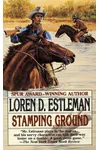
- Stamping Ground (1980): Sent north into the freezing Dakotas, Murdock is tasked with capturing Ghost Shirt, a renegade Cheyenne leader. The mission quickly becomes a complex, dangerous trial of survival amidst massacres, blizzard conditions, and escalating tribal conflicts.
- Murdock's Law (1982): Murdock is dispatched to the small, tense town of Breen, Montana. Tasked with keeping the peace and locating an elusive, menacing outlaw, he finds himself caught in a web of local corruption and deadly gunplay where the line between law and lawlessness is paper-thin.
- The Stranglers (1985): In this dark entry, a deadly, anonymous vigilante posse is roaming the Montana territory, hanging accused criminals and targeting local lawmen. Murdock must infiltrate or hunt down this ruthless group before they dismantle the formal justice system entirely.
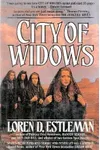
- City of Widows (1994): After a nearly decade-long publishing hiatus, the series returned with Murdock traveling incognito to 1881 New Mexico. His target is the notorious Baronet brothers, but the mission is complicated by old flames, betrayal, and the harsh realities of the southwestern desert.
- White Desert (2000): Murdock's jurisdiction stretches to its absolute limits as he pursues a vicious gang of outlaws into the frozen wastes of northern Canada. Along the way, he must navigate uneasy alliances with Métis communities, escaped American slaves, and remnants of Crazy Horse's followers.
- Port Hazard (2004): Targeted by mysterious assassins, Murdock traces the conspiracy back to San Francisco's notorious Barbary Coast. Enlisting the help of an ex-buffalo soldier, Murdock plunges into Chinatown's opium dens and the corrupt halls of coastal politicians to save his own skin.
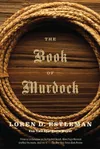
- The Book of Murdock (2010): Murdock goes deep undercover in Owen, Texas, masquerading as a traveling preacher named "Brother Bernard Sebastian." Tasked with breaking up a dangerous gang of bandits, he has to keep up his holy facade while dealing with a cynical town and a figure from his past.
- Cape Hell (2016): Judge Blackthorne dispatches Murdock south of the border to Cape Hell, Mexico. Reports suggest a rogue former Confederate captain is raising a private army to seize Mexico City and reignite the American Civil War, forcing Murdock into a volatile international conspiracy.
- Wild Justice (2018): The final chapter of Murdock's career. Following the death of his long-time superior, Judge Harlan Blackthorne, Murdock is given the solemn duty of escorting the judge's remains by rail across the United States to his home state of Delaware, reflecting on a lifetime of frontier justice along the way.
Chronological Caveats and Publication Gaps
Although the chronological timeline flows in the same direction as the publication order, readers should prepare for shifts in tone due to the massive gaps between releases. Loren D. Estleman did not write these books in a single continuous stream; instead, he interspersed them with his famous Amos Walker detective novels and other historical works.
Specifically, there is a nine-year gap between The Stranglers (1985) and City of Widows (1994), and a six-year gap between Port Hazard (2004) and The Book of Murdock (2010). When you cross these gaps, you will notice Murdock aging, reflecting more on his mortality, and observing the rapid modernization of the West. The final book, Wild Justice, acts as a poignant, slower-paced epilogue to the entire era of the classic gunslinger, contrasting heavily with the fast, action-heavy pace of the first three novels written in the late '70s and early '80s.
What to Know Before You Start
Estleman's Page Murdock is often described as a "lawless lawman." He is not a clean-cut, white-hat hero of classic Hollywood Westerns. Instead, Murdock is a cynical, pragmatic survivor who has worked as a saloonkeeper, a cowhand, and even survived a period as a captive of the Comanche before taking his badge. He carries a five-shot Deane & Adams revolver and is fully willing to bend, break, or completely ignore the rules to ensure Judge Blackthorne's version of justice is served.
The series is highly praised by Western enthusiasts for its historical accuracy and gritty, hard-boiled mystery style. Estleman, a historical scholar who famously writes his manuscripts on a manual typewriter, weaves authentic detail throughout the books without bogging down the action. There are no official spin-offs or media adaptations of the Page Murdock series, meaning the ten core novels contain the entirety of his story. If you enjoy cross-genre fiction that combines the atmosphere of a classic Western with the sharp dialogue and plotting of a noir detective novel, Page Murdock is the perfect starting point.