
The Recommended Reading Order for the Pathfinder Trilogy
Since the Pathfinder series is a tightly woven, linear narrative with a continuous plot, there is only one way to read the books: in their original order of publication. Because the story relies on a dual-narrative structure that gradually intersects, skipping ahead or reading out of order will ruin the mystery and make the complex time-travel mechanics impossible to follow.
Here is the recommended reading path for the series, published by Margaret K. McElderry Books (an imprint of Simon & Schuster):
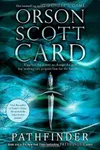
- Pathfinder (2010): Introduces Rigg, his unique path-seeing ability, and the parallel story of Ram Odin aboard the starship.
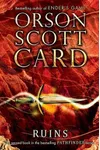
- Ruins (2012): Expands the world of Garden, introducing more time-manipulating characters and escalating the threat to the wall-divided provinces.
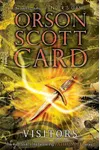
- Visitors (2014): The final book in the trilogy, where Rigg and his allies must face external threats arriving on the planet Garden, bringing the time-travel loops and cosmic stakes to their ultimate conclusion.
Understanding the Dual Narrative and Tone
Before jumping into Pathfinder, it is helpful to know how Orson Scott Card structures the storytelling, especially in the first novel. The book alternates between two distinct viewpoints and settings:
- Rigg's Story: A fantasy-esque coming-of-age journey set in a seemingly low-tech, medieval world. Rigg has been trained by his father to track the invisible paths left behind by every living thing in the past.
- Ram Odin's Story: A hard science fiction narrative focusing on a starship pilot tasked with launching a human colonization mission. His sections deal with space travel, artificial intelligence, and the initial discovery of the planet Garden.
As the series progresses, these two narratives converge, revealing how the fantasy elements of Rigg's world are deeply rooted in the sci-fi history of the colonization effort. This blend of genres makes the trilogy unique, appealing equally to fans of high fantasy and space-faring science fiction.
The Rules of Time Travel in Pathfinder
Time travel in Card's universe is not a simple plot device; it is governed by strict, logical rules that form the backbone of the series' puzzles. Rigg's path-seeing ability is only the starting point. When he teams up with other characters—such as those who can slow down time or physically jump backward into the past—they discover they can alter history, creating new timelines and paradoxes.
Unlike many stories where changing the past instantly rewrites the present, the characters in Pathfinder must deal with the physical and psychological consequences of their actions. The books frequently feature heavy, philosophical discussions between the characters as they try to calculate the fallout of their chronological interference, preventing them from making reckless changes.
Are There Any Spin-offs or Companions?
No. The Pathfinder universe begins and ends with this core trilogy. Orson Scott Card has not published any companion novellas, short stories, or spin-off novels set on Garden. Because the narrative is completely wrapped up in Visitors, readers do not need to worry about tracking down external material or missing critical lore from anthologies.
Tips for Readers
If you are planning to start the trilogy, keep these tips in mind to get the most out of your reading experience:
- Pay attention to the formatting: In the first book, the alternating chapters might feel disjointed at first. Trust the process; the connection between the sci-fi space mission and the medieval quest becomes clear and serves as the primary mystery of the first book.
- Be prepared for dialogue-heavy chapters: Card focuses heavily on philosophical debates about free will, causality, and politics. If you prefer action-only adventures, some of the planning sessions in Ruins and Visitors may feel slow, but they are essential for understanding the time loops.
- Don't take breaks between books: Because the ending of each book directly sets up the next, reading them close together will help you remember the intricate timeline details and character relationships.