
The Recommended Reading Order for Paul Chavasse
If you are planning to follow Paul Chavasse through the shadows of the Cold War, the best path is the original publication order. Because the books were written sequentially, following his progression from a fresh operative into a hardened, battle-scarred intelligence agent gives you the best sense of his character arc. Here is how to read the series:
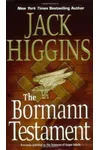
- The Testament of Caspar Schultz (1962) – Also published under the title The Bormann Testament.
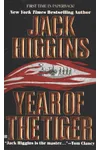
- Year of the Tiger (1963)
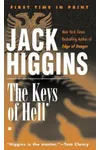
- The Keys of Hell (1965)
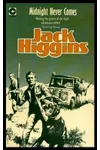
- Midnight Never Comes (1966)
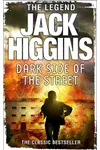
- Dark Side of the Street (1967)
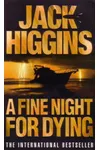
- A Fine Night for Dying (1969) – Note that some editions and lists record the publication date as 1979 due to late reprints, but the original text was published in 1969.
Understanding the Publication and Chronological Timeline
Unlike some thriller series that jump back and forth in time, the Paul Chavasse books follow a linear chronological timeline that closely matches their publication order. The stories run from the early 1960s to the end of the decade, capturing the real-world evolution of the Cold War. However, reading the series comes with a few unique quirks regarding titles, pen names, and later revisions that you should know before starting.
The Martin Fallon Pseudonym
When these books were first released in the 1960s, they did not feature the name Jack Higgins on the cover. Instead, the author Harry Patterson published them under the pseudonym Martin Fallon. It was only after Patterson achieved massive global success with his 1975 blockbuster The Eagle Has Landed (under the Jack Higgins name) that publishers began reissuing the Chavasse series under the Jack Higgins moniker to appeal to his growing fanbase.
Original vs. Revised Editions
Another major detail for collectors and readers is that Jack Higgins returned to several of these early novels decades later to revise, update, and polish them for modern audiences. For example, Year of the Tiger was significantly revised and re-released in 1996, while The Keys of Hell received a major update in 2002. The revised versions feature tighter plotting and slightly updated language, but the core storylines remain the same. Both the original and revised editions are highly readable, but purists may want to seek out the original 1960s paperbacks to experience the authentic era-specific tone.
The Six Paul Chavasse Novels Explained
Here is a closer look at the six missions that define Paul Chavasse’s career as a secret agent:
1. The Testament of Caspar Schultz / The Bormann Testament (1962)
The series kicks off with Chavasse sent on a desperate hunt to locate a secret manuscript written by Caspar Schultz, a high-ranking Nazi who was believed to have died. The document contains explosive secrets that could threaten the fragile stability of postwar Western Europe. Chavasse must navigate a web of neo-Nazis, Israeli agents, and rival spy agencies who are willing to kill to keep the testament buried or use it for their own gain.
2. Year of the Tiger (1963)
Set in 1962, this adventure takes Chavasse into the treacherous heights of the Himalayas. Having previously helped the Dalai Lama escape from Chinese-occupied Tibet, Chavasse is tasked with returning to the region to rescue Dr. Karl Hoffner, a brilliant space-race scientist. He has to dodge Chinese patrols, hostile local factions, and Soviet agents in a high-altitude game of survival.
3. The Keys of Hell (1965)
Sent behind the Iron Curtain to Albania, Chavasse is tasked with finding and neutralizing a dangerous double agent. The mission takes a dramatic turn when he is caught up in the search for a priceless religious relic known as the "Madonna of Scutari," which the Communist authorities want to destroy. Chavasse must use midget submarines and diving expertise to escape a trap set by an enemy from his past.
4. Midnight Never Comes (1966)
After a disastrous mission in Albania leaves him physically and mentally scarred, Chavasse is sidelined. However, he is quickly recalled to active duty when a group of Soviet agents targets a secret, high-tech British missile project being tested in the isolated Scottish Highlands. This entry dives deep into Chavasse's psychological resilience and the human cost of espionage.
5. Dark Side of the Street (1967)
An international criminal syndicate known as "The Baron" has been breaking notorious prisoners out of British jails with military precision. To break the ring, Chavasse goes deep undercover. He commits a crime, gets himself sent to prison, and aligns himself with a disgruntled gang member to orchestrate an escape, allowing him to follow the trail back to the Baron's secret headquarters.
6. A Fine Night for Dying (1969)
The final book in the series begins with a grim discovery: the body of a gangland boss is pulled from the English Channel, wrapped in chains. Chavasse is sent to the coast of Sussex to investigate an alleged cross-Channel smuggling ring. What starts as a local smuggling investigation quickly unravels into a massive international conspiracy involving elite foreign intelligence agencies.
Practical Reader Advice
Can they be read as standalones? Yes. Each book features a self-contained mission with its own primary mystery, villain, and climax. However, reading them in order is highly recommended because Chavasse's personal life, physical scars, and professional standing with his superiors carry over from book to book.
How does Chavasse compare to James Bond? While written during the height of 1960s "Bondmania," Chavasse is a much grittier, more grounded protagonist. He does not rely on high-tech gadgets or glamorous luxury. Instead, Chavasse uses his academic background, multilingual skills (he is half-British and half-French), and sheer physical resilience to survive. He is highly flawed, gets hurt frequently, and makes mistakes, making him a precursor to the complex spies found in John le Carré's novels.
Are there spin-offs or crossovers? There are no direct character crossovers between Paul Chavasse and Jack Higgins’ later famous characters, such as Sean Dillon or Liam Devlin. However, readers should note that Jack Higgins wrote two separate novels—Cry of the Hunter (1960) and A Prayer for the Dying (1973)—featuring a completely different protagonist who is also named Martin Fallon (the same name as Chavasse's original pseudonym). Despite the shared name, these are standalone works and have no connection to the Paul Chavasse spy universe.