

The Recommended Reading Path
If you want to experience the full flavor of Carter Brown's late-era pulp noir, the best way to read the Paul Donavan series is in publication order. While each book is a standalone mystery that does not rely on heavy overarching plot continuity, reading them in order lets you appreciate the chemistry between Donavan and his ex-mercenary sidekick, Hicks, as it develops across their globetrotting adventures.
Because the series is short—comprising only four novels written at the peak of the 1970s paperbacks boom—you can easily breeze through the entire run. If you want to sample just one book first, the opening novel, Donavan (1974), sets up the protagonist's lavish lifestyle and crime-fighting motives perfectly.
Paul Donavan Books in Publication Order
The series was published between 1974 and 1979. Note that the spelling of the protagonist's surname varies between "Donavan" and "Donovan" depending on the edition and the publisher (such as Signet, Horwitz, or Belmont Tower).
- Donavan (1974) — The debut novel introduces the wealthy industrialist playboy who acts as a self-styled modern Don Quixote. (Translated in French as Le Don Quichotte des canapés).
- Donovan's Day (1975) — Donavan finds himself caught in a web of intrigue involving a clash between several glamorous women, including Collette, Mandy, and Juliet. (Translated in French as Croupe Suzette).
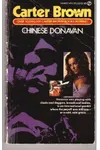
- Chinese Donavan (1976) — Donavan travels to Hong Kong at a friend's request, only to land in an international conspiracy after his friend is murdered and three separate syndicates target him. (Translated in French as Magouilles à Macao).
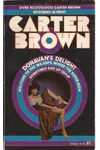
- Donavan's Delight (1978/1979) — A trip to the English countryside leads Donavan and Hicks into an adventure involving contraband weaponry, the CIA, and high-society secrets. (Translated in French as À saute-jarretelle).
Chronological Order and Continuity
There is no separate chronological order for the Paul Donavan series. The events of the books follow a linear sequence that aligns with their publication dates, set roughly in the mid-to-late 1970s. Since the narratives are highly episodic, you will not lose any critical context if you happen to read them out of order or skip a book. The main recurring element is the relationship between Donavan and his trusted companion, Hicks.
What to Know Before You Start: Meet the Duo
Before diving into the novels, it helps to understand the unique character dynamic and tone that Alan Yates (writing as Carter Brown) established for this late-career series:
The Playboy and the Mercenary
Unlike Carter Brown's earlier hard-boiled detectives like Al Wheeler or Danny Boyd, Paul Donavan is not a private eye by trade. He is an immensely wealthy American industrialist-adventurer who fights crime out of amusement and a desire to help the underdog. He is accompanied in all his adventures by Hicks, his "man." Far from being a typical butler, Hicks is an ex-mercenary who serves as Donavan's primary drinking, brawling, and investigative companion. Their snappy, buddy-cop dialogue is a signature element of the series.
The Late-Era Carter Brown Style
By the mid-1970s, Yates' writing style had evolved to match the looser censorship standards of the decade. The Paul Donavan novels feature a "tongue-in-cheek hardboiled" style that blends fast-paced action, heavy dialogue, retro 1970s nightlife aesthetics, and more explicit adult themes than his 1950s and 1960s works. The settings are international and glamorous, ranging from the British countryside to the high-stakes underworld of Hong Kong.
Alternative and Foreign Titles
If you are collecting physical copies of these books, look out for alternative titles. For example, German translations of Donovan's Day were sometimes titled Donavan and the Girl in the Hotel. In France, the series was popular in Gallimard's iconic "Carré noir" paperback collection, which gave the titles humorous, slang-filled French names such as Le Don Quichotte des canapés (Donavan) and À saute-jarretelle (Donavan's Delight). Keep these in mind if you are browsing collector circles or foreign listings.