



How to Read the Penny Parker Mystery Stories
If you want to follow the adventures of Penny Parker, the recommended reading path is simple and direct: read the books in publication order. Unlike some classic children's mystery series that bounce around in time, the Penny Parker stories follow a linear timeline that aligns exactly with how they were originally released from 1939 to 1947. Reading them in this sequence allows you to see the natural progression of Penny's relationships, her growth as an amateur reporter, and the evolving dynamics of the fictional town of Riverview.
Because the chronological order matches the publication order exactly, you do not need to worry about confusing timelines or prequel novels. You can start right at the beginning with Tale of the Witch Doll (1939) and progress sequentially through all seventeen volumes to the final case, The Cry at Midnight (1947).
The Complete Publication Order
Here is the complete list of all 17 novels in the Penny Parker Mystery Stories series in their chronological and publication order:
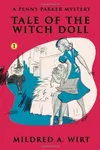
- Tale of the Witch Doll (1939) - Penny investigates a suspicious doll shop and uncovers a fake séance racket.
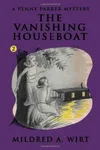
- The Vanishing Houseboat (1939) - A riverfront mystery begins when a houseboat disappears under suspicious circumstances.
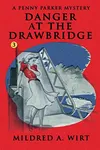
- Danger at the Drawbridge (1940) - Penny probes the sudden disappearance of a groom during a high-society wedding.
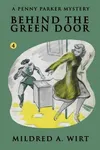
- Behind the Green Door (1940) - Working undercover at a ski resort, Penny hunts for a missing girl and a hidden chamber.
- Clue of the Silken Ladder (1941) - A mysterious silk ladder leads Penny to a ring of antique smugglers.
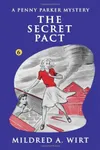
- The Secret Pact (1941) - Penny goes to work at a department store to expose a group of blackmailers.
- The Clock Strikes Thirteen (1942) - A remote island, a mysterious clock, and a missing scientist form the core of this case.
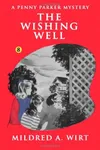
- The Wishing Well (1942) - Penny investigates a strange estate where wishes allegedly come true, uncovering a fraud.
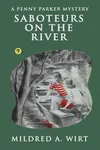
- Saboteurs on the River (1943) - War-era tension rises as Penny protects a local shipyard from enemy saboteurs.
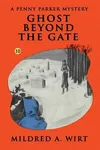
- Ghost Beyond the Gate (1943) - Set during World War II, Penny uncovers a spy ring hiding in an supposedly haunted mansion.
- Hoofbeats on the Turnpike (1944) - Penny investigates a phantom horseman terrorizing a country turnpike.
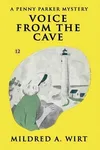
- Voice from the Cave (1944) - A trip to the mountains leads to a search for a missing boy and an eerie voice in a cavern.
- Guilt of the Brass Thieves (1945) - Penny tracks down thieves stealing valuable scrap metal from local factories.
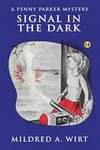
- Signal in the Dark (1946) - A mysterious light code leading to secret operations attracts Penny's journalistic eye.
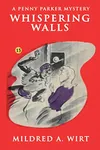
- Whispering Walls (1946) - Penny investigates an old estate and a series of strange messages hidden within its walls.
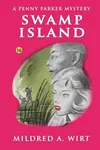
- Swamp Island (1947) - An adventure in a dense swamp region leads Penny to expose a criminal hideout.
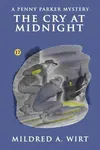
- The Cry at Midnight (1947) - The final book in the series, where Penny solves a mystery involving a remote cottage and an eerie nightly cry.
What to Know Before You Start
Before diving into Riverview, it helps to understand the unique history behind the series. The Penny Parker stories were written by Mildred A. Wirt Benson under her own name. Benson is best known as the primary ghostwriter behind the early, iconic Nancy Drew mysteries, which she wrote under the Stratemeyer Syndicate's pseudonym, Carolyn Keene. Unlike Nancy Drew—where Benson had to follow strict, pre-determined outlines provided by the syndicate—Penny Parker was Benson's independent project for publisher Cupples & Leon. This gave her full creative freedom.
Because she had complete control over the narrative, Benson was able to infuse Penny with a more active, rebellious, and humorous personality. Penny is a high school student and an aspiring reporter for the Riverview Star, the newspaper owned by her father, Anthony Parker. Unlike the perfectly polished Nancy, Penny is impulsive, makes mistakes, gets into trouble, and regularly argues with her father and the paper's staff. Benson famously declared that she preferred Penny Parker to Nancy Drew, stating that she believed Penny was "a better Nancy Drew than Nancy is."
Readers should also note the historical context. Written and set during the late 1930s and 1940s, the series directly reflects its era. Several volumes, particularly those published between 1942 and 1945, feature wartime themes, shortages, and rationing, adding historical depth. However, like many books from this period, some stories contain outdated social assumptions and stereotypes. Despite these elements, Penny's progressive stance, independence, and refusal to conform to traditional gender expectations make her a refreshing heroine for modern readers.
Practical Reading Advice and Standalone Appeal
Can the Penny Parker books be read as standalones? Yes. Each book contains a self-contained mystery that is fully resolved by the final chapter. If you happen to pick up a random copy at a thrift store or library, you will have no trouble understanding the plot. However, reading them in order is highly recommended to appreciate the growth of the recurring cast. Penny's relationships with her father, her loyal housekeeper Mrs. Weems, her best friend Louise Sidell, and young journalists Jerry Livingston and Salt Sommers build gradually over the course of the seventeen books.
For the best experience, start with the first book, Tale of the Witch Doll, to see how Penny first establishes her reputation as a reporter. If you want to jump around, some of the most highly praised entries in the series include Behind the Green Door, The Clock Strikes Thirteen, and Ghost Beyond the Gate. Today, these books are in the public domain and are widely available in affordable reprint editions from publishers like Wildside Press and Halcyon Press, as well as on digital platforms like Project Gutenberg.