
The Recommended Reading Order
To fully experience the magic of Neverland and trace Peter’s evolution from a lonely orphan into the boy who never grows up, you should follow the publication order. The main novels form a linear, continuous narrative where each book builds directly upon the events, lore, and character developments of its predecessor. Skipping ahead or reading out of order will spoil major plot points, particularly the mystery surrounding the magical substance known as 'starstuff' and the secret society sworn to protect it.
The Main Series Sequence
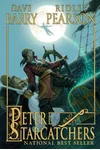
- Peter and the Starcatchers (2004): The adventure begins aboard the ship Never Land. We meet Peter, a mistreated orphan, and Molly Aster, a young Starcatcher-in-training. Together, they must keep a trunk of powerful, magical starstuff out of the hands of the fearsome pirate Black Stache. This novel establishes the core lore of the universe, introducing the magical properties of starstuff, the origin of Neverland, and the transformation of a simple bird into Tinker Bell.
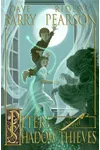
- Peter and the Shadow Thieves (2006): Set shortly after the first book, Peter is left on Mollusk Island while Molly returns to London. However, a dark and terrifying new threat emerges in the form of Lord Ombra, a creature who can steal people's shadows and seeks the remaining starstuff. Peter must travel to London to help Molly and her father, leading to a dark, suspenseful chase across the Victorian city.
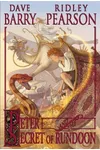
- Peter and the Secret of Rundoon (2007): The stakes rise as Peter and Molly face the sinister King Zarboff, who is using starstuff to build a weapon capable of destroying the world. The action shifts to the desert land of Rundoon. This book wraps up many of the primary plot arcs established in the first three novels, detailing how the Lost Boys are formed and cementing Peter's permanent status as the guardian of Mollusk Island.
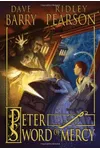
- Peter and the Sword of Mercy (2009): Set several years after the events of Rundoon, Molly is now grown up and married, and Peter remains a boy on Neverland. When a new threat arises in London involving the shadows and the historical Sword of Mercy, Molly's daughter, Wendy, must step up to help. Peter is drawn back into the conflict, establishing the generational transition that leads toward the classic J.M. Barrie narrative.
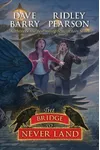
- The Bridge to Never Land (2011): The final novel in the main sequence takes a creative, modern-day twist. Two contemporary teenagers, Aidan and Sarah, discover a mysterious, centuries-old document written by Peter Pan and Molly. They are drawn into a puzzle-solving quest that bridges the gap between our modern world and the magical realm of Neverland, facing descendants of the original villains who still hunt for starstuff.
The Spin-Off Chapter Books: The Never Land Adventures
In addition to the main novels, Dave Barry and Ridley Pearson wrote a companion spin-off series specifically designed for younger readers (typically ages 8 to 12). These shorter, illustrated chapter books focus on the side characters of Mollusk Island, exploring what happens when Peter is away or highlighting the adventures of the Mollusk natives, the local mermaids, and the Lost Boys.
The Never Land Books Publication Order
- Escape from the Carnivale (2006): This adventure centers on Little Richard, a Lost Boy who gets separated from the group, and a mermaid named Aqua Marina, who must rescue him from a traveling carnivale run by a cruel showman.
- Cave of the Dark Wind (2007): Follows the Lost Boys and the Mollusk natives as they investigate mysterious occurrences on the island, encountering a new pirate threat and navigating dangerous caverns.
- Blood Tide (2008): The final chapter book brings the characters together to face a massive storm and a group of invading plunderers threatening the delicate peace of the island.
How to Integrate the Spin-Offs
Because the Never Land chapter books are self-contained side stories, they do not impact the main storyline of the primary novels. You do not need to read them to understand the main series, and they can be read in any order. However, if you want a complete chronological experience, it is best to read them after finishing the first novel, Peter and the Starcatchers, as they build upon the island setting and characters introduced in that book.
Chronological Continuity vs. J.M. Barrie Canon
While Peter and the Starcatchers is marketed as a prequel to J.M. Barrie’s classic Peter Pan, it is most accurately understood as a modern reimagining or an alternate universe. Barry and Pearson construct a highly detailed, semi-logical origin story for elements that Barrie left mysterious and magical. For instance, in Barrie’s work, flight is fueled by happy thoughts and fairy dust, whereas in the Starcatchers universe, flight is a physical reaction to 'starstuff'—a cosmic material that falls to Earth. Similarly, the authors provide a physical origin for Tinker Bell (a bird transformed by starstuff) and Captain Hook (originally the pirate Black Stache, who loses his hand in a confrontation with a crocodile and the starstuff trunk).
Because J.M. Barrie's original works are in the public domain, the authors had the creative freedom to adapt and alter the rules of the world. While the series eventually introduces Wendy and builds a bridge toward the classic status quo, purists should note that the tone is significantly different. The Starcatchers books swap the melancholic, poetic prose of J.M. Barrie for a fast-paced, humorous, and action-oriented adventure style, combining Dave Barry’s trademark wit with Ridley Pearson’s experience writing thrillers.
What to Know Before You Start
Before diving into this high-seas adventure, here are a few practical tips to keep in mind:
- Target Audience: The main five novels are middle-grade fantasy adventures, but they feature plenty of suspense, action, and occasionally darker elements (particularly in Peter and the Shadow Thieves). They are highly engaging read-alouds for families as well as independent reads.
- Co-Author Chemistry: The series is a true collaborative effort. Dave Barry brings the humor, wordplay, and comedic pirate dialogue, while Ridley Pearson structures the suspenseful plots, cliffhangers, and action sequences. This results in a unique tone that balances danger with lighthearted fun.
- The Broadway Adaptation: The first novel was adapted into a highly successful play, Peter and the Starcatcher, which premiered on Broadway in 2012 and won five Tony Awards. The play is famous for its minimalist staging, theatrical imagination, and comedic script, capturing the spirit of the first book perfectly.