

Where to Begin: The Best Starting Points
For readers diving into the Lord Peter Wimsey universe, selecting the right starting point is essential for tracking both the mystery plots and the rich character development. Depending on what you look for in classic detective fiction, there are two primary entry points:
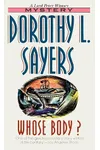
- The Chronological Beginning: Whose Body? (1923) — If you prefer to watch a character grow from the ground up, start with the very first novel. Here, you are introduced to Lord Peter's classic traits: his monocle, his passion for rare book collecting, and the lingering shellshock from World War I. It establishes his partnership with his loyal valet Bunter and Inspector Charles Parker of Scotland Yard.
- The Romantic/Feminist Entry Point: Strong Poison (1930) — If you want to experience the peak emotional and intellectual core of the series, starting with Strong Poison is highly recommended. This novel introduces Harriet Vane, a brilliant mystery novelist on trial for the murder of her former lover. Lord Peter's quest to prove her innocence sets off one of the most celebrated, slow-burning romantic and intellectual partnerships in detective history.
Dorothy L. Sayers Original Series: Publication Order
Following the publication order is the most straightforward and satisfying way to read the original Dorothy L. Sayers works. It preserves the organic evolution of Wimsey's personality from a somewhat eccentric, fop-like dilettante into a deeply complex, emotionally mature protagonist. The original run consists of 11 novels and 4 short story collections:
- Whose Body? (1923) — Lord Peter investigates a naked corpse found in a Battersea bathtub wearing nothing but a pair of pince-nez.
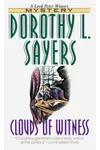
- Clouds of Witness (1926) — Wimsey must clear the name of his own brother, the Duke of Denver, who is accused of murdering their sister's fiancé.
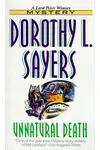
- Unnatural Death (1927) — A doctor's suspicion about the death of a wealthy elderly patient leads Wimsey into a web of inheritance fraud and murder.
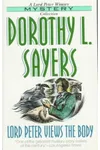
- Lord Peter Views the Body (1928) — The first collection of short stories, showcasing Wimsey's diverse talents across shorter puzzles.
- The Unpleasantness at the Bellona Club (1928) — Set against the backdrop of post-war trauma, Wimsey investigates the death of an elderly veteran who died in his armchair at a London club.
- Strong Poison (1930) — The pivotal novel introducing Harriet Vane, charged with poisoning her bohemian partner. Wimsey falls in love and rushes to find the real killer.
- Five Red Herrings (1931) — A classic village mystery set in Scotland, where Wimsey must determine which of six local artists murdered a disliked painter.
- Have His Carcase (1932) — Harriet Vane finds a throat-cut corpse on a coastal rock, prompting her and Wimsey to team up to decode a complex conspiracy.
- Hangman's Holiday (1933) — A short story collection featuring several Lord Peter tales alongside stories introducing Sayers' other detective, Montague Egg.
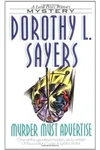
- Murder Must Advertise (1933) — Wimsey goes undercover as an advertising copywriter to investigate a suspicious death, drawing directly on Sayers' real-life advertising career.
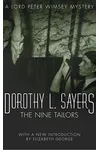
- The Nine Tailors (1934) — Often considered Sayers' masterpiece, this atmospheric mystery combines campanology (bell-ringing) lore and a drainage-system flood in rural East Anglia.
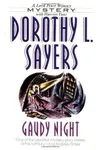
- Gaudy Night (1935) — Harriet Vane takes center stage at her Oxford college reunion to investigate a series of malicious pranks and threats, with Wimsey acting in a supporting role.
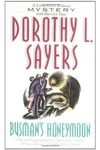
- Busman's Honeymoon (1937) — Subtitled "A Love Story with Detective Interruptions," this novel follows Peter and Harriet's marriage, which is instantly disrupted by a dead body in the cellar of their new country home.
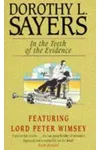
- In the Teeth of the Evidence (1939) — The third short story collection featuring Wimsey alongside other standalone mystery tales.
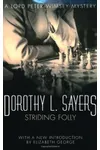
- Striding Folly (1973) — A posthumously published collection containing the final short stories featuring Wimsey, including his reflections during the onset of World War II.
The Continuations: Jill Paton Walsh Era
After Dorothy L. Sayers died in 1957, the Wimsey estate remained inactive for decades until the discovery of an unfinished manuscript. The estate commissioned award-winning novelist Jill Paton Walsh to complete the manuscript and write new adventures. These books should be read immediately following the original Sayers run:
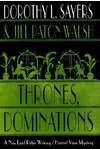
- Thrones, Dominations (1998) — Begun by Sayers in 1936 but left abandoned in a safe, Walsh completed this novel, which explores the early, adjusting months of Peter and Harriet's marriage amid the abdication crisis of King Edward VIII.
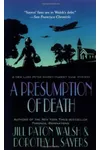
- A Presumption of Death (2002) — Set during World War II, this novel is based on the "Wimsey Papers" (letters published in The Spectator by Sayers during the war), depicting Harriet and her children navigating life on the home front while Peter is away on a secret government mission.
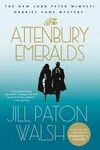
- The Attenbury Emeralds (2010) — This novel details Lord Peter's very first case—the recovery of the legendary Attenbury Emeralds—which was frequently mentioned but never fully detailed in the original Sayers novels, alongside a modern mystery that revisits the case decades later.
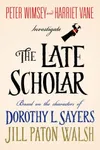
- The Late Scholar (2013) — Set in 1953, Lord Peter has inherited the title of Duke of Denver and is asked to solve a series of murders at an Oxford college, bringing the academic setting of Gaudy Night full circle.
Publication Order vs. Chronological Order
For the novels, publication order and chronological order are virtually identical. The timeline of Lord Peter's life moves forward from the 1920s to the 1950s. The only minor complication comes from the short story collections. Individual stories in collections like Lord Peter Views the Body or Hangman's Holiday are set at various points in Wimsey's early career. Some purists try to slot these stories individually between the novels. However, doing so offers little benefit and disrupts the narrative flow of the main novels. The consensus among Golden Age mystery enthusiasts is to read the novels in publication order and enjoy the short stories as pleasant side-trips between the novels.
Essential Companions and Recurring Characters
One of the reasons the Wimsey books stand out from typical Golden Age mysteries is the depth of the supporting cast. Understanding these relationships enhances the reading experience:
- Mervyn Bunter — Lord Peter's valet and sergeant during World War I. Bunter is instrumental in Wimsey's recovery from severe shellshock (PTSD). He is far more than a servant; he is a skilled photographer, investigator, and confidant.
- Inspector Charles Parker — A hardworking Scotland Yard detective who represents the methodical side of police work compared to Wimsey's intuitive genius. The two share a close friendship, which eventually becomes family when Parker marries Wimsey's sister, Lady Mary.
- Harriet Vane — A highly independent, Oxford-educated writer of detective novels. Her relationship with Wimsey is a core pillar of the series, shifting from rescue to mutual respect, collaboration, and eventually, marriage.
What to Know Before You Start
The Lord Peter Wimsey books are celebrated for their literary allusions, social commentary, and witty prose. Sayers was one of the first female graduates of Oxford, and her intellectual background shines through the series, particularly in Gaudy Night. Readers should be prepared for a slower pace than modern thrillers; the novels focus heavily on character studies, societal changes in interwar Britain, and the psychological trauma of World War I. While each mystery is solved by the end of its respective book, the personal lives of the characters carry over continuously, making sequential reading highly rewarding.