
Where to Start with Philip Marlowe
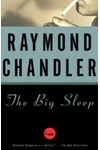
For anyone looking to walk the rain-slicked, neon-lit streets of mid-century Los Angeles, the best place to start is at the very beginning with The Big Sleep (1939). It is Raymond Chandler's debut novel and the definitive introduction to Philip Marlowe: a cynical, Chess-playing, poetry-quoting private investigator who operates under a strict, if weary, personal moral code.
While every core Marlowe novel functions perfectly as a standalone mystery, reading them in order allows you to experience Marlowe's slow aging, his growing disillusionment with the changing landscape of California, and the evolution of Chandler's legendary, metaphor-heavy prose style.
The Original Raymond Chandler Novels in Publication Order
Between 1939 and 1958, Raymond Chandler wrote seven completed novels featuring Philip Marlowe. These books established the hardboiled detective archetype that would influence crime fiction for decades.
- The Big Sleep (1939): Marlowe is hired by the wealthy, ailing General Sternwood to deal with a blackmailer targeting his wild younger daughter, only to find himself entangled in murder, pornography, and family secrets.
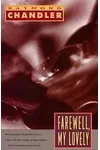
- Farewell, My Lovely (1940): Often considered one of Chandler's finest, this story begins with Marlowe looking for a missing woman on behalf of an ex-con named Moose Malloy, leading him into a web of corruption spanning from the seedy underbelly of LA to elite high society.
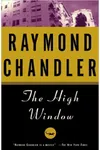
- The High Window (1942): A quieter, more introspective case where Marlowe is hired by a wealthy, domineering widow to retrieve a rare, stolen coin, the Brasher Doubloon, uncovering a history of blackmail and domestic terror.
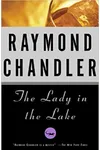
- The Lady in the Lake (1943): Moving away from the smoggy city to the mountain resort of Little Fawn Lake, Marlowe is hired to locate the missing wife of a wealthy businessman, only to discover a decomposing body in the water.
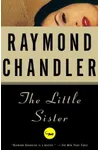
- The Little Sister (1949): Drawn from Chandler's bitter experiences working in Hollywood, this novel follows Marlowe as he helps a quiet girl from Kansas find her missing brother, plunging him into the fake, transactional world of movie stars and blackmail.
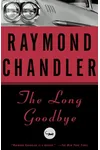
- The Long Goodbye (1953): Chandler's most ambitious and literary work. Marlowe befriends a scarred war veteran named Terry Lennox. When Lennox is accused of murdering his wealthy wife and flees the country, Marlowe refuses to let the case go, leading to a sprawling study of friendship, betrayal, and institutional corruption. It won the Edgar Award for Best Novel in 1955.
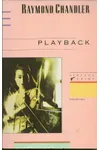
- Playback (1958): The final novel completed by Chandler before his death. Set in the coastal town of Esmeralda (a fictionalized La Jolla), Marlowe is hired by a lawyer to tail a mysterious woman getting off a train, resulting in a shorter, more melancholic mystery.
The Authorized Continuations and Reimagined Mysteries
Following Raymond Chandler's death in 1959, his estate and various publishers authorized several prominent crime writers to continue Philip Marlowe's legacy. These books are set in different eras, ranging from direct sequels to modern updates.
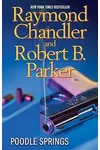
- Poodle Springs (1989) by Raymond Chandler and Robert B. Parker: Chandler left behind only four chapters of this novel at the time of his death. The estate commissioned Robert B. Parker (creator of the Spenser detective series) to complete the book, which follows a newly married Marlowe navigating the wealthy, desert enclave of Palm Springs.
- Perchance to Dream (1991) by Robert B. Parker: An authorized sequel written entirely by Parker that picks up right after the events of The Big Sleep, sending Marlowe to a private sanatorium to investigate what happened to Vivian Regan and Carmen Sternwood.
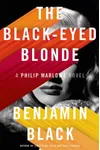
- The Black-Eyed Blonde (2014) by Benjamin Black: Written by Booker Prize-winning author John Banville under his crime-writing pen name. Set in the early 1950s, this novel captures Chandler's style as Marlowe takes on a case for a beautiful, wealthy heiress searching for her missing former lover.
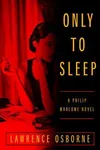
- Only to Sleep (2018) by Lawrence Osborne: A unique entry that fast-forwards to 1988. An elderly, 72-year-old Philip Marlowe is living in retirement in Baja California, Mexico, spending his days drinking at a local hotel until he is drawn into investigating the suspicious death of a wealthy American developer.
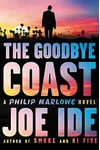
- The Goodbye Coast (2022) by Joe Ide: A complete, modern-day reimagining of the character. Set in contemporary Los Angeles, this version of Marlowe deals with cell phones, modern celebrity culture, and the challenges of the present-day city, offering a sharp stylistic departure from the classic mid-century noir.
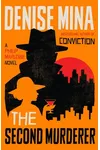
- The Second Murderer (2023) by Denise Mina: Written by the acclaimed Scottish crime novelist, this is the first authorized Philip Marlowe novel written by a woman. Set during a 1940s LA heatwave, it follows Marlowe as he searches for a missing heiress, navigating everything from Beverly Hills mansions to the dive bars of Skid Row.
Raymond Chandler's Short Stories and the "Cannibalization" Process
Before Philip Marlowe became a household name, Raymond Chandler spent the 1930s writing short fiction for pulp magazines like Black Mask and Dime Detective. His early stories featured a rotating cast of tough, cynical investigators named Mallory, Carmady, John Dalmas, or Ted Malvern. These characters served as prototypes for what would eventually become the definitive Philip Marlowe.
When compiling his stories for later collections, most notably in The Simple Art of Murder (1950), Chandler edited several of these early stories to change the protagonist's name to Philip Marlowe. Furthermore, Chandler frequently used a process he called "cannibalizing"—taking plots, scenes, and character dynamics from his short stories and expanding them into his full-length novels. For example, his short stories "Killer in the Rain" and "The Curtain" were merged and heavily reworked to form the foundation of his first novel, The Big Sleep.
What to Know Before You Start
Readers diving into Philip Marlowe should prepare for a slow-burning, character-focused experience. Chandler famously cared more about atmosphere, dialogue, and character than he did about tight, logical plotting. In fact, during the filming of the 1946 film adaptation of The Big Sleep, the screenwriters reportedly contacted Chandler to ask who killed the chauffeur, Owen Taylor—only for Chandler to admit he had no idea himself.
If you prefer a highly structured puzzle mystery where every clue fits perfectly together, Marlowe's cases might frustrate you. However, if you want to soak in the atmosphere of a moody, mid-century California, appreciate razor-sharp dialogue, and watch a principled man try to stay decent in a world that has largely given up on decency, the Philip Marlowe series remains the absolute gold standard of hardboiled detective fiction.