


How to Read the Phule’s Company Series
If you are looking for a lighthearted, comedic space opera that reads like a mix of M*A*S*H, F-Troop, and classic science fiction, then Robert Asprin’s Phule’s Company is the perfect series for you. The series centers around Captain Willard J. Phule, a multimillionaire heir to an arms manufacturing fortune who finds himself court-martialed by the Space Legion. Instead of being completely discharged, he is exiled to lead the Omega Company—a dumping ground for the military's most chaotic, unmanageable, and bizarre rejects on a remote mining planet. Rather than enforcing strict discipline, Phule uses his business acumen, immense wealth, and unconventional leadership style to turn this group of misfits into an incredibly effective, loyal, and highly productive fighting force.
Because the story builds chronologically on character arcs, promotions, and ongoing relationships, you should read this series in its original publication order. Fortunately, the publication order and the chronological order are identical, making it easy for readers to follow the Omega Mob's journey from their initial deployment to their wildest galaxy-spanning escapades.
The Official Chronological & Publication Order
Here is the recommended reading path for the entire six-novel run of the series:
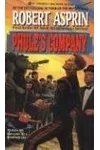
- Phule’s Company (1990) – The book that starts it all. Willard Phule is court-martialed after accidentally strafing a peace treaty ceremony. Exiled to Haskin's Planet to command the legendary Space Legion rejects, he immediately starts using his checkbook and corporate management skills to win the crew over.
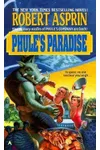
- Phule’s Paradise (1992) – Now that the Omega Company is showing signs of teamwork, they are reassigned to guard the Space Legion's premier casino, the Phule's Paradise, located in a high-stakes environment where alien syndicates and corporate rivals threaten their operation.
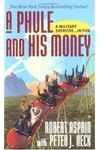
- A Phule and His Money (1999) – The first book co-authored with Peter J. Heck. Willard and the crew head to a combat zone that doubles as an amusement park, attempting to manage a peacekeeping mission while keeping their chaotic tendencies in check. Note: While some library catalogs and online databases list a projected publication date of 1993, the book was actually released in 1999.
- Phule Me Twice (2000) – The Omega Company takes on a training role, but things go sideways when Willard Phule gets caught up in planetary politics and has to deal with a double who is attempting to ruin his reputation.
- No Phule Like an Old Phule (2004) – With the threat of alien hostilities looming, Phule and his crew are dispatched to a planet where they must negotiate, defend, and somehow turn potential combatants into business partners.
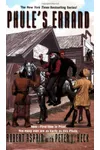
- Phule’s Errand (2006) – The final book in the series. When Phule's long-suffering and dry-witted butler, Beeker, goes missing on a mysterious mission of his own, Willard and the crew go on a wild chase across the galaxy to bring him back.
The Transition from Solo Writing to Co-Authorship
The creation of the Phule’s Company series went through a significant shift during its run. Robert Asprin wrote the first two novels, Phule’s Company (1990) and Phule’s Paradise (1992), entirely by himself. Following the massive success of these books, a long hiatus occurred. During this time, Asprin partnered with writer Peter J. Heck to continue the series.
Starting with A Phule and His Money in 1999, Peter J. Heck stepped in as co-author, bringing fresh comedic timing and helping Asprin manage the writing process until the series wrapped up with Phule’s Errand in 2006. The tone remained light and character-driven, though fans often notice a shift toward more episodic, situational humor in the later collaborations.
What to Know Before You Start
Before you dive into the misadventures of the Omega Company, keep these key details in mind to maximize your enjoyment:
- Point of View: Rather than being told from Captain Willard Phule’s perspective, the stories are narrated by his butler, Beeker. This narrative choice provides a dry, sarcastic, and highly amusing commentary on Phule’s bizarre schemes and the chaotic antics of the recruits.
- Tone and Style: The series relies heavily on puns (evident in the titles), situational military comedy, and corporate management parodies. It focuses more on interpersonal dynamics, logistics, and clever problem-solving than on gritty military space battles.
- No Spin-offs or Short Stories: Unlike Asprin’s famous Thieves' World shared anthologies or the extensive tie-ins found in other major sci-fi universes, the Phule’s Company franchise consists solely of these six main novels. There are no side novellas or short stories to track down.
- Readability: The books are fast-paced, highly readable, and work best when read in order, as they chart the transformation of characters like the pugnacious Super-Gnat, the massive warthog-like alien Tusk-anini, and the master chef Escrima.