







The Recommended Reading Order
Lauren Willig’s Pink Carnation series is a delightful mix of historical romance and Napoleonic-era espionage, tied together by a modern-day framing story. To get the absolute best experience, you should follow the author's recommended order. This sequence merges the 12 full-length novels with three official companion novellas and short stories, keeping the character arcs and the modern-day framing plot in perfect alignment.
Here is the recommended reading path for the Pink Carnation series:
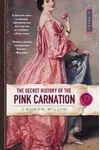
- The Secret History of the Pink Carnation (2005) – Set in Spring 1803. This is the essential starting point where we meet modern historian Eloise Kelly and travel back to meet Amy Balcourt and the Purple Gentian in Paris.
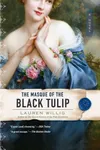
- The Masque of the Black Tulip (2005) – Set in Spring/Summer 1803. Henrietta Selwick and Miles Dorrington search for the mysterious French spy known as the Black Tulip.
- The Deception of the Emerald Ring (2006) – Set in Summer 1803. Letty Alsworthy and Lord Geoffreys wind up in Ireland amidst a rebellion plot.
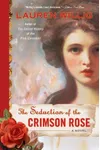
- The Seduction of the Crimson Rose (2008) – Set in Autumn 1803. The focus shifts to the cynical Mary Alsworthy and the enigmatic Lord Vaughn.
- Ivy and Intrigue: A Very Selwick Christmas (Novella, 2008) – Set during Christmas 1803. A holiday check-in with Richard Selwick and Amy Balcourt.
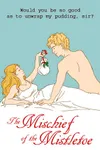
- The Mischief of the Mistletoe (2010) – Set in Winter 1803. A Christmas romance featuring Jane Austen, Turnip Fitzhugh, and Arabella Dempsey. Note: Although published seventh, reading it here preserves the historical timeline.
- Away in a Manger: A Very Turnip Wedding Night (Short Story, 2011) – Set in Early 1804. A bonus piece picking up immediately after the events of The Mischief of the Mistletoe.
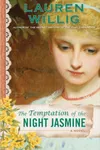
- The Temptation of the Night Jasmine (2009) – Set in Winter 1803/Spring 1804. Follows Robert, the Duke of Greycliffe, and Charlotte Lansdowne.
- Bunny & Biscuits: A Very Dorrington Valentine’s Day (Short Story, 2012) – Set in February 1804. A sweet, romantic bonus look at Henrietta and Miles’s first Valentine's Day.
- The Betrayal of the Blood Lily (2010) – Set in Autumn 1804. Penelope Deveraux and Captain Alex Reid travel to India amidst colonial conspiracies.
- The Orchid Affair (2011) – Set in Spring 1804. Laura Grey goes undercover as a governess in Paris, interacting with the league.
- The Garden Intrigue (2012) – Set in Summer 1804. Secret agent Augustus Whittlesey poses as a terrible poet in a French chateau.
- The Passion of the Purple Plumeria (2013) – Set in Spring 1805. Jane Wooliston (the Pink Carnation herself) and Colonel William Reid lead a rescue mission.
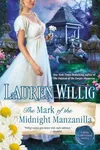
- The Mark of the Midnight Manzanilla (2014) – Set in Autumn 1806. Follows Sally Fitzhugh and the brooding, vampire-rumored Duke of Olympia in Yorkshire.
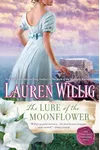
- The Lure of the Moonflower (2015) – Set in Winter 1807/1808. The epic conclusion of the series, featuring the Pink Carnation and Jane's final mission in Portugal.
Understanding the Timeline Divergence
If you look closely at the list above, you will notice that the publication years and the internal chronology don't perfectly align. The biggest divergence happens right after book four, The Seduction of the Crimson Rose. Lauren Willig published The Temptation of the Night Jasmine in 2009, but then hit what she calls a "fork in the road." She wanted to write two separate books that occur roughly concurrently: one set in India, and one returning to Paris.
Instead of trying to publish them simultaneously, Willig wrote the India-based book first—The Betrayal of the Blood Lily—which takes place in the autumn of 1804. She then doubled back to write the French-based book, The Orchid Affair, which takes place earlier, in the spring of 1804. Similarly, the holiday novel The Mischief of the Mistletoe was published in 2010 but is set in winter 1803, making it flow much better when read earlier in the sequence.
While you could try to read strictly by historical dates, doing so ruins the flow of the modern-day framing story. Eloise and Colin’s contemporary romance and research progresses in a straight line that parallels the recommended reading order. Stick to the list above to avoid spoilers and preserve the emotional beats of the framing narrative.
The Role of the Modern Framing Story
Unlike standard historical romances, the Pink Carnation books feature a dual-timeline structure. In the modern era, Eloise Kelly is an American graduate student in London searching for the identity of the Pink Carnation—the most elusive of England's Napoleonic-era spies. As she uncovers old letters and journals, she learns about the historical couples, while also dealing with her own slow-burn romance with Colin Selwick, a descendant of the historical family.
The modern timeline is not just fluff; it acts as the connective tissue of the series. Every mystery solved by Eloise in the present day directly relates to the historical secrets revealed in the text. This is why reading the books out of order can be jarring; even if a historical romance feels self-contained, the modern-day storyline builds progressively from one book to the next, culminating in a major resolution in The Lure of the Moonflower.
Standalone Status and Spin-offs
Can these books be read as standalones? Yes and no. Each historical timeline resolves its primary romance and main spy subplot by the final page, meaning you can technically pick up any book and enjoy the central love story. However, characters frequently drop in and out of other books, and the overarching war against the French spy network—including the hunt for the Black Tulip and the Emerald Ring conspiracy—spans multiple volumes.
Furthermore, Lauren Willig has not written any official spin-offs or sequels since the series concluded in 2015. While she has co-authored several popular historical novels with Karen White and Beatriz Williams under the collective name "Team W" (such as The Glass Ocean and All the Ways We Say Goodbye), these works are completely separate and do not connect to the Pink Carnation universe. If you are looking for extra Pink Carnation content, the author's official website hosts the "Pink Zone," which features free PDF outtakes and short bonus scenes.