
The Recommended Reading Path: Follow the Calendar
If you are planning to dive into Harry Kemelman’s classic mysteries, the best way to read them is in publication order. While each mystery is technically a standalone case, the characters age, the congregation’s politics shift, and Rabbi Small's career moves through distinct phases—from a young rabbi constantly defending his pulpit to an academic and eventually a retiree. Reading them in sequence allows you to appreciate the natural evolution of the community in Barnard's Crossing and the changing landscape of American Jewish life from the mid-1960s to the late 1990s.
The Rabbi Small Books in Order
Here is the complete sequence of Rabbi Small's adventures, including the day-of-the-week mysteries and the unique dialogue-based companion volume:
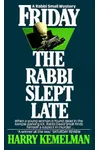
1. Friday the Rabbi Slept Late (1964)
The book that started it all and won the 1965 Edgar Award for Best First Novel. When a nanny is found dead on the grounds of the newly built Temple Shalom, the community's finger points directly at their intellectual, uncompromising new rabbi. To clear his name, Rabbi Small teams up with the local Irish-Catholic Police Chief, Paul Lanigan, using Talmudic logic to solve the crime.
2. Saturday the Rabbi Went Hungry (1966)
Set during the solemn holiday of Yom Kippur, a prominent member of the congregation dies under suspicious circumstances. Because the death might be a suicide—which would prevent the deceased from being buried in the Jewish cemetery—Rabbi Small must determine the truth before the community collapses into gossip and grief.
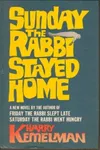
3. Sunday the Rabbi Stayed Home (1969)
This installment reflects the turbulent late 1960s, touching on race relations, youth counterculture, drug abuse, and generational divides. Rabbi Small finds himself defending the younger members of his congregation while solving a murder linked to a local drug ring.
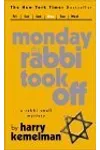
4. Monday the Rabbi Took Off (1972)
Feeling burnt out by endless board meetings and congregational squabbles, Rabbi Small takes a leave of absence and travels to Israel. However, peace is short-lived when his host's son is implicated in a political bombing, forcing the rabbi to bring his deductive skills to the Middle East.
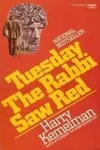
5. Tuesday the Rabbi Saw Red (1973)
Back in Massachusetts, Rabbi Small takes a part-time teaching job at Windemere Christian College. When a bomb blast kills a professor, the rabbi uses his unique reasoning to navigate the campus protests and identify the killer among the faculty and student body.
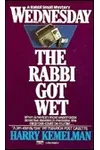
6. Wednesday the Rabbi Got Wet (1976)
A battle over a new pharmacy in Barnard’s Crossing heats up, exposing deep local corruption. When a patient dies after taking a mislabeled prescription, Rabbi Small must figure out if it was a tragic accident or a calculated murder.
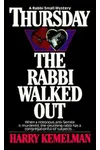
7. Thursday the Rabbi Walked Out (1978)
Frustrated by a faction of the synagogue board that wants a more conformist, less intellectual leader, Rabbi Small finally resigns. Before he can plan his next move, a local anti-Semitic millionaire is murdered, and the rabbi must help his old friend Chief Lanigan crack the case.
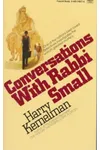
8. Conversations with Rabbi Small (1981)
This is a major departure for the series. It features no murder mystery and no crime to solve. Instead, it is an educational dialogue novel set during Rabbi Small's vacation in the mountains. He mentors a young Christian woman engaged to a secular Jewish professor, explaining the core tenets, history, and cultural practices of Conservative Judaism. While not a mystery, it offers deep insight into the character's worldview.
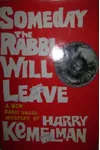
9. Someday the Rabbi Will Leave (1985)
The mystery elements return as a corrupt local politician attempts to influence the temple's board of directors. Rabbi Small must protect the integrity of his synagogue while untangling a web of political corruption and murder.
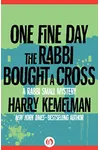
10. One Fine Day the Rabbi Bought a Cross (1987)
Rabbi Small returns to Israel for a vacation, only to find himself embroiled in a conspiracy involving religious extremists. The purchase of a cross—normally an unusual item for a rabbi—becomes a key clue in a complex web of international intrigue.
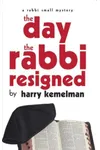
11. The Day the Rabbi Resigned (1992)
After decades of fighting with his congregation’s board of directors, Rabbi Small decides he has had enough and officially retires from the pulpit. He transitions to teaching Jewish studies at a local university, but his retirement is immediately interrupted by a suspicious car accident.
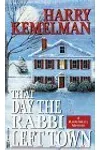
12. That Day the Rabbi Left Town (1996)
The final book in the series. Now working full-time as an academic, Rabbi Small must solve the murder of a colleague. Assisted by a young police officer who was one of his former students, this novel serves as a bittersweet farewell to one of fiction’s most unusual detectives.
What to Know Before You Start
Harry Kemelman originally wrote a straight novel about suburban temple-building, but when editors rejected it, he repackaged the cultural themes into a murder mystery. The result is a series where the mystery often takes a backseat to discussions of theology, ethics, and community politics. You do not need a background in Jewish law to enjoy these books; Kemelman designed them to explain Jewish traditions and the principles of Talmudic reasoning (pilpul) to a mainstream audience in an accessible, engaging way.
The TV Adaptation: Lanigan's Rabbi
The popularity of the novels led to a television adaptation titled Lanigan's Rabbi. It aired on NBC as a 90-minute pilot in 1976, followed by a brief, four-episode run in early 1977 as part of the NBC Sunday Mystery Movie rotation. Art Carney starred as Chief Paul Lanigan, while Bruce Solomon played Rabbi David Small in the weekly series (succeeding Stuart Margolin, who played the rabbi in the pilot).