



How to Read the Raj Whitehall Series: The Recommended Path
If you are planning to dive into this military science fiction masterpiece, the best way to read the series is in its original publication order. Because the narrative progresses chronologically across the galaxy, following the publication order ensures you witness the evolution of the overarching plot, the development of the sentient computer Center, and the galactic plan to build a Second Federation of Man.
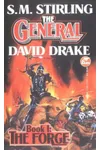
You should begin your journey with The Forge (1991), which introduces the core conflict, the planet Bellevue, and the partnership between Raj Whitehall and Center. Reading the books out of order is not recommended, as the later arcs rely heavily on the rules of the universe and the technological progression established in the early novels.
The Core Bellevue Arc (Books 1–5)
The first five novels form the heart of the series, detailing Raj Whitehall's campaigns to unify the planet Bellevue. These books were co-authored by David Drake (who created the outlines based on historical campaigns) and S.M. Stirling (who wrote the narrative).
- The Forge (1991): Introduces Raj Whitehall, a young officer of the Civil Government on the planet Bellevue. He discovers Center, a highly advanced artificial intelligence from the fallen Federation, which tasks Raj with uniting the planet to prevent a 15,000-year galactic dark age.
- The Hammer (1992): Raj Whitehall continues his campaign to unify Bellevue, dealing with both barbarian invaders and treacherous domestic political rivals who fear his rising power.
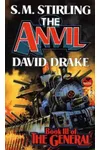
- The Anvil (1993): The war expands as Raj leads his forces against the Squadron, a rival faction that controls crucial industrial territories.
- The Steel (1993): Raj faces the Brigade, testing his tactical brilliance and the technological advancements introduced by Center against a formidable military force.
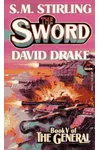
- The Sword (1995): The dramatic conclusion to the Bellevue campaign. Raj must secure total victory while surviving the paranoia of his own overlord, Barholm Clerett.
The Interstellar Missions and Follow-on Arcs (Books 6–10)
After the resolution of the Bellevue campaign, the series expands its scope. The consciousness of Raj Whitehall is downloaded into Center, and their combined entity is sent via interstellar probes to other human-inhabited worlds that have regressed to primitive states. In these follow-on novels, Raj and Center act as mentors, guiding new protagonists to unite their respective worlds.
The Visager Arc
- The Chosen (1996): Co-authored with S.M. Stirling. Set on the planet Visager, this novel follows two characters, John Hosten and Jeffrey Farr, as they try to unite the planet's free nations to stop a racist, expansionist empire known as "the Chosen" from conquering the world and eventually taking their hate to the stars.
The Hafardine Arc
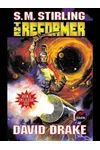
- The Reformer (1999): Co-authored with S.M. Stirling. Set on the planet Hafardine, the story introduces Adrian Gellert, a philosopher, and his soldier brother Esmond, who discover the relic containing Raj and Center. Together, they begin the long task of uniting their world.
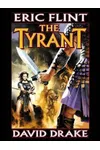
- The Tyrant (2002): Co-authored with Eric Flint. This book continues the campaign on Hafardine, following Adrian and Esmond Gellert as they face complex political and military conflicts to secure the planet's future.
The Duisberg Arc
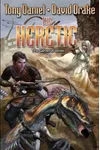
- The Heretic (2013): Co-authored with Tony Daniel. Set on the planet Duisberg, where a dogmatic computer system named Zentrum has outlawed advanced technology, treating scientific progress as heresy. A young officer named Abel Dashian receives the minds of Raj and Center to challenge Zentrum's rule.
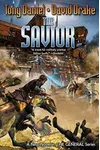
- The Savior (2014): Co-authored with Tony Daniel. The final volume of the Duisberg campaign. Abel Dashian must defeat Zentrum and unite the planet to prepare for an impending asteroid impact, setting Duisberg on the path to join the Second Federation.
Omnibus Editions: A Practical Way to Collect the Books
If you prefer to collect the physical novels or read them in larger volumes, Baen Books has compiled the series into several omnibus editions over the years.
The Classic Omnibuses
- Warlord (2003): Contains the first two Bellevue books, The Forge and The Hammer.
- Conqueror (2003): Collects the remaining three Bellevue books, The Anvil, The Steel, and The Sword.
The "Hope" Omnibus Series
Baen later re-released the series in a matching set of four omnibus volumes:
- Hope Reborn (2013): Contains The Forge and The Hammer.
- Hope Rearmed (2014): Contains The Anvil and The Steel.
- Hope Renewed (2014): Contains The Sword and The Chosen.
- Hope Reformed (2014): Contains The Reformer and The Tyrant.
Note that the final two books in the series, The Heretic and The Savior, have not been collected into a standard omnibus edition and must be purchased as standalone novels.
What to Know Before You Start
The General series is heavily inspired by real history. David Drake based the outlines of Raj Whitehall's campaigns on the conquests of the legendary Byzantine general Belisarius, who fought to reclaim the Western Roman Empire. The series combines historical tactics, neo-feudal societies (complete with dog-mounted cavalry and black powder weapons), and high-concept science fiction.
Readers who enjoy this series should also check out the Belisarius series, co-authored by David Drake and Eric Flint, starting with An Oblique Approach. While set in a different fictional universe (6th-century Earth with alternate history elements), it shares a similar premise, tone, and strategic focus, acting as a spiritual sibling to the Raj Whitehall books.