
How to Read the Raymond Donne Mystery Series
The Raymond Donne Mystery series, created by New York City schoolteacher Tim O’Mara, follows the investigations of Raymond "Ray" Donne. Once a promising NYPD detective, a severe knee injury forced Ray off the force. Instead of retiring from public service, he transitioned to the classroom, becoming a middle school special education teacher. However, his old police instincts are constantly put to the test when his students, colleagues, or former associates find themselves in the crosshairs of crime in Williamsburg, Brooklyn.
Because the series follows Ray’s personal evolution, his relationships, and the shifting landscape of Brooklyn, the recommended reading order is the straightforward publication order. There are no prequels or timeline jumps, meaning the chronological order aligns perfectly with the order of release.
Raymond Donne Mystery Books in Order
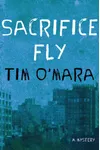
- Sacrifice Fly (2012) – The debut novel introduces readers to Ray Donne, who is trying to settle into his life as a middle school teacher. When one of his students goes missing and a dead body is discovered, Ray is drawn back into the world of detective work. (Nominated for the 2013 Barry Award for Best First Novel)
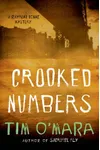
- Crooked Numbers (2013) – A former student of Ray’s is found stabbed under the Williamsburg Bridge. While the police write it off as routine gang violence, Ray’s intimate knowledge of the neighborhood leads him to investigate deeper, uncovering a complex web of local crime.
- Dead Red (2015) – The stakes get deeply personal when Ray’s childhood friend and fellow former cop, Ricky Torres, is gunned down right next to him. Ray is knocked unconscious during the ambush and wakes up determined to find the killers, which forces him to team up with his old police nemesis.
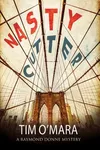
- Nasty Cutter (2016/2017) – When a prominent Williamsburg philanthropist and family friend is murdered at a local event, Ray tries to let the NYPD handle it. But after his childhood home is burglarized and his students are threatened, he is forced to intervene to protect his community.
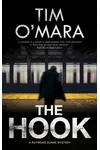
- The Hook (2020) – A colleague teaching a hydroponics program at Ray’s school is found murdered with a bow and arrow on the school roof. Ray must navigate complicated police dynamics and investigate the victim’s secret ties to a white nationalist group.
What to Know Before You Start
Before diving into the books, here are a few key details that define the series' tone, setting, and style:
- The Williamsburg Setting: Williamsburg, Brooklyn, serves as more than just a backdrop. Author Tim O’Mara portrays the neighborhood as a living, breathing character, highlighting the tension between long-term working-class families, local gang elements, and the influx of bohemian artists and gentrification.
- A Compassionate Protagonist: Unlike traditional hard-boiled detectives, Ray Donne is driven by empathy. His background as a special education teacher informs how he interacts with witnesses and suspects, bringing a unique level of patience, humanity, and emotional intelligence to his investigations.
- Realistic Dialogue: Drawing on his thirty-plus years as a New York City public school educator, O’Mara writes sharp, authentic dialogue that captures the genuine voices of Brooklyn students, cops, and neighborhood residents.
Spin-Offs, Novellas, and Companion Works
Readers looking to explore more of Tim O’Mara’s work will find several novellas and short stories, though it is important to note that they do not feature Raymond Donne:
- The Aggie Novellas: Tim O’Mara co-authored three crime anthology collections with authors Ross Klavan and Charles Salzberg. O'Mara's contributions to these books form a trilogy centered on "Aggie," a smuggler who runs bootleg cigarettes, coffee, and maple syrup, only to stumble into major criminal operations. These novellas are:
- "Smoked" – featured in Triple Shot (2016)
- "Jammed" – featured in Three Strikes (2018)
- "Beaned" – featured in Third Degree (2020)
- Short Stories: O’Mara also contributed the short story "The Tip" to the gun-free crime anthology Unloaded: Crime Writers Writing Without Guns (2016).