

The Recommended Reading Order for Rebecca Schwartz
If you want to follow Rebecca’s career from a young, green-haired attorney playing piano in a bordello to a seasoned defense attorney handling high-profile cases, the best way to read the series is in publication order. Because the books are episodic, you can read them as standalones, but reading in order allows you to appreciate the subtle development of Rebecca's relationships, career, and personal growth.
Rebecca Schwartz Books in Publication Order
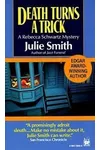
- Death Turns a Trick (1982)
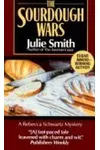
- The Sourdough Wars (1984)
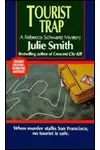
- Tourist Trap (1986)
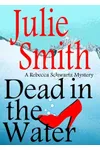
- Dead in the Water (1991)
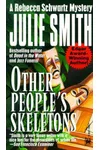
- Other People's Skeletons (1993)
The Companion Short Stories
Alongside the five core novels, Julie Smith penned two short stories featuring Rebecca Schwartz. While published in collections later on, they fit neatly alongside her novel-length cases:
- Blood Types (Originally published in 1989 in the Sisters in Crime anthology; collected in Mean Rooms in 2014)
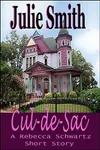
- Cul-de-Sac (First collected in Mean Rooms in 2014)
Chronological Order vs. Publication Order
Because the novels were written and published in chronological sequence, the publication order is identical to the chronological order for the main novels. The only minor deviation involves the short stories:
- Chronological placement of "Blood Types": Since "Blood Types" was first published in 1989, it chronologically fits between the third novel, Tourist Trap (1986), and the fourth novel, Dead in the Water (1991). Reading it here gives you a taste of Rebecca in her prime late-80s era.
- Chronological placement of "Cul-de-Sac": This short story is best read after finishing the final novel, Other People's Skeletons (1993), as a fun bonus adventure.
The Rebecca Schwartz Universe: Book-by-Book Breakdown
1. Death Turns a Trick (1982)
This is where the adventure begins. Rebecca Schwartz is a feminist Jewish lawyer in San Francisco who is a bit of an amateur sleuth on the side. When she finds herself playing piano at a local feminist bordello, a police raid turns her life upside down. To make matters worse, she helps a near-naked state senator escape undetected, and a student working part-time as a prostitute is found dead in Rebecca's own apartment. When her boyfriend becomes the prime suspect, Rebecca has to dive headfirst into the city's underbelly to clear his name, facing down blackmailers, angry pimps, and a killer who is now stalking her.
2. The Sourdough Wars (1984)
San Francisco's culinary heritage takes center stage in this second installment. When Peter Martinelli, the handsome heir to a famous family bakery, decides to auction off the legendary family sourdough starter (a frozen lump of dough that contains the secret to their famous sourdough), the city's bakers go wild. Rebecca gets dragged into the bidding war when she agrees to represent her glamorous law partner, Chris Nicholson, who is also Peter's romantic partner. When the rivalry turns deadly, Rebecca must navigate family secrets, corporate greed, and intense local feuds to find a killer who is willing to commit murder for a loaf of bread.
3. Tourist Trap (1986)
An Easter morning sunrise service turns horrific when a body is found nailed to a landmark cross. A serial killer calling himself "the Trapper" begins targeting San Francisco's lucrative tourism industry, following the initial murder with a mass food-poisoning incident involving shellfish at Pier 39. When the police lock up an innocent suspect, Rebecca steps up to defend them. To crack the case, she goes undercover, using unorthodox and hilarious tactics—such as spraying herself with Thunderbird wine to blend in with street witnesses—to find the real killer before the city's tourism is completely destroyed.
4. Dead in the Water (1991)
Leaving the foggy streets of San Francisco behind, Rebecca heads down to Monterey for a relaxing weekend with her friend, Marty Whitehead. The vacation is cut short when they discover a dead body floating inside a 30-foot-tall kelp tank at the Monterey Aquarium. When Marty is arrested for the murder of her boss, Rebecca must act as her defense attorney. She is forced to untangle a web of lies told by aquarium staffers, track down rumors of a hidden pearl, and manage her own growing attraction to a handsome marine biologist named Julio Soto, all while trying to keep him from becoming the killer's next target.
5. Other People's Skeletons (1993)
The stakes get highly personal in the final novel of the series. When Jason McKendrick, a local art critic, is murdered, Rebecca's best friend and law partner, Chris Nicholson, becomes the prime suspect. To Rebecca's dismay, Chris refuses to provide an alibi, leaving her with no choice but to dig into Chris's private life. As Rebecca uncovers the hidden secrets and "skeletons" of her closest friend, she is forced to question how well she really knows the people around her, building to a dramatic and emotional conclusion to the main novel series.
6. Blood Types (2014 / Originally 1989)
This short story offers a quick, bite-sized mystery. Originally published in Marilyn Wallace's 1989 anthology Sisters in Crime, it highlights Rebecca's classic legal wit and San Francisco charm as she handles a tricky situation. It was later collected in Julie Smith's 2014 collection Mean Rooms.
7. Cul-de-Sac (2014)
In this short story, Rebecca Schwartz helps a friend move into a new house, only to discover the friend's roommate digging what looks suspiciously like a grave in the backyard. While the story maintains Rebecca's usual humor, it takes a slightly darker tone than the novels, making it a great, fast-paced addition to the series.
What to Know Before You Start
The Rebecca Schwartz series is a pioneer of the feminist cozy mystery genre. Written by Julie Smith, a former reporter for the San Francisco Chronicle, the books are deeply rooted in the actual culture, atmosphere, and geography of San Francisco in the 1980s and early 1990s. Rebecca is not a super-sleuth; she is a relatable, funny, and sometimes chaotic young woman who is fiercely independent and challenges the male-dominated legal system of her time.
If you enjoy this series, you might also want to check out Julie Smith’s other works. She won the prestigious Edgar Award in 1991 for her novel New Orleans Mourning, which launched her police procedural series featuring New Orleans detective Skip Langdon. While the two series do not cross over directly, they share Smith’s sharp eye for detail and strong female leads.