

The Red Dwarf Book Universe: A Divergent Reading Order
If you have ever wanted to embark on a space odyssey that combines high-concept sci-fi themes with the chaotic energy of a British pub brawl, the Red Dwarf novels are your ticket. Written by the creators of the hit television sitcom, Rob Grant and Doug Naylor, these books offer a richer, darker, and often more coherent narrative than their small-screen counterpart. But reading them isn't quite as straightforward as counting from one to four.
Because the authors dissolved their writing partnership midway through the series, the book continuity splits into two separate, mutually exclusive timelines. Here is how to navigate this unique literary cosmos, make sense of the parallel sequels, and decide where to start your journey.
The Shared Foundation: The Collaborative Novels
No matter which path you choose to take, your journey through deep space must begin with the first two novels. These were co-authored by Rob Grant and Doug Naylor under the joint pseudonym "Grant Naylor."
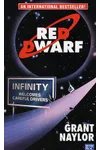
- Infinity Welcomes Careful Drivers (1989): The starting point. This novel establishes the core universe, introducing Dave Lister—the lazy, curry-loving technician who wakes up from stasis three million years in the future to find himself the last human alive. He is joined by Arnold Rimmer (a neurotic hologram of his deceased bunkmate), Cat (a vain creature evolved from Lister's pregnant cat), and later, Kryten (a guilt-ridden service mechanoid). The book explores Lister's isolation and the dystopian backdrop of the Space Corps with far more depth and grit than the television pilot.
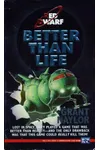
- Better Than Life (1990): The direct sequel. The crew becomes trapped in an addictive, total-immersion virtual reality game where their deepest desires come to life—which, given their neurotic psyches, quickly turns into a nightmare. It ends on a dramatic cliffhanger that sets up the major split in the series.
The Great Split: The Parallel Sequels ("Altquels")
After the publication of Better Than Life, Grant and Naylor ended their collaborative writing partnership. However, both authors wanted to resolve the cliffhanger and write a third book. Instead of working together, they each wrote their own individual sequel. These two books are completely independent of one another and represent two alternate universes. Fans refer to them as "altquels."
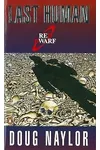
- Last Human (1995) – Written by Doug Naylor: Naylor's solo continuation takes the crew in a more dramatic, sci-fi-oriented direction. It features alternate dimensions, a more serious tone, and complex plots involving genetic engineering, the crew's encounters with their alternate selves, and a search for Lister's lost son. It feels closer to the science-fiction world-building seen in the later seasons of the television show.
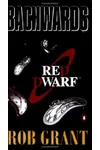
- Backwards (1996) – Written by Rob Grant: Grant's solo effort focuses heavily on comedy and high-concept absurdity. It resolves the cliffhanger by landing the crew on a planet where time runs backward—a premise taken from the TV series but expanded to its logical, hilarious, and sometimes disgusting limits. This book is generally favored by readers who prefer the rapid-fire British wit and slapstick humor of the early seasons.
Recommended Reading Pathways
Because of the parallel sequels, there are three primary ways to read the main Red Dwarf series:
Path A: The Comedy-First Route (Recommended)
For readers who prioritize the classic humor and comedic pacing of the original partnership, this path follows the collaborative books directly into Rob Grant's comedy-heavy sequel.
- Infinity Welcomes Careful Drivers (1989)
- Better Than Life (1990)
- Backwards (1996)
Path B: The Sci-Fi Drama Route
If you prefer a story that leans more into hard sci-fi, complex plot threads, and character development, follow Doug Naylor's sequel instead.
- Infinity Welcomes Careful Drivers (1989)
- Better Than Life (1990)
- Last Human (1995)
Path C: The Completionist Route
If you want to experience everything the Red Dwarf literary universe has to offer, you can read both sequels. Simply treat them as parallel timelines or alternate dimensions—a concept that is highly thematic for Red Dwarf anyway.
- Infinity Welcomes Careful Drivers (1989)
- Better Than Life (1990)
- Last Human (1995)
- Backwards (1996) (or swap the order of the last two)
Companion Books, Scripts, and Collectibles
Beyond the core four novels, there are several companion volumes, script books, and rare promotional releases that complete the Red Dwarf library:
- Red Dwarf Omnibus (1992): A combined edition featuring the first two novels, Infinity Welcomes Careful Drivers and Better Than Life. It also includes the original, unbroadcast television pilot script for the first episode, "The End."
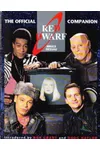
- The Official Red Dwarf Companion (1992): Written by comedy journalist Bruce Dessau, this is an illustrated guide focusing on the making of the first five television series. It features behind-the-scenes interviews, character profiles, and production details, though fans have noted a few minor factual inaccuracies in its pages.
- Primordial Soup (1993) & Son of Soup (1996): These are official script collections compiling the "least worst" scripts from the television series, complete with deleted scenes and author commentary.
- Scenes From The Dwarf (1996): A tiny, pocket-sized promotional book published as part of the "Penguin 60s" anniversary series. It contains select script extracts and is now considered a highly sought-after collector's item due to its limited print run.
- Red Dwarf Programme Guide: Written by Chris Howarth and Steve Lyons, this detailed reference guide was updated through multiple editions in the 1990s and early 2000s, serving as a comprehensive directory of the show's lore.
What to Know Before You Start
The Red Dwarf books are not simple novelizations of the TV show. While they borrow plot elements, characters, and jokes from the sitcom, the books stand alone as a distinct work of fiction. They paint a much grittier, darker, and more detailed picture of the dystopian 22nd-century solar system. Lister's isolation is felt more acutely, Rimmer's tragic neuroses are explored in greater depth, and the science fiction concepts are taken more seriously. You do not need to have watched a single episode of the show to enjoy the books—in fact, many readers argue that the novels are the definitive version of the Red Dwarf story.