


Where to Start with Richard Browning
If you are ready to dive into the smoky, star-studded world of Richard Browning, the best path forward is to follow his adventures in chronological order. Framed as a series of rediscovered audio memoirs recorded onto 99 cassette tapes and transcribed by Peter Corris—the celebrated "godfather of Australian crime fiction"—the series reads best when you watch Browning grow from a post-World War I army deserter into a cynical, sharp-tongued private investigator. Starting with Box Office Browning allows you to experience his origin story before he gets fully tangled up in the glitz and grit of Tinseltown.
Richard Browning Reading Order
To follow Richard Browning's timeline from the aftermath of the First World War through to the post-World War II era, we recommend reading the books in this chronological order:
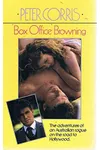
- Box Office Browning (1987) – The series opener introduces us to Richard Browning, a six-foot-tall Australian who finds his ambitions of entering the film industry disrupted by World War I. After escaping a bad marriage and wandering the globe, he lands jobs as a chauffeur for Rudyard Kipling, joins the Canadian Mounties, and eventually works with Howard Hughes on the movie Hell's Angels.
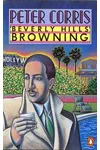
- Beverly Hills Browning (1987) – Browning officially takes on the American film capital. Making a chaotic detour through Mexico, he ends up in Beverly Hills, navigating a dangerous web of bootleggers, anarchists, and starlets, even crossing paths with Hollywood icon Douglas Fairbanks.
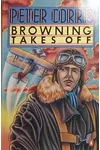
- Browning Takes Off (1989) – Browning's adventures continue as he flees a forced stint in the Royal Canadian Mounted Police via the Yukon and Chicago. He teams up with Bluey Tait to learn to fly, but his past threatens to catch up with him just as his Hollywood career seems secure.
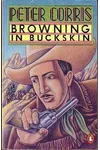
- Browning in Buckskin (1991) – Set during the Great Depression, a down-on-his-luck Browning uses his charm and striking looks to survive in Southern California, leading to a memorable encounter with the legendary Australian-born actor Errol Flynn.
- Browning P.I. (1992) – Transitioning into detective work in 1944 Los Angeles, Browning is hired to track down a missing screenwriter, Hart Sallust. This case drags him into the Chinese underworld and features a classic cameo by noir legend Raymond Chandler.
- Browning Battles On (1993) – The stakes rise as Browning finds himself staring down the barrel of an executioner's rifle, forcing him to rely on his wits to survive another high-octane international escapade.
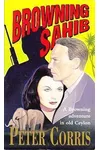
- Browning Sahib (1994) – Browning travels to London and gets caught up in the dramatic affairs of his old drinking companion, the actor Peter Finch, whose obsession with actress Vivien Leigh sparks a series of brawls and close calls.
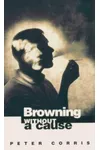
- Browning Without a Cause (1995) – The final entry wraps up Browning’s long saga, bringing his Hollywood connections, old rivalries, and detective exploits to a fittingly hard-boiled conclusion.
Publication Order and Database Discrepancies
While the chronological reading order aligns perfectly with the author's narrative design, readers looking up these books online may find minor conflicts in publication dates. For example, some bibliographic databases and local listings swap the order of the first two releases, listing Beverly Hills Browning as the first book (1987) and Box Office Browning as a later 1989 release. Historically, both of the initial volumes debuted in 1987, but because Box Office Browning serves as the essential origin story, it should always be read first.
What to Know Before You Start
Before you embark on Richard Browning's memoirs, here are a few structural and stylistic elements to keep in mind:
- The Flashman Influence: Corris heavily based the structure of the Browning series on George Macdonald Fraser’s famous Flashman Papers. Like Flashman, Browning is a roguish, morally grey anti-hero whose adventures are framed as retrospective memoirs filled with real-world historical footnotes.
- Historical Cameos: A major charm of the series is how Browning interacts with real historical figures. Keep an eye out for appearances by Howard Hughes, Somerset Maugham, Douglas Fairbanks, Errol Flynn, Raymond Chandler, Peter Finch, and Vivien Leigh.
- Dual Settings: The series brilliantly contrasts the gritty, working-class streets of mid-century Sydney with the sun-drenched, corrupt, and glamorous avenues of Southern California.
- Standalone vs. Serialized: While each book presents a self-contained mystery or adventure, the overarching evolution of Browning's life and his transition from film hopeful to private eye makes reading them in order highly rewarding.