

The Recommended Reading Path
For the best experience, readers should follow the series in its publication order. Because the narrative timeline of Richard Hannay's life moves forward in lockstep with the release of the books, reading in publication order is also the chronological order. This trajectory takes you from the tense pre-war days of 1914 through the harrowing trials of World War I, and into the geopolitical shifts of the 1920s and 1930s. Starting here ensures you see the organic growth of Hannay's career, his changing personal relationships, and the development of recurring characters like Sandy Arbuthnot and Archie Roylance.
Publication and Chronological Order of the Core Novels
The core series written by John Buchan consists of five novels focusing directly on the adventures of Richard Hannay. These core books should be read in this sequence:
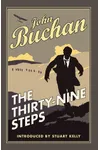
- The Thirty-Nine Steps (1915) - Introduces Richard Hannay as a bored mining engineer in London who is suddenly framed for murder and thrust into a high-stakes German espionage plot on the eve of World War I.
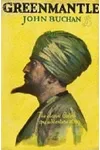
- Greenmantle (1916) - Set during the war, this novel sends Hannay undercover across war-torn Europe and into the Middle East to foil a German-led plot to spark a holy war. Here, he is joined by key allies Sandy Arbuthnot and John S. Blenkiron.
- Mr. Standfast (1919) - A gripping espionage thriller set during the latter stages of the war. Hannay works to dismantle a dangerous spy ring in Great Britain, operating under various disguises and eventually serving on the Western Front. This book marks the first appearance of pilot Archie Roylance.
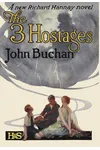
- The Three Hostages (1924) - Moving into the post-war era, this novel follows Hannay as he seeks a peaceful retirement, only to be dragged back into action to solve a complex kidnapping ring involving post-war trauma and hypnosis.
- The Island of Sheep (1936) - The final adventure, also published in the United States under the alternative title The Man from the Norlands. A mature Hannay must protect the son of an old friend from his mining days in South Africa, honoring a long-standing oath on a remote northern island.
Wider Shared Universe and Crossover Books
John Buchan constructed a remarkably unified literary universe in which his characters frequently crossed paths, visited the same London clubs, and shared mutual acquaintances. To fully appreciate the scope of Hannay's world, readers can explore these connected works:
The Sandy Arbuthnot and Archie Roylance Connections
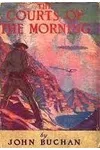
- The Courts of the Morning (1929) - While often grouped with the Hannay series, Hannay himself only narrates the prologue. He introduces the mystery of their mutual friend John S. Blenkiron's disappearance in South America and tries to recruit Sandy Arbuthnot (Lord Clanroyden) to help. The rest of the book shifts focus entirely to Sandy and the newly married Archie and Janet Roylance, who lead a revolution in a fictional South American state.
- John Macnab (1925) - A crossover novel that features Edward Leithen, Archie Roylance, and other Buchan figures who engage in a sporting challenge to poach game from Scottish estates. Hannay does not appear directly, but the book develops Archie's character and his romance with Janet Raden.
The Runagates Club (1928)
This collection of short stories is structured around a fictional London dining club where Buchan's main protagonists gather to swap tales of adventure. It contains the only short story featuring Richard Hannay, titled "The Green Wildebeest". This story is a prequel of sorts, narrated by Hannay about a supernatural encounter in his younger years as a mining engineer in South Africa, long before the events of The Thirty-Nine Steps. The collection also features stories told by Edward Leithen and Sandy Arbuthnot, acting as the ultimate intersection of the Buchan universe.
Sir Edward Leithen and Dickson McCunn Series
If you enjoy the style of the Hannay books, you can read Buchan's other series, which share the same world but operate under different tones:
- The Edward Leithen Books - Follows a distinguished barrister and politician who handles legalistic, psychological, and high-society mysteries, starting with The Power-House (1916) and ending with Sick Heart River (1941, published as Mountain Meadow in the US).
- The Dickson McCunn Trilogy - Follows a retired Glasgow grocer who is swept into romantic adventure and intrigue, beginning with Huntingtower (1922) and concluding with The House of the Four Winds (1935). Archie Roylance appears as a supporting character in this trilogy.
What to Know Before You Start
Before diving into John Buchan's thrillers, there are a few important points of context that will enhance your reading experience. First, Buchan referred to these fast-paced adventure novels as "shockers"—a popular term of the era for sensation novels and romance-thrillers designed for pure entertainment. They are characterized by coincidences, narrow escapes, and breakneck pacing.
Second, the historical context of the First World War is heavily woven into the narrative. The first three novels are deeply patriotic and reflect the real-time tensions, propaganda, and fears of the British Empire during the conflict. Finally, modern readers should be aware that the text contains outdated racial and social stereotypes characteristic of early 20th-century British imperial attitudes, though Hannay himself frequently displays a high level of respect for his adversaries' courage and intelligence.
Practical Reading Guidance and Standalone Feasibility
While the books are linked chronologically, The Thirty-Nine Steps and Greenmantle function perfectly as standalone novels. However, reading Mr. Standfast without having read the previous two will spoil major plot points and weaken the emotional impact of the wartime character arcs. The post-war novels, The Three Hostages and The Island of Sheep, can be read independently, but the relationships between Hannay, Sandy, and Archie are much richer if you have followed their journeys from the beginning. We recommend starting with The Thirty-Nine Steps, progressing through the core five novels, and then dipping into The Runagates Club and The Courts of the Morning to round out your experience of the universe.