
The Recommended Reading Order: The Path of the Acoma
When it comes to Riftwar: The World On The Other Side (universally known to fantasy fans as The Empire Trilogy), there is no complex puzzle to solve regarding chronological versus publication order. The narrative flows in a straight line, following the life, struggles, and political triumphs of Mara of the Acoma. To experience the story as intended, you should read the trilogy in its original publication order:
- Daughter of the Empire (1987) – Mara's journey begins when she is pulled from a religious order on the eve of her vows to take command of her dying house.
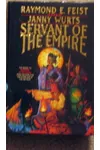
- Servant of the Empire (1990) – Now a seasoned player in the Game of the Council, Mara must expand her influence, navigate forbidden romance, and deal with the arrival of a strange slave from another world.
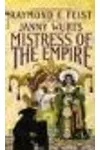
- Mistress of the Empire (1992) – The epic conclusion where Mara faces her ultimate adversaries, including the mysterious Assembly of Magicians (the Black Robes), to secure a lasting peace.
Where Should You Start? Midkemia or Kelewan?
One of the most common debates among fantasy readers is whether you need to tackle Raymond E. Feist's massive, multi-series Riftwar Cycle before starting this trilogy. The short answer is: No, you do not.
Because the Empire Trilogy is co-authored by Janny Wurts, it possesses a completely distinct narrative style, a more focused political tone, and a self-contained plot that wraps up beautifully by the end of the third book. You can pick up Daughter of the Empire having never read a single page of Feist's other works and still fully comprehend the story, the culture, and the stakes.
However, if you want the absolute richest experience, the recommended approach is to read Feist's classic debut novel, Magician (often split into Magician: Apprentice and Magician: Master in US editions), before diving into Mara's story. The events of the Empire Trilogy occur concurrently with the Riftwar depicted in Magician. Reading Magician first gives you a grand, bird's-eye view of the interdimensional war from the side of the invaders (Midkemia), which makes Mara's struggles to survive the political fallout on the home front (Kelewan) feel even more poignant.
The Core Trilogy: A Book-by-Book Breakdown
Daughter of the Empire (1987)
We meet Mara at her lowest point. At just seventeen, she is poised to dedicate her life to the goddess Lashima when she receives devastating news: her father and brother have been killed in a military trap set by the rival Minwanabi family during the campaign on Midkemia. As the last surviving heir of the Acoma, she must abandon the temple, take the mantle of Ruling Lady, and prevent her house's total annihilation. Wurts and Feist establish a tense, claustrophobic atmosphere of constant threat. Mara cannot rely on physical force; instead, she must outthink assassins, negotiate a treaty with the insectoid Cho-ja, and make a shocking marriage alliance to survive.
Servant of the Empire (1990)
Having stabilized the Acoma, Mara is now a powerful force in the Game of the Council. This second installment raises the stakes by introducing Kevin of Zun, a Midkemian warrior captured during the Riftwar and sold to the Acoma as a slave. Through Kevin, Mara learns of a world beyond the rigid, honor-bound constraints of Tsuranuanni society—one where concepts of love, equality, and compassion exist. As Mara struggles with her growing feelings for Kevin, she must also navigate the treacherous political maneuvering of the Imperial court, culminating in a dramatic bid to alter the succession of the Empire itself.
Mistress of the Empire (1992)
The final volume shifts the conflict from the houses of the nobility to the true rulers of Kelewan: the Assembly of Magicians. The Great Ones (or Black Robes) are above Tsurani law, answering to no one and maintaining their grip on power through terror. Recognizing Mara as a threat to their centuries-old dominance, they initiate a shadow war to eliminate her. To defeat an enemy that commands the forces of magic, Mara must forge alliances outside of traditional Tsurani structures, seeking help from the ancient, non-human races of Kelewan and unraveling the secret history of the planet.
Midkemia vs. Kelewan: Understanding the Riftwar Connection
To fully appreciate how the Empire Trilogy fits into the broader Riftwar Cycle, it is helpful to look at how the two main settings contrast. Feist's solo novels focus heavily on Midkemia, a world resembling traditional European high fantasy filled with castles, elves, dwarves, and knights. The magic is flashy, and the narrative centers on grand quests and epic battles between good and evil.
Kelewan, the setting of the Empire Trilogy, is entirely different. Influenced by M.A.R. Barker's Tékumel setting, Kelewan is a world highly scarce in metals. Wood, hides, and lacquer are used for armor, and the culture is heavily inspired by feudal East Asian societies, emphasizing absolute obedience, ancestral honor, and ritual suicide (shur). Political intrigue takes center stage, making it read more like a precursor to modern political fantasy like Game of Thrones rather than standard high fantasy.
Crucially, the protagonist of Magician, Pug (known on Kelewan as the Great One Milamber), crosses paths with Mara. His rebellion against the Tsurani status quo and his ultimate destruction of the arena in Magician serve as pivotal background events that directly impact the political chess board Mara is playing on in Servant of the Empire and Mistress of the Empire.
What to Know Before You Start
Here are a few quick tips and thematic elements to keep in mind before you turn the first page of Daughter of the Empire:
- The Game of the Council: In Tsuranuanni culture, political warfare is a formalized game. Assassination, spying, and manipulation are entirely legal, provided they are done according to strict rules of honor and etiquette. Every word spoken has double meanings, and a single social faux pas can result in execution.
- The Absence of Metal: Because Kelewan is almost entirely devoid of metals, weapons and armor are crafted from treated hide and wood. This material scarcity shapes their entire economy, warfare, and trade systems.
- The Cho-ja: A prominent alien element in the series, the Cho-ja are intelligent, hive-minded insectoids who share Kelewan with the Tsurani. Understanding their treaties and securing their mining rights is key to Mara's survival.
- A True Collaboration: Unlike some collaborative books where one author writes a draft and another edits, Feist and Wurts worked closely together. Feist provided the deep lore of Kelewan and the Riftwar timeline, while Wurts focused heavily on the intricate political scheming, the psychological depth of Mara, and the rich, descriptive prose.