








The Recommended Reading Path
When diving into the adventures of Roger Brook, Dennis Wheatley’s premier historical secret agent, there is only one logical way to proceed: in order of publication. Unlike many long-running series where publication dates and in-universe chronology diverge, the Roger Brook series progresses linearly. Reading the books chronologically aligns perfectly with the order in which they were written, allowing you to follow Roger's development from a naive fifteen-year-old schoolboy into a battle-hardened master spy operating at the highest levels of European power.
We highly recommend starting with the very first book, The Launching of Roger Brook, and reading through to the final volume, Desperate Measures. Reading them out of order is not recommended; Wheatley frequently references past exploits, character relationships evolve continuously, and the backdrop of the French Revolution and the rise and fall of Napoleon Bonaparte serves as a rigid historical framework that dictates the flow of the narrative.
The Complete Roger Brook Reading Order
Below is the complete sequence of the Roger Brook novels. Each entry includes its publication year, the specific historical timeframe covered by the plot, and the key events that shape Roger's mission:
- 1. The Launching of Roger Brook (1947)
Period Covered: July 1783 – November 1787
The adventure begins with a teenage Roger Brook being sent to school in France. He quickly becomes embroiled in French foreign policy, meets future historical figures, and is recruited as a secret agent for British Prime Minister William Pitt the Younger. - 2. The Shadow of Tyburn Tree (1948)
Period Covered: November 1787 – April 1789
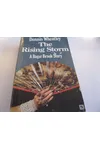
Roger's espionage activities expand as he is dispatched on a perilous mission to Russia, navigating the court of Catherine the Great while facing lethal political conspiracies and complicated romances. - 3. The Rising Storm (1949)
Period Covered: April 1789 – July 1790
Set during the initial eruption of the French Revolution, Roger is caught up in the chaotic fall of the Bastille and the shifting alliances of a nation in revolt. - 4. The Man Who Killed the King (1951)
Period Covered: June 1792 – August 1794
In one of the most acclaimed entries, Roger returns to Paris during the height of the Reign of Terror. He attempts to rescue the French Royal Family from the Temple prison and witnesses the dramatic downfall of Robespierre. - 5. The Dark Secret of Josephine (1955)
Period Covered: August 1794 – April 1796
Roger crosses paths with the charming Rose de Beauharnais before she marries a rising young general named Napoleon Bonaparte, setting the stage for Roger’s double life. - 6. The Rape of Venice (1959)
Period Covered: June 1796 – December 1797
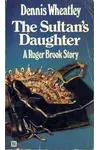
Sent to the Republic of Venice, Roger watches Napoleon's brilliant Italian Campaign reshape the map of Europe while trying to secure vital intelligence for England. - 7. The Sultan's Daughter (1963)
Period Covered: February 1798 – December 1799
Roger follows Napoleon's ambitious military expedition to Egypt and the Levant, navigating Ottoman intrigue, captivity, and desert warfare. - 8. The Wanton Princess (1966)
Period Covered: January 1800 – November 1805
Roger infiltrates the French imperial court, becoming intimately involved with Napoleon's sister, Pauline Bonaparte, while tracking the Emperor's plans to invade Britain. - 9. Evil in a Mask (1969)
Period Covered: February 1807 – September 1809
Taking Roger far from Europe, this book follows his exploits in the Iberian Peninsula during the early years of the Peninsular War and his journey to South America, including Brazil. - 10. The Ravishing of Lady Mary Ware (1971)
Period Covered: September 1809 – January 1813
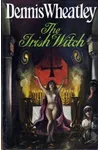
Roger is swept up in Napoleon's disastrous invasion of Russia, enduring the grueling retreat from Moscow and fighting for survival amidst the frozen wastes. - 11. The Irish Witch (1973)
Period Covered: 1812 – 1814
This late-series entry introduces Dennis Wheatley’s trademark occult themes into the historical narrative. Roger deals with satanic cults and political plotting in Ireland and England during the War of 1812. - 12. Desperate Measures (1974)
Period Covered: 1814 – 1815
The grand finale brings Roger Brook’s career to a close during Napoleon’s exile to Elba, his return during the Hundred Days, and the climactic Battle of Waterloo.
Chronological Gaps and Timeline Nuances
While the series follows a linear historical path, Wheatley did not document every single year of Roger’s career. The most notable chronological gap occurs between The Rising Storm (ending in July 1790) and The Man Who Killed the King (beginning in June 1792). This two-year period is skipped entirely in the narrative, leaving Roger's activities during the early, transitional phase of the French legislative assembly unrecorded. A smaller gap of about fifteen months also occurs between the end of The Wanton Princess (November 1805) and the start of Evil in a Mask (February 1807), skipping over the Battle of Jena and the immediate aftermath of Austerlitz.
Readers should also note that The Irish Witch and The Ravishing of Lady Mary Ware have a slight chronological overlap, with the former beginning in 1812 while the latter concludes in early 1813. However, reading them in publication order remains the most satisfying approach to maintaining narrative continuity.
What to Know Before You Start
Dennis Wheatley referred to his approach to historical fiction as "history without tears." His goal was to provide readers with an accurate, highly detailed education on the political and military maneuvers of the Napoleonic era under the guise of an exciting espionage thriller. Because of this, modern readers should expect long, descriptive passages detailing troop movements, treaty terms, and political alignments alongside the action sequences.
Furthermore, the books reflect the mid-20th-century sensibilities of their author. Written between 1947 and 1974, the novels feature elements that modern audiences may find dated, including romantic relationships that rely on older tropes of seduction and occasionally caricatured portrayals of European nationalities. Additionally, purists of historical fiction may be surprised by the sudden integration of occult and satanic plotlines in The Irish Witch, which aligns with Wheatley's secondary fame as a writer of black magic thrillers.
Spin-offs and Connections to Other Series
Although Dennis Wheatley created several iconic protagonists—most notably the modern occult investigator Duke de Richleau and the World War II spy Gregory Sallust—there are no official crossovers between these universes. Roger Brook’s adventures remain strictly self-contained within his 12-novel Napoleonic sequence. No official spin-offs or co-authored additions exist, and the series was never adapted into films or television programs, though unabridged audiobooks have been produced and remain available through digital library platforms.