
The Recommended Reading Order
To fully appreciate the evolution of the Rogue Warrior series, the recommended path is to read the books in publication order. Because the fictional novels directly build upon the legendary real-world military career detailed in the opening autobiography, jumping straight into publication order ensures you follow the chronological character development of the fictionalized "Demo Dick" Marcinko as he operates in the post-Cold War landscape.
The Core Rogue Warrior Series in Publication Order
The series consists of one autobiography and sixteen fictional action thrillers that follow a fictionalized version of Marcinko. Below is the complete listing of the main series:
- Rogue Warrior (1992)
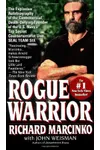
The groundbreaking #1 New York Times bestseller that started it all. This autobiography details Richard Marcinko's real-life experiences in Vietnam, his founding of the elite SEAL Team Six, and his command of the counterterrorism unit Red Cell. A crucial starting point that establishes the tone, vocabulary, and background of the entire saga.
- Red Cell (1994)
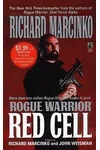
The first fictional novel. In this story, the fictionalized Dick Marcinko is tasked with stopping nuclear materials from being smuggled out of a chaotic post-Soviet landscape into North Korea. Co-authored by John Weisman.
- Green Team (1995)
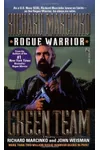
Marcinko tackles a complex global conspiracy involving high-level treason, religious fanatics, and domestic terror threats. This book dives deeper into the tactical coordination of Navy SEAL operations.
- Task Force Blue (1996)
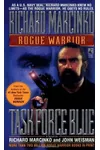
Dick Marcinko and his handpicked commandos go head-to-head with violent right-wing domestic militias plotting a massive attack on American soil.
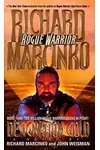
- Designation Gold (1997)
Marcinko's godson is killed, leading the Rogue Warrior on a personal vendetta that uncovers a conspiracy involving rogue Russian nuclear weapons and international syndicates.
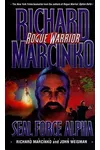
- Seal Force Alpha (1998)
Sent to the South China Sea, Marcinko must counter a growing threat from Chinese military forces using high-tech electronic warfare and unconventional tactics.
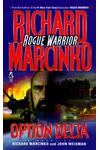
- Option Delta (1998)
Set in Germany, Marcinko and his team investigate a neo-Nazi movement plotting to destabilize the European economy by seizing control of critical energy infrastructure.
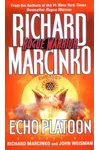
- Echo Platoon (2000)
Marcinko goes under the Caspian Sea to protect oil pipelines and counter an Iranian-backed scheme targeting global oil reserves.
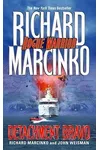
- Detachment Bravo (2001)
The final collaboration with John Weisman. Marcinko is sent to the United Kingdom to coordinate with the SAS and counter a deadly Irish Republican Army splinter group threat.
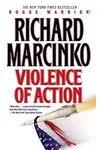
- Violence of Action (2002)
Co-authored with Greg Walker, this transition novel sees Marcinko dealing with a nuclear threat involving rogue elements in the Middle East and domestic security vulnerabilities.
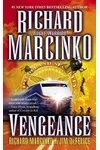
- Vengeance (2005)
The first book co-authored by Jim DeFelice. Marcinko must track down a terrorist mastermind who has systematically targeted and executed active-duty SEALs and their families.
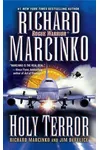
- Holy Terror (2006)
Marcinko faces off against a global network of religious extremists operating in the heart of Rome, threatening the Vatican and international stability.
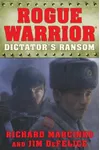
- Dictator's Ransom (2008)
The Rogue Warrior is hired for a covert mission to recover stolen nuclear materials in North Korea, navigating a web of dictator politics and military blockades.
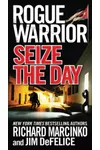
- Seize the Day (2009)
Marcinko goes on a high-stakes mission to protect a tech billionaire's daughter and prevent a catastrophic cyberwarfare system from being unleashed.
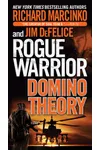
- Domino Theory (2011)
Set during the preparation for the Olympics in India, Marcinko must dismantle a terrorist network aiming to ignite a nuclear war between regional superpowers.
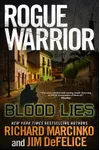
- Blood Lies (2012)
Marcinko goes rogue to clear his name and investigate a deep-state conspiracy stretching from Mexico to the highest levels of the Pentagon.
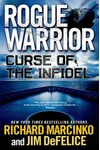
- Curse of the Infidel (2014)
The final novel in the series. Marcinko is brought out of semi-retirement to face an asymmetric threat combining cyber-terrorism, financial warfare, and radical ideologies.
Chronological Continuity & Evolution of the Series
While the series maintains a loose chronological progression, it is split into three distinct eras defined by Marcinko's writing collaborators, each bringing a slightly different flavor to the high-intensity military action:
The John Weisman Era (Books 1–9)
Co-written by John Weisman, these early novels are highly detailed in terms of weapon specs, bureaucratic red tape, and military procedure. They directly mirror the geopolitical landscape of the 1990s, focusing on the immediate aftermath of the Soviet Union's collapse and the rise of rogue nations.
The Greg Walker Interlude (Book 10)
Violence of Action stands as the only entry co-authored by Greg Walker. This book acts as a bridge between the detailed procedural feel of the 90s entries and the faster, action-movie style of the later books.
The Jim DeFelice Era (Books 11–17)
Starting with Vengeance, thriller veteran Jim DeFelice (known for co-authoring American Sniper) took over as co-writer. These entries feature a faster pace, higher cinematic stakes, more modern cyber threats, and a focus on global counterterrorism operations in a post-9/11 world.
Beyond the Novels: Non-Fiction Leadership & Companion Books
Richard Marcinko also leveraged his "Rogue Warrior" persona to author several non-fiction leadership and management books. While these are not part of the narrative series, they offer fascinating insights into the mindset that inspired the books:
- Leadership Secrets of the Rogue Warrior: A Commando's Guide to Success (1996): Translates Marcinko’s "Ten Commandments of Special Warfare" into strategies for corporate management and career growth.
- The Rogue Warrior's Strategy for Success: A Commando's Principles of Winning (1997): A follow-up manual detailing aggressive strategies for handling business challenges.
- The Real Team (1999): Profiles real-life commandos and discusses the principles of team-building and operational success.
Additionally, the series was adapted into a 2009 third-person shooter video game titled Rogue Warrior, featuring actor Mickey Rourke voicing the digital version of Dick Marcinko.
What to Know Before You Start
The Rogue Warrior books are not standard military procedurals. They are written in a highly stylized, brash, and profanity-laced first-person perspective. The protagonist, Dick Marcinko, is unapologetically aggressive, fiercely loyal to his men, and completely contemptuous of desk-bound military bureaucrats (whom he calls "piss-ants" and "desk-commandos"). Readers should expect plenty of military jargon, vulgar humor, and intense combat sequences. If you enjoy raw, politically incorrect, and action-packed thrillers, this series remains a landmark of the genre.