





How to Read the Rogue Wizard Series
Christopher Stasheff’s Rogue Wizard series is a classic blend of science fiction and fantasy that grew out of his celebrated Warlock of Gramarye universe. The series centers on Magnus D'Armand, the eldest son of the original Warlock, Rod Gallowglass. Traveling under the alias Gar Pike, Magnus roams forgotten human colonies to liberate oppressed populations using his formidable psychic abilities—which local populations mistake for magic.
While the series consists of ten books published between 1979 and 2001, readers face a slight chronological hurdle due to an early standalone novel that was later retroactively positioned as the third volume in the sequence. To experience Magnus’s journey as a cohesive story arc, we highly recommend following the chronological narrative order detailed below.
The Recommended Chronological Reading Order
For the best reading experience, you should follow the narrative chronology rather than the strict publication timeline. This allows you to witness Magnus's initial departure from his home planet, his early freelance missions, and his long-term partnership with recurring characters in their correct sequence.
- A Wizard in Absentia (1993): This is the narrative starting point where Magnus leaves his home planet of Gramarye to join the interstellar agency SCENT. Finding their bureaucratic methods too slow to address systemic tyranny, he strikes out on his own as a rogue agent.
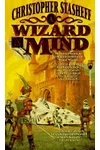
- A Wizard in Mind (1995): Magnus travels to a planet styled after the Renaissance, where he must protect the local population from exploitative offworld merchants using his psychic gifts.
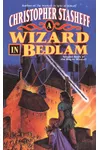
- A Wizard in Bedlam (1979): Despite being written and published first, this novel is narratively the third entry. Magnus (operating as the giant Gar Pike) lands on the planet Melange and helps a rebel leader named Dirk Dulain lead a revolution of churls and clones against despotic lords.
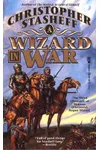
- A Wizard in War (1995): Magnus lands on the medieval planet Maltroit, orchestrating a peasant revolution against a brutal feudal regime.
- A Wizard in Peace (1996): Magnus encounters a highly puritanical, authoritarian colony ruled by a stern Protector. To bypass their tight control, Magnus gathers a group of societal misfits and young lovers to reform the government.
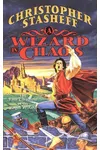
- A Wizard in Chaos (1997): On the planet Durvie, Magnus finds a colony founded by anarchists that has collapsed into decentralized feudal warfare. Alongside his sentient spaceship Herkimer, he seeks to restore order.
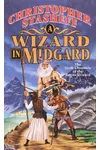
- A Wizard in Midgard (1998): Landing on Siegfried—a world modeled on Norse mythology populated by dwarfs, giants, and humans—Magnus rescues a psychic young woman named Alea.
- A Wizard and a Warlord (2000): With Alea now traveling as his companion, Magnus visits a seemingly peaceful planet with no central government, only to defend the pacifist locals from an invading warlord.
- A Wizard in the Way (2000): Magnus and Alea navigate the planet Oldeira, where rival magician-lords use elemental magic and psychic powers to enslave the peasantry.
- A Wizard in a Feud (2001): The series finale finds Magnus and Alea on a Scottish-themed colony planet. Posing as traders and healers, they work with local Druids and mystical beings to unite feuding clans under a democratic framework.
Understanding the Publication Order vs. Chronological Order
The primary point of confusion for new readers is the placement of A Wizard in Bedlam. Published in 1979 by Doubleday, it was originally conceived as a standalone science fiction novel set in Stasheff’s broader Warlock universe. Fourteen years later, Stasheff launched the formal Rogue Wizard series, writing A Wizard in Absentia (1993) as a prequel to show how Magnus became the rogue reformer seen in Bedlam. If you read the series in strict publication order, you will start with book three, jump backward to Magnus's youth in books one and two, and then resume the timeline with book four.
What to Know Before You Start
The Rogue Wizard series takes place in a universe governed by the Decentralized Democratic Tribunal (DDT), which struggles to monitor thousands of human colonies that lost contact with Earth during a historical dark age. Many of these colonies reverted to medieval, Renaissance, or mythological social structures. Magnus operates under the aegis of the Society for the Conversion of Extra-terrestrial Nascent Totalitarianisms (SCENT), though he quickly realizes that official channels cannot move fast enough to save people suffering under active tyranny.
Stasheff's background in theater and radio plays is heavily reflected in the series' quick-witted dialogue and theatrical staging. The books lean heavily into philosophical themes surrounding personal liberty, the ethics of using power (even for good), and the importance of self-governance over top-down authority.
Do You Need to Read the Warlock of Gramarye First?
No, you do not need to read the Warlock of Gramarye series before starting Rogue Wizard. While Magnus is the son of the Warlock Rod Gallowglass, his adventures are fully self-contained. The Warlock series is significantly longer and features a different, more localized fantasy tone centered on a single planet, whereas Rogue Wizard is a planet-hopping adventure. However, reading the Warlock books first will give you deeper context on Magnus's family background, his upbringing, and the origins of his psychic abilities.