
How to Read the Saga of the Iron Dragon
For readers diving into Robert Kroese's unique blend of Viking grit and hard science fiction, the journey is straightforward but highly serialized. The series spans five novels that trace a continuous narrative arc. Despite the heavy elements of time travel and temporal manipulation that occur within the plot, the books are designed to be read in their official release order.
Because the overarching story builds directly from one volume to the next, skipping ahead or attempting to read them out of order will ruin the central mystery and spoil major plot developments. Below is the recommended sequence to experience the saga as the author intended.
Saga of the Iron Dragon Publication and Recommended Reading Order
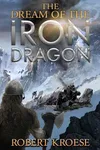
- The Dream of the Iron Dragon (2018) – The story begins as the crew of the 23rd-century exploratory ship Andrea Luhman crash-lands in 9th-century Scandinavia. They must form an alliance with Norse warriors to survive and start the generations-long process of building a spaceship using primitive technology.
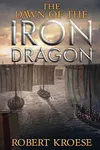
- The Dawn of the Iron Dragon (2018) – The stranded crew works to expand their secret base in Iceland and navigate medieval European politics, culminating in their involvement in defending Paris against a historical Viking siege.
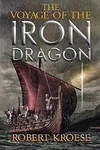
- The Voyage of the Iron Dragon (2019) – This installment focuses on the ultimate challenge of launching the newly built spacecraft into Earth's orbit while managing escalating threats from both human rivals and the alien Cho-ta'an.
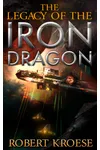
- The Legacy of the Iron Dragon (2020) – The narrative expands beyond Earth as the Norse-descended spacefarers seek alliances in a grander galactic conflict. The timeline stretches from a war-torn 23rd century to 1st-century Judea, introducing connections to Rome's Lost Ninth Legion.
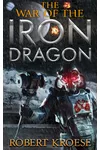
- The War of the Iron Dragon (2021) – The explosive finale brings the saga full circle as legendary historical and fictional figure Eric Bloodaxe battles across space and time to defeat the ancient alien menace once and for all.
Understanding the Premise: Vikings in Space
The core concept of the Saga of the Iron Dragon is a classic "what if" scenario scaled up to cosmic proportions. In Kroese's universe, 23rd-century humanity is on the brink of total annihilation by an aggressive alien race called the Cho-ta'an. A desperate exploratory vessel, the Andrea Luhman, miscalculates a temporal jump and is thrown 1,300 years into the past, crash-landing in Scandinavia during the Viking Age.
With only a handful of survivors and zero chance of returning to their original era, the crew realizes that their only hope for saving humanity's future is to change the past. They must introduce advanced physics, metallurgy, and engineering to medieval Norsemen, teaching them how to construct an interplanetary vessel—which the Vikings dub the "Iron Dragon." The result is a fascinating culture clash where futuristic technology meets the raw survival instincts and martial honor of Viking warriors.
Publication Order vs. Chronological Continuity
With time travel stories, readers often wonder if a chronological order exists that differs from the publication order. In the case of the Saga of the Iron Dragon, a non-linear reading order is not recommended. While the plot moves across different historical eras—ranging from the 9th-century Viking Age, to 1st-century Judea, and forward to the 23rd century—the narrative perspective follows a linear sequence of cause and effect.
The metaphysics of time travel in this universe are governed by what Kroese introduces as the LOKI principle (named after the Norse god of mischief). Under this concept, time travel does not create simple parallel universes; instead, altering history causes highly chaotic, unpredictable ripples throughout the timeline. Reading the books in any order other than publication order would disrupt your understanding of how these temporal changes ripple outward, transforming the future of the galactic war.
What to Know Before You Start
Before launching into the series, here are a few practical tips to keep in mind:
- It is a completed story: The saga wraps up completely with the fifth book, The War of the Iron Dragon, meaning you can binge-read the entire narrative without worrying about unresolved cliffhangers or waiting for future releases.
- Hard sci-fi meets historical fiction: Kroese balances imaginary space-travel mechanics with highly researched historical events, including the Siege of Paris (885 AD) and the integration of real historical figures like Eric Bloodaxe.
- No spin-offs or side stories: Unlike some sprawling science fiction franchises, the Saga of the Iron Dragon is a self-contained pentology. There are no companion novellas, short story collections, or co-authored spin-offs that you need to track down. Every piece of the story is contained within the five core novels.