
How to Start Reading the Saga of the Skolian Empire
Catherine Asaro’s Saga of the Skolian Empire (often called the Skolian Saga or the Tales of the Ruby Dynasty) is a unique masterpiece in modern science fiction. Combining Asaro's background as a Harvard-trained chemical physicist with rich character development, political intrigue, and emotional depth, it stands out for its intellectual rigor and its heart. Because the books span generations, jump backward and forward in time, and shift protagonists, choosing where to start can seem daunting. Here is the definitive guide to navigating the stars of the Ruby Dynasty.
The Best Starting Point: Primary Inversion
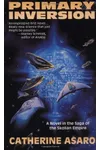
If you are a newcomer to the series, the absolute best place to start is with the first published book, Primary Inversion (1995). This novel introduces Sauscony (Soz) Valdoria, a telepathic fighter pilot and heir to the Ruby Dynasty. Through her eyes, readers are introduced to the central elements of the universe: the psiberweb (a faster-than-light telepathic internet), the neurological enhancements of the Jagernauts, and the horrifying stakes of the conflict with the Eubian Concord. Starting here gives you the perfect introduction to the tone, technology, and core dynamics of the galaxy before the timeline begins branching out.
The Two Primary Reading Paths
Readers generally divide themselves into two camps: those who prefer to read in the order the books were written, and those who want a chronological timeline. Both approaches have distinct advantages.
Option 1: Publication Order (Highly Recommended)
Reading in publication order is the safest and most satisfying path for your first read-through. This is the order in which Catherine Asaro revealed the mysteries of her universe. Spoilers are kept to a minimum, and you will gradually learn about the history of the Ruby Dynasty alongside the original fanbase.
- Primary Inversion (1995) – Introduces Sauscony Valdoria and the war against the Eubian Concord.
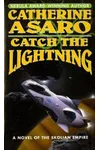
- Catch the Lightning (1996) – A generation-jump story that branches into an alternate-history Earth.
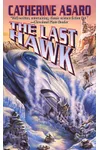
- The Last Hawk (1997) – Focuses on Kelric Valdoria, Sauscony's brother, who is stranded on a restricted, matriarchal planet.
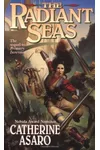
- The Radiant Seas (1998) – The massive, direct sequel to Primary Inversion that details the climax of the first Skolian War.
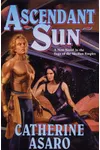
- Ascendant Sun (2000) – Continues Kelric's story as he escapes captivity and returns to find the empire in ruins.
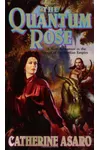
- The Quantum Rose (2000) – A Nebula Award-winning standalone romance that mirrors quantum scattering theory, set on a backwater planet.
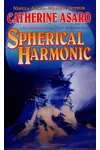
- Spherical Harmonic (2001) – Follows Dyhianna Selei as she attempts to locate her family and rebuild the psiberweb after the war.
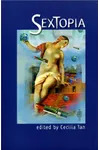
- Sextopia (2001) – An anthology featuring Asaro's short story "Soul of Light", which adds romance and depth to the universe's history.
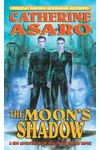
- The Moon's Shadow (2003) – Focuses on Jaibriol III, the young heir to the Eubian Concord, as he navigates his secret telepathic heritage.
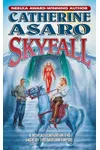
- Skyfall (2003) – A prequel novel detailing the meeting of Roca and Eldrinson, the parents of Sauscony and Kelric.
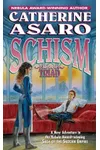
- Schism (2004) – Explores the childhood of Sauscony and the early fractures of the Ruby Dynasty.
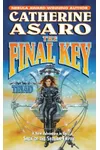
- The Final Key (2005) – The dramatic conclusion to the prequel arc begun in Skyfall and Schism.
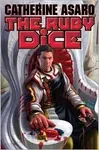
- The Ruby Dice (2008) – A major crossover novel that brings the stories of Kelric and Jaibriol III to a tense confrontation.
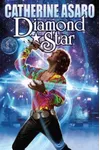
- Diamond Star (2009) – Follows Carnelian, a Ruby Dynasty heir, as he pursues a music career on Earth while avoiding imperial duty.
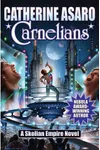
- Carnelians (2011) – Continues the political efforts of Kelric and Jaibriol III to forge a lasting peace between their rival empires.
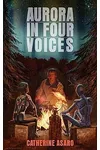
- Aurora in Four Voices (2011) – An anthology containing essential short stories and novellas set throughout the timeline.
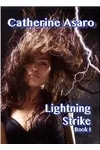
- Lightning Strike (2014) – Part of the modern Ruby Dynasty arc, building on the alternate timeline established in Catch the Lightning.
Option 2: Chronological Order (For Timeline Purists)
If you prefer to read the history of the Ruby Dynasty from its chronological beginning, you will start with the prequel novels that focus on the previous generation. This highlights the political build-up to the war but can make the worldbuilding of the later books feel slightly repetitive. Here is the chronological flow:
- Skyfall (2003)
- Schism (2004)
- The Final Key (2005)
- The Last Hawk (1997)
- Primary Inversion (1995)
- The Radiant Seas (1998)
- Ascendant Sun (2000)
- The Quantum Rose (2000)
- Spherical Harmonic (2001)
- The Moon's Shadow (2003)
- Diamond Star (2009)
- The Ruby Dice (2008)
- Carnelians (2011)
- Catch the Lightning (1996)
- Sextopia (2001)
Understanding the Narrative Arcs
Because the Saga of the Skolian Empire is so vast, it can be helpful to view the books as a collection of character-driven subseries or arcs that run in parallel:
- The Roca and Eldrinson Arc (Prequel/Origin Arc): Comprising Skyfall, Schism, and The Final Key. This trilogy tells the tragic and romantic story of how a Skolian aristocrat fell in love with a pilot from an isolated world, establishing the parentage of the next generation's heroes.
- The Sauscony (Soz) Arc: Comprising Primary Inversion and The Radiant Seas. This is the military and telepathic core of the early saga, detailing the massive war against the Eubians.
- The Kelric Arc: Comprising The Last Hawk, Ascendant Sun, The Ruby Dice, and Carnelians. This follows Kelric's journey from stranded survivor to the leader of his empire.
- The Jaibriol III Arc: Comprising The Moon's Shadow, The Ruby Dice, and Carnelians. This focuses on the young emperor of the Eubian Concord who secretly shares the telepathic traits of his Skolian enemies.
What to Know Before You Start
The universe of the Skolian Empire is built on a premise of biological empathy. The Skolians have developed telepathy, which they use to run their faster-than-light communication grid. The Eubian Concord (often referred to as the Traders) are ruled by the Aristos, humans who lack empathy and exploit telepaths as "empathy slaves" to experience pleasure. This dark, emotional conflict runs beneath every space battle and romantic pairing. Asaro does not shy away from the trauma of this slavery, making the series emotionally intense. The scientific aspects of the series are also remarkably detailed: the concepts of hyperspace are based on Asaro's own scientific papers on mathematical physics, meaning the "hard science" here is truly hard science.