




The Recommended Reading Order for Sal Kilkenny
If you want to experience the full depth of Cath Staincliffe's groundbreaking Manchester-based private investigator series, there is only one way to go: publication order. Because Sal Kilkenny's life, career, and family evolve chronologically, reading the books in sequence allows you to watch her daughter, Maddie, grow from a four-year-old toddler into an independent young adult, while Sal's personal relationships, household arrangements, and professional capabilities shift and mature with each passing year.
Sal Kilkenny Books in Chronological and Publication Order
Below is the complete chronological sequence of the Sal Kilkenny novels, which aligns perfectly with their publication dates:
-
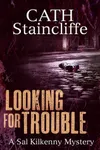
Looking for Trouble (1994)
The series debuts with Sal Kilkenny establishing her one-woman private investigation agency in Manchester. As a single mother trying to build a business from scratch, she is hired to find a missing boy—a case that quickly drags her into Manchester’s gritty criminal underworld. Simultaneously, Sal is negotiating the logistics of childcare for her four-year-old daughter, Maddie, and dealing with the constraints of a tight budget. This debut was shortlisted for the CWA New Blood Dagger and introduced readers to a detective who was as concerned with finding a reliable babysitter as she was with tracking down suspects.
-
Go Not Gently (1997)
In her second outing, Sal is hired to look into the suspicious physical and mental decline of an elderly woman residing in a local nursing home. The book showcases Staincliffe's signature blend of mystery and hard-hitting social commentary, exposing the vulnerability and societal neglect of the elderly. Sal must balance the emotional weight of investigating elder abuse with the daily, lighter trials of raising Maddie, whose growing vocabulary and preschool milestones provide a realistic domestic contrast to the dark case.
-
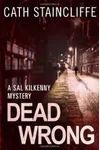
Dead Wrong (1998)
Set during the hot, tense summer of 1996, this installment takes place against the backdrop of the Euro '96 football tournament and the devastating IRA bombing of the Manchester Arndale Centre. Sal is stretched thin between two urgent cases: protecting Debbie Gosforth, a terrified mother targeted by a relentless stalker, and defending a teenager, Luke Wallace, who fears he will be accused of murdering his best friend, Ahktar Khan. The physical destruction of the city center mirrors the disruption in the lives of Sal's clients, forcing her to navigate a chaotic urban landscape.
-
Stone Cold Red Hot (2001)
Sal takes on a multi-layered investigation that hits close to home. She is hired to look into a case of intense racial intimidation on a local housing estate, exposing systemic prejudice and community tensions. Simultaneously, she dives into a decades-old missing persons case, demonstrating her talent for uncovering long-buried secrets. All the while, Sal has to manage the increasing complexity of Maddie's primary school years and the challenges of keeping her daughter insulated from the hostility of her working environment.
-
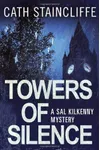
Towers of Silence (2002)
It is the frantic countdown to Christmas, and Sal is struggling to balance the holiday rush with a tragic new investigation. When a family begs her to look into a death ruled as a suicide, Sal initially hesitates due to her heavy workload. However, she soon discovers that the deceased woman suffered from a debilitating phobia of heights, making her supposed leap from the top of the Arndale Centre car park highly suspicious. Sal's investigation exposes the clinical details of phobias, the shortcomings of official police inquiries, and the quiet grief of the holiday season.
-
Bitter Blue (2003)
Domestic and professional conflicts collide when Maddie begins showing a sudden, worrying reluctance to go to school. While trying to get to the bottom of her daughter's distress, Sal investigates a series of venomous poison-pen letters sent to a hotel receptionist, Lucy Barker. She also takes on a mundane yet tense surveillance job to assess the safety and neighborhood dynamics of a street for prospective homebuyers, demonstrating that private eye work is often about patience, observation, and neighborhood politics.
-
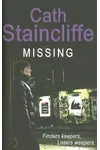
Missing (2007)
As the title suggests, Sal is drawn into several concurrent investigations involving people who have dropped off the grid. The cases include Janet Florin, a wife and mother who left her life behind, and Berfan, an asylum seeker from Iran whose brother is desperate to find him. The story highlights the plight of marginalized populations and the quiet tragedies of modern urban life, showcasing the deep empathy and social consciousness that sets Staincliffe's writing apart from more sensationalized crime fiction.
-
Crying Out Loud (2011)
The eighth and final novel in the series presents Sal with some of her most extreme challenges yet. While embroiled in a complex murder investigation, Sal discovers an abandoned infant left on her doorstep. Juggling the immediate needs of a helpless baby with the high-stakes demands of a homicide inquiry, Sal must summon all her resourcefulness. The book serves as a fitting conclusion to the series, reflecting on how much Sal and Maddie have grown since their debut in 1994.
What to Know Before You Start
Cath Staincliffe's Sal Kilkenny series was a pioneer in the "domestic noir" and feminist private eye subgenres in the United Kingdom. Writing at a time when most fictional private eyes were hard-drinking, lone-wolf men, Staincliffe introduced a protagonist whose primary challenges include finding a reliable babysitter, paying the mortgage, and checking homework between stakeouts. This realistic portrayal of balancing domestic life and detective work is a hallmark of the series.
The setting of Manchester is not just a backdrop; it is a living character. From the rainy streets and the Arndale Centre to the changing social landscape of the post-industrial North, the city's transformation over two decades is mapped directly onto the pages. Staincliffe, a co-founder of the Northern crime writers' collective Murder Squad, brings a deep sense of place and local community to each book, using first-person narration and tight pacing to keep readers hooked.
Readers should expect stories that prioritize human empathy and social justice over high-octane gunfights or sensationalized violence. The cases Sal takes on—ranging from elder abuse and racial harassment to the struggles of asylum seekers—reflect real-world issues that Staincliffe researched meticulously. The tone is compassionate, gritty, and deeply authentic, capturing the struggles of ordinary people caught in extraordinary circumstances.
Are There Spin-offs or Standalones?
While the Sal Kilkenny series itself has remained a focused eight-book arc without direct spin-off novels, Cath Staincliffe has had a prolific career beyond her signature detective. Most notably, she created the hit ITV police procedural drama Blue Murder, starring Caroline Quentin, which also deals with the themes of a working mother (DS Janine Lewis) balancing a chaotic home life with murder investigations. Staincliffe wrote several tie-in novels for the show, which fans of Sal Kilkenny will find highly appealing due to their similar thematic DNA.
Additionally, Staincliffe has written numerous standalone crime novels that explore the aftermath of tragedy on ordinary families, such as The Silence Between Us and Letters to My Killer. She is also a well-known voice on BBC Radio 4, having written several radio dramas, including the series Legacy. However, to get the classic single-mother PI experience, the eight Sal Kilkenny novels stand alone as a cohesive, satisfying unit.