






The Recommended Reading Order for Sam Durell
For readers diving into the high-stakes world of the Assignment series, the most rewarding path is to follow the original publication order. While almost every single book is written as a standalone mission, reading them in the order they were published allows you to experience the natural evolution of Cold War technology, geopolitics, and Sam Durell's personal life and career trajectory.
Because the series spans nearly thirty years of publication history, Durell's character reflects the changing attitudes of the eras, transitioning from the stark nuclear anxiety of the mid-1950s to the complex proxy battlegrounds of the 1960s, and finally the cynical detente and resource-focused operations of the 1970s and 1980s. Starting from the beginning gives you the cleanest entry point into his world.
Publication Order of Sam Durell / Assignment Books
Here is the complete order of the Sam Durell series, covering the initial runs penned by creator Edward S. Aarons and the continuation novels published after his death:
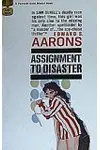
- Assignment to Disaster (1955)
- Assignment, Treason (1956)
- Assignment Suicide (1956)
- Assignment Stell Marni (1957)
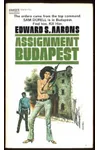
- Assignment Budapest (1957)
- Assignment Angelina (1958)
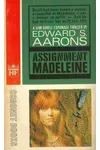
- Assignment Madeleine (1958)
- Assignment Carlotta Cortez (1959)
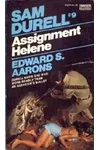
- Assignment Helene (1959)
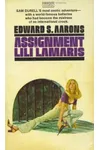
- Assignment Lili Lamaris (1959)
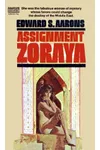
- Assignment Zoraya (1960)
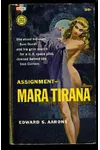
- Assignment Mara Tirana (1960)
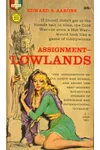
- Assignment Lowlands (1961)
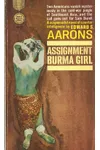
- Assignment Burma Girl (1961)
- Assignment-Ankara (1961)
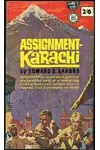
- Assignment Karachi (1962)
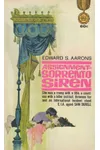
- Assignment Sorrento Siren (1963)
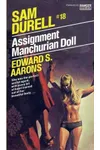
- Assignment Manchurian Doll (1963)
- Assignment the Girl in the Gondola (1964)
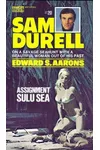
- Assignment Sulu Sea (1964)
- Assignment-Cairo Dancers (1965)
- Assignment School for Spies (1966)
- Assignment Cong Hai Kill (1966)
- Assignment Palermo (1966)
- Assignment Black Viking (1967)
- Assignment Moon Girl (1967)
- Assignment Nuclear Nude (1968)
- Assignment Peking (1969)
- Assignment White Rajah (1970)
- Assignment Star Stealers (1970)
- Assignment Tokyo (1971)
- Assignment Golden Girl (1972)
- Assignment Bangkok (1972)
- Assignment Maltese Maiden (1972)
- Assignment Silver Scorpion (1973)
- Assignment Ceylon (1974)
- Assignment Amazon Queen (1974)
- Assignment Sumatra (1974)
- Assignment Quayle Question (1975)
- Assignment Black Gold (1975)
- Assignment Unicorn (1976)
- Assignment-Afghan Dragon (1976)
- Assignment Sheba (1976) (Published under the Will B. Aarons byline; ghostwritten by Lawrence Hall)
- Assignment Tiger Devil (1976) (Published under the Will B. Aarons byline; ghostwritten by Lawrence Hall)
- Assignment 13th Princess (1979) (Published under the Will B. Aarons byline; ghostwritten by Lawrence Hall)
- Assignment Mermaid (1979) (Published under the Will B. Aarons byline; ghostwritten by Lawrence Hall)
- Assignment Tyrant's Bride (1980) (Published under the Will B. Aarons byline; ghostwritten by Lawrence Hall)
- Assignment Death Ship (1983) (Published under the Will B. Aarons byline; ghostwritten by Lawrence Hall)
Chronological Caveats and the Floating Timeline
If you are looking for a strict in-universe chronological reading order, you will find that the series operates on a classic "floating timeline." When the series begins in 1955, Sam Durell is introduced as a veteran of the Office of Strategic Services (OSS) who served during World War II, which matches his education at Yale and establishes his seasoned spy credentials. If he aged in real time, Durell would have been well into his sixties by the time the series wrapped up in the 1980s.
Instead, the author keeps Durell relatively static in age, allowing him to remain an active, peak-physical field operative throughout three decades of global shifts. Some books contain mild continuity nods or reference previous missions, but you do not need to worry about complex chronological puzzles or prequels. Reading in publication order guarantees that you experience these minor connections without spoiling prior endings.
Origins and Authorship: Edward S. Aarons and the Ghostwriters
To fully appreciate the series, it is helpful to understand the history behind the byline. Edward S. Aarons created Sam Durell and wrote the first 42 novels in the series between 1955 and his death in 1975. Aarons drew from his background as a World War II Coast Guard veteran and a reporter, giving the books a gritty, atmospheric realism that stood in contrast to some of the flashier, more fantastical spy fiction of the era.
Following Edward's death, his brother and estate executor, William B. Aarons, decided to keep the popular franchise alive. Six additional novels were published under the pseudonym Will B. Aarons. However, historical research and bibliographical records confirm that William did not write these entries himself; they were ghostwritten by author Lawrence Hall. Despite the change in authors, these final six books maintain the classic Durell formula, taking the Cajun spy to various exotic locales to wrap up the series.
Practical Reader Advice and Starting Points
For new readers wondering where to begin, the logical choice is the very first novel, Assignment to Disaster. It does an excellent job of setting up Sam Durell's background, including his Louisiana bayou roots and his relationship with his grandfather. It also introduces the high-stakes, pulp-infused tone of the series as Durell searches for a missing scientist in a race against time.
However, if you cannot find a copy of the debut novel, do not hesitate to jump in elsewhere. Middle-era books like Assignment Manchurian Doll or Assignment Sulu Sea are widely regarded by fans as excellent representations of Aarons' fast-paced storytelling and atmospheric world-building. Because of their standalone nature, you can easily pick up almost any random paperback from a used bookstore and enjoy the narrative without feeling lost.
What to Know Before You Start
Before stepping into Sam Durell's world, it is worth adjusting your expectations regarding tone and era-specific tropes. Durell is not a suave, gadget-laden spy like James Bond. Instead, he is a rugged, Yale-educated Cajun who relies on survival instincts, linguistic abilities, and sharp intellect. He is introspective, sometimes flawed by a hot temper, and operates in a morally gray landscape where loyalty is constantly questioned.
Additionally, because these books were published between 1955 and 1983, they reflect the cultural and gender dynamics of mid-century pulp fiction. Readers should expect typical period tropes, but will also find that Durell behaves with a level of principled restraint and intelligence that elevates these thrillers above standard pulp fare.