




The Recommended Reading Order
If you want to experience the birth of England through the eyes of the brash, pagan warrior Uhtred of Bebbanburg, there is only one true path. Unlike some sprawling fantasy or historical series that benefit from complex chronological reshuffling, the Saxon Chronicles (also widely known as The Saxon Stories or The Last Kingdom series) follows a linear, aging progression. Uhtred begins the first book as a young boy and finishes the thirteenth book as an elderly warrior reflecting on a lifetime of blood, steel, and destiny.
Therefore, both the publication order and the chronological order are identical. For the best experience, you should read the main thirteen novels in the order they were written, followed by the companion book:
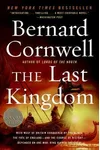
- The Last Kingdom (2004) – Introduces Uhtred as a child captured by the Danes, establishing his dual identity.
- The Pale Horseman (2005) – Follows Uhtred’s uneasy alliance with King Alfred during the desperate defense of Wessex.
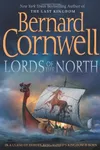
- Lords of the North (2006) – Uhtred travels north to seek vengeance, facing betrayal and chaos in Northumbria.
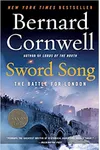
- Sword Song (2007) – Set during a time of relative peace, Uhtred is tasked with securing London against new Viking threats.
- The Burning Land (2009) – Explores the personal cost of loyalty as Uhtred is torn between his oath to Alfred and his personal freedom.
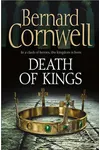
- Death of Kings (2011) – King Alfred’s health is failing, leaving the fate of Wessex and the dream of a united England in peril.
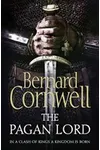
- The Pagan Lord (2013) – Uhtred, now older, makes a bold bid to reclaim his ancestral home of Bebbanburg.
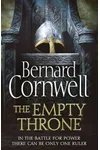
- The Empty Throne (2014) – Follows the political turmoil and military clashes after the death of Æthelred of Mercia.
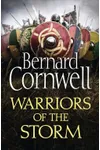
- Warriors of the Storm (2015) – A major conflict brews as domestic rivalries collide with invading Northmen.
- The Flame Bearer (2016) – Focuses on Uhtred’s long-awaited, direct struggle to finally secure Bebbanburg.
- War of the Wolf (2018) – Uhtred faces a deadly new threat in the form of the Norse king Sköll.
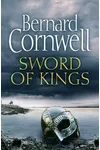
- Sword of Kings (2019) – Set during a succession crisis as England’s unified future hangs in the balance once again.
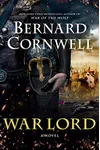
- War Lord (2020) – The epic conclusion to Uhtred’s narrative arc, culminating in the battle that determines England's fate.
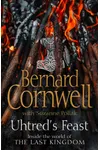
- Uhtred’s Feast (2023) – A companion volume containing three short stories and historical recipes.
Publication Order vs. Chronological Order
Because Bernard Cornwell wrote Uhtred's story chronologically, there are no prequel novels or confusing time jumps to navigate. Reading the series out of order is highly discouraged, as the political landscape of 9th- and 10th-century Britain evolves significantly from book to book. Characters grow, grow old, and die, while the dream of a unified "Englaland" slowly transitions from a pious king's fantasy into a hard-fought reality. The only outlier is the 2023 release, Uhtred’s Feast. While it contains three short stories set at different points in Uhtred's life (one during his childhood, one during his time serving Alfred, and one in his older years), it is best read after finishing the main series to avoid spoilers and appreciate the retrospective context.
What to Know Before You Start
Before diving into the shield walls, it helps to understand the historical backdrop. The Saxon Chronicles is heavily grounded in the real history of the Viking invasions and the unification of England. Bernard Cornwell was inspired to write the series after discovering his own ancestral links to the historical Uhtred the Bold (a real Northumbrian noble, though he lived later than the fictional Uhtred). Real historical figures such as King Alfred the Great, Guthrum, Æthelflæd, and King Aethelstan play massive roles in the plot, acting as anchors for Uhtred’s fictional exploits.
Readers should expect a gritty, muddy, and visceral tone. Cornwell does not romanticize the medieval period; instead, he emphasizes the harsh realities of dark-age warfare, the clash between paganism and Christianity, and the constant threat of disease and betrayal. A signature feature of the series is the historical note at the end of each book, where Cornwell explains where his narrative matches the historical record and where he took creative liberties.
The Companion Book: Uhtred’s Feast
Published in 2023, Uhtred’s Feast: An Anglo-Saxon Companion is a unique entry in the franchise. Co-authored by Bernard Cornwell and culinary historian Suzanne Pollak, the book is half historical guide and half recipe book. It provides a fascinating look at the daily lives, domestic spaces, and eating habits of the Anglo-Saxons, complete with authentic recipes adapted for modern kitchens. For fiction readers, its main draw is the inclusion of three exclusive short stories written by Cornwell. These stories add color to Uhtred's life but do not impact the overarching plot of the main thirteen novels, making the book an enjoyable post-series dessert rather than a mandatory main course.
From Page to Screen: The Last Kingdom
Many readers discover this series through its highly successful television adaptation, The Last Kingdom, which ran for five seasons on BBC and Netflix, followed by the wrap-up movie Seven Kings Must Die (2023). The show is a remarkably faithful adaptation, generally covering the events of two books per season. For example, Season 1 adapts The Last Kingdom and The Pale Horseman, while Season 5 adapts Warriors of the Storm and The Flame Bearer. The movie covers the broad strokes of the final books, particularly Sword of Kings and War Lord. If you have watched the show, you will find the books offer much deeper insights into Uhtred's internal thoughts, detailed accounts of military strategy, and a vastly expanded roster of characters and subplots.
Practical Reading Guidance
Can the books be read as standalones? While Bernard Cornwell provides brief recaps at the beginning of each book to help reorient readers, the Saxon Chronicles is designed as a continuous, serialized narrative. Starting anywhere other than The Last Kingdom will leave you confused by the complex web of oaths, familial relationships, and historical grievances. The recommended starting point is, without question, the very first book. If you enjoy historical accuracy, rich first-person narration, and military fiction, this series will keep you captivated from the first shield wall to the final battle.