




The Recommended Reading Path for SEAL Team Seven
For readers diving into the high-octane world of Lieutenant Blake Murdock and his elite squad, the best way to experience the series is in publication order. Starting with the self-titled debut, SEAL Team Seven (1994), ensures you follow the team's evolution, Murdock's growth as a leader, and the changing landscape of global geopolitical threats as they unfolded in real-time during the late 1990s and early 2000s.
Because the books are mostly episodic, focusing on a single, self-contained crisis per novel, you won't get lost if you pick up a later book. However, reading in order is highly recommended to appreciate the persistent character relationships, squad promotions, and tactical progression that tie the series together.
SEAL Team Seven Publication Order
Here is the complete chronological list of the SEAL Team Seven novels based on their original publication dates. The series spanned 22 books, beginning in 1994 and concluding in 2005:
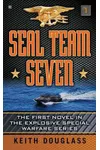
- SEAL Team Seven (1994) – Lt. Blake Murdock and his team must retrieve a hijacked Japanese freighter carrying weapon-grade nuclear fuel from Iranian terrorists.
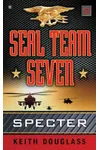
- Specter (1994) – The team is sent to Greece to rescue a kidnapped U.S. congressional delegation held by extremists.
- Nucflash (1995) – A rogue faction in North Korea threatens to launch nuclear missiles, forcing the SEALs to infiltrate a highly fortified facility.
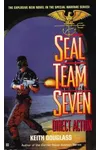
- Direct Action (1997) – Murdock's squad executes a daring raid on a chemical weapons plant in Syria.
- Firestorm (1997) – The SEALs head into the freezing mountains of the Balkans to destroy a missile base.
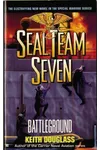
- Battleground (1998) – Following a violent coup in Kenya, the team is deployed to secure American assets and restore order.
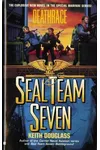
- Deathrace (1999) – A high-speed chase unfolds in international waters as the team tries to stop a drug cartel's heavily armed fleet.
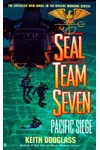
- Pacific Siege (1999) – When a Chinese submarine goes rogue and threatens shipping lanes, the SEALs launch an undersea intervention.
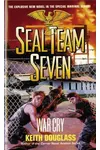
- War Cry (1999) – The squad operates deep in the jungles of Central America to dismantle a terrorist training camp.
- Frontal Assault (2000) – Murdock leads a frontal breach against a fortified island stronghold in the South China Sea.
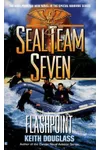
- Flashpoint (2000) – The team works to defuse a ticking border crisis between nuclear-armed rivals.
- Tropical Terror (2000) – Hostages are taken on a remote tropical resort, demanding a silent, stealthy rescue operation.
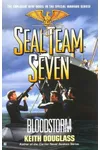
- Bloodstorm (2001) – An Eastern European crisis draws the SEALs into urban combat against heavily armed paramilitaries.
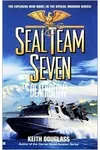
- Death Blow (2001) – Murdock's team targets a rogue weapons developer hiding in a heavily defended desert fortress.
- Ambush (2001) – Trapped behind enemy lines, the squad must fight their way to an extraction point against overwhelming odds.
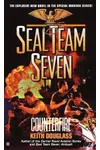
- Counterfire (2002) – The SEALs execute counter-terrorist operations in the Mediterranean to halt a wave of maritime hijackings.
- Payback (2002) – Personal stakes rise as the team seeks justice against an old enemy who targeted their own members.
- Deadly Force (2002) – The team is called in to neutralize a biological threat before it can be dispersed in a major city.
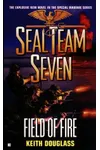
- Field of Fire (2003) – Operating in the dense African jungle, the team must secure a downed stealth satellite.
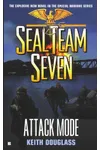
- Attack Mode (2003) – Navy SEALs deploy high-tech submersibles to stop an oil platform from being turned into a missile launchpad.
- Hostile Fire (2004) – The team goes head-to-head with international terrorists trying to disrupt peace talks in Europe.
- Under Siege (2005) – The series finale finds the team defending their own home turf against a coordinated assault.
Chronological Order and Continuity Caveats
Fortunately, the chronological order of the story match the publication order. The timeline progresses from the post-Cold War challenges of the mid-90s straight through to the war-on-terror era of the early 2000s. There are no prequels or confusing jumps back in time, meaning you can simply follow the list from 1 to 22.
The only caveat readers should keep in mind is the changing of the guard behind the scenes. Because the books were written by different ghostwriters under a house pseudonym, some readers note slight shifts in tone, writing style, and character dialogue in the middle of the run. Lieutenant Murdock remains the steadfast anchor of the series, but the exact flow of military jargon and squad banter changes slightly depending on who was behind the keyboard for that installment.
Who is Keith Douglass? The Authors Behind the Mask
Like many popular military and action-adventure series of its era, SEAL Team Seven was published under a house pseudonym: Keith Douglass. This was a brand created by Berkley Books to ensure a consistent author name on the cover, even as different writers took turns writing the novels.
The foundation of the series was built by veteran military fiction author William H. Keith Jr. (also known as Bill Keith), a former Navy hospital corpsman who served during the Vietnam War. He wrote the first three books, establishing the character of Blake Murdock, the core members of the squad, and the realistic tactical feel. Later in the series, prolific western and adventure novelist Chet Cunningham and other ghostwriters took over the writing duties, maintaining the brand's style and publishing multiple books per year to satisfy fans of the genre.
What to Know Before You Start: Tone, Context, and Style
If you're planning to dive into the series, here is what you can expect from these novels:
- Techno-Thriller Realism: Expect detailed descriptions of firearms, tactical gear, diving apparatus, and military vehicles. The authors drew heavily on real-world military specifications to appeal to enthusiasts.
- 90s and 2000s Geopolitics: The stories are a time capsule of their era. The enemies, locations, and political crises reflect the real-world concerns of the decade in which they were written, ranging from post-Soviet rogue states to Middle Eastern conflicts.
- Episodic Pace: Each book is designed as a standalone mission. While the characters age and experience promotions, major plotlines rarely carry over extensively between books, making it easy to put down and pick up months later.
Practical Reader Advice
For the best experience, start with the very first book, SEAL Team Seven, to get the origin story of Lt. Blake Murdock and his crew. If you enjoy the blend of military tactics and fast-paced action, you might also want to look into the Carrier series, another popular franchise written under the same Keith Douglass house name. Since the books are out of print, searching for used paperbacks or digital editions is the best way to assemble the full 22-volume collection today.