


The Recommended Reading Order
The Secret Journeys of Jack London is a tightly plotted, linear trilogy. Because the overarching narrative builds directly from one volume to the next, there is no debate on how to approach it: you must read the books in order of publication, which also serves as the chronological order of Jack's supernatural adventures.
- The Wild (Published in March 2011) - The adventure begins as seventeen-year-old Jack heads to the Yukon Gold Rush and encounters the terrifying Wendigo.
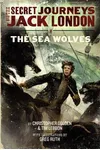
- The Sea Wolves (Published in February 2012) - The story moves to the high seas, where Jack is captured by a crew of werewolf pirates led by a captain named Ghost.
- White Fangs (Published in December 2013) - The final chapter wraps up the saga as Jack returns to the frozen wilderness alongside his companion Sabine, facing deadly beasts and ancient spirits.
Why the Series Order Matters
This series operates as a single continuous story arc rather than episodic adventures. Reading the books out of order will spoil major character deaths, romantic developments, and the evolution of the supernatural forces Jack interacts with. The Wild establishes Jack's first contact with the spirit of the wilderness and introduces key supporting characters. The Sea Wolves acts as a transitional chapter that tests Jack's resolve outside of his familiar land-based environment. White Fangs brings the elements of the first two books together, resolving Jack's relationship with the mystical forces of the North.
Understanding the Books: A Deeper Look
The Wild (Book 1)
Set against the historical backdrop of the 1897 Klondike Gold Rush, this opening volume introduces a teenage Jack London seeking fortune. Golden and Lebbon merge historical accounts of the grueling journey through the Chilkoot Pass with Native American folklore and classic wilderness survival tropes. Jack finds himself caught between human greed and the ancient, flesh-hungry Wendigo. Greg Ruth's moody illustrations help establish the stark, scary atmosphere of the Yukon.
The Sea Wolves (Book 2)
The second installment expands the universe's lore by shifting the setting from the frozen forest to the icy waters of the Pacific. Jack is kidnapped and forced onto a ship manned by 'the Sea Wolves'—a crew of shapeshifting, lycanthropic pirates. This entry explores themes of leadership, corruption, and the primal beast within humanity, offering a dark fantasy twist on classic maritime adventure literature.
White Fangs (Book 3)
The trilogy's climax returns Jack to the cold wilderness. He is accompanied by Sabine, a shape-shifter introduced earlier in the series. The plot centers around their attempt to survive both human adversaries and a new supernatural threat of massive, blood-thirsty predators. To survive, they must align with a forest spirit named Lesya. The title is a direct, thematic nod to London's famous novel White Fang, incorporating elements of the wild wolf motif in a paranormal horror context.
Publication and Formatting Quirks (What to Know Before You Start)
Readers looking to collect physical editions of the series should be aware of a major publishing transition that occurred between the second and third books. While HarperCollins published the hardcover editions of The Wild and The Sea Wolves, they did not publish the final book. The authors released White Fangs in late 2013 through their own digital publishing venture, Daring Greatly Corporation. Because of this, the third book was primarily released as an ebook, and a matching English-language hardcover version was never printed. Physical editions of the third book were only produced in foreign translation markets such as Germany and Brazil.
The Men Behind the Myth: Golden, Lebbon, and Ruth
The series is a collaborative effort between two heavyweights of modern dark fantasy. Christopher Golden is a New York Times bestselling author known for his extensive work in horror and media tie-ins, while Tim Lebbon is a Bram Stoker Award-winning writer based in Wales. The two writers conceived the series during a horror convention, driven by their mutual appreciation for Jack London's writing style and themes of naturalism. Their prose is elevated by the black-and-white illustrations of Greg Ruth, whose gritty, textured artwork helps ground the supernatural elements in the historical reality of the late 19th century.
Fictionalized Biography vs. Paranormal Adventure
While the protagonist shares his name, age, and historical itinerary with the real-life author Jack London, this series is entirely fictional. The authors use real historical checkpoints, such as London's journey to the Klondike and his battle with scurvy, as scaffolding for a paranormal adventure story. It serves as a tribute to London's rugged ethos and the dark, untamed themes of his actual novels, such as The Call of the Wild and White Fang, making it an excellent gateway for younger readers to discover classic adventure literature.