
The Recommended Reading Order for Sergeant Cribb
If you want to experience Sergeant Daniel Cribb’s cases the way Peter Lovesey intended, the best way is to follow the original publication order. The series spans eight novels published between 1970 and 1978. Because the stories follow a natural progression of Cribb’s career and Scotland Yard’s developing Criminal Investigation Department (CID), starting at the beginning allows you to see the growth of Cribb’s working relationship with his loyal assistant, Constable Thackeray.
Here is the recommended reading path for the series:
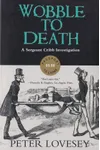
- Wobble to Death (1970)
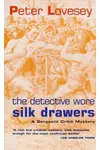
- The Detective Wore Silk Drawers (1970)
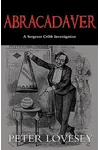
- Abracadaver (1972)
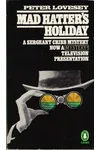
- Mad Hatter's Holiday (1973)
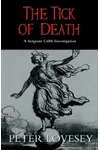
- Invitation to a Dynamite Party (1974) (also published as The Tick of Death)
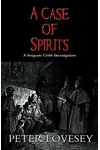
- A Case of Spirits (1975)
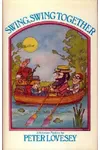
- Swing, Swing Together (1976)
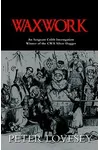
- Waxwork (1978)
Publication Order vs. Chronological Order
For almost the entire run, the publication order of the Sergeant Cribb novels matches their internal chronological order. However, there is a minor chronological swap at the very end of the series involving the final two books. Swing, Swing Together was published in 1976 and is explicitly set in the summer of 1889, drawing heavily on the rowing craze sparked by the publication of Jerome K. Jerome's classic comedy Three Men in a Boat. Meanwhile, the final novel, Waxwork, was published in 1978 but is set in 1888, focusing on a high-stakes case involving a woman facing execution at Newgate Prison.
Does this minor chronological swap affect your reading experience? Not at all. The books function perfectly well as standalones, and the slight overlap in the timeline does not create any major continuity errors. We recommend sticking to the publication order, as Lovesey’s writing style and the evolution of the characters' dynamics flow best in the order they were written.
What to Know Before You Start
Peter Lovesey’s Sergeant Cribb series is a pioneer of modern historical mystery fiction. When Lovesey wrote Wobble to Death in 1970, the subgenre was not as prominent as it is today. Unlike the glamorous, upper-class world of Sherlock Holmes or the eccentric geniuses of Golden Age detective fiction, Sergeant Daniel Cribb is a grounded, hardworking Scotland Yard policeman. He represents the newly formed Criminal Investigation Department (CID) established in 1878, navigating the bureaucratic frustrations, long hours, and lack of public respect that plagued Victorian detectives.
The defining feature of the series is Lovesey's focus on Victorian sports, leisure, and entertainment. Drawing on his background as a sports historian, Lovesey builds each mystery around a specific cultural phenomenon of the late 19th century. Readers are treated to meticulous, fascinating historical details about obscure pastimes, illegal spectacles, and popular amusements, making the setting feel like a living, breathing character in its own right.
A Closer Look at the Books
1. Wobble to Death (1970)
Set in 1879, the debut novel introduces Sergeant Cribb and Constable Thackeray during a grueling six-day "pedestrianism" race—a popular Victorian endurance-walking competition known as a "wobble." When one of the leading contenders is poisoned mid-race, Cribb must go undercover in the crowded, sweat-soaked Agricultural Hall in Islington. It is a brilliant, claustrophobic mystery that sets the tone for the rest of the series.
2. The Detective Wore Silk Drawers (1970)
This second installment takes readers into the brutal, illegal underworld of bare-knuckle boxing (pugilism) in 1880. When headless bodies are discovered in the Thames, Cribb suspects they are connected to a secret training camp for prize fighters. To crack the case, Cribb sends a young constable undercover as a pugilist, exposing the class divide and the dangerous stakes of Victorian blood sports.
3. Abracadaver (1972)
Set in 1881, this novel shifts focus to the vibrant and eccentric world of London's music halls. A series of bizarre, humiliating accidents targeting performers during their acts escalates to murder. Cribb and Thackeray must go behind the scenes of the stage to uncover the culprit, dealing with magicians, singers, and the unique theatrical culture of the era.
4. Mad Hatter's Holiday (1973)
Leaving the foggy streets of London behind, this story takes place in the seaside resort of Brighton during the summer of 1882. The plot centers on the Victorian obsession with seaside holidays, amateur photography, and pier culture. When severed human remains are found in a local amusement attraction, Cribb finds himself unraveling a twisted web of jealousy and murder among the tourists.
5. Invitation to a Dynamite Party / The Tick of Death (1974)
Set in 1884, this high-stakes thriller centers on the historic Fenian "dynamite campaign" in London. Cribb goes undercover to infiltrate a group of Irish nationalists plotting to bomb major landmarks. The book displays a slightly tenser, more political tone than the earlier sports-focused mysteries, showcasing Lovesey's range as a writer.
6. A Case of Spirits (1975)
Set in 1885, this entry tackles the Victorian obsession with spiritualism, seances, and the occult. When a wealthy art collector's home is burgled during a seance and a medium is found dead under mysterious circumstances, Cribb must separate supernatural illusions from cold, hard criminal facts. The novel is a clever satire of Victorian upper-class gullibility.
7. Swing, Swing Together (1976)
Set in the summer of 1889, this story is a delightful parody of Jerome K. Jerome's Three Men in a Boat. When a student on a midnight swim witnesses a body being dumped in the River Thames, Cribb and Thackeray embark on a rowing chase upstream toward Oxford, following a trio of suspects who are mimicking the exact route and antics of Jerome’s famous characters.
8. Waxwork (1978)
The final novel in the series is set in 1888 and is widely considered one of Lovesey's finest works, earning the Crime Writers’ Association Silver Dagger. The story follows a woman who has confessed to murder but whose motives and guilt remain highly suspect. As she faces execution at Newgate, Cribb must race against the clock to uncover the truth, leading him to the famous Madame Tussauds waxworks exhibition.
Spin-offs, Adaptations, and Short Stories
Although the core novel series ended in 1978, Sergeant Cribb’s legacy continued through other media. The most famous adaptation is the television series Cribb, which aired on Granada Television from 1979 to 1981. Starring Alan Dobie as Cribb and William Simons as Thackeray, the show successfully adapted Lovesey's novels and captured the gritty, humorous tone of the books. Lovesey himself contributed to writing scripts for the series, which expanded the detective's adventures beyond the original eight novels.
In print, Sergeant Cribb occasionally returns in short stories. While there is no dedicated Cribb short story collection, several of his shorter cases can be found scattered in Lovesey's general anthologies, such as Murder on the Short List (2012) and the retrospective The Best of Peter Lovesey Stories (2025). These short stories are delightful additions for readers who want to spend just a little more time with the Scotland Yard duo.