
The Recommended Reading Order for The Seventh Tower
Unlike many expansive fantasy universes with spin-offs, prequels, and complicated timelines, The Seventh Tower by Garth Nix is a beautifully straightforward, linear adventure. The series was designed as a single continuous story divided into six short novels, meaning there is only one correct way to read it: in publication order, which matches the chronological progression of the story. Reading these books out of order will leave you thoroughly confused, as each volume picks up immediately where the previous one ends.
Here is the recommended reading path for the series:
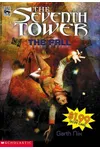
- The Fall (2000)
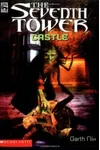
- Castle (2000)
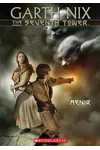
- Aenir (2000)
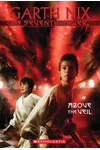
- Above the Veil (2001)
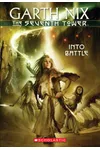
- Into Battle (2001)
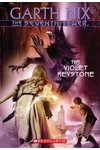
- The Violet Keystone (2001)
Breaking Down the Books
1. The Fall (2000)
Our journey begins in a world shrouded in perpetual ice and darkness, where the sun is blocked by a thick, magical barrier known as the Veil. High above the frozen plains sits the massive Castle of the Chosen, a towering structure divided into seven color-coded levels. Tal, a young boy of the Chosen, desperately needs a primary Sunstone to secure his family's survival and status after his father goes missing. When his desperate attempt to steal a Sunstone from the top of the Red Tower goes wrong, Tal falls from the Castle. He lands on the dangerous, icy wastes below, where he is captured by Milla, a fierce young warrior from the nomadic Icecarl clans. This unexpected meeting of two entirely different cultures sets the grand adventure in motion.
2. Castle (2000)
Having survived the fall and formed an uneasy truce, Tal and Milla must find a way back into the Castle. Tal needs to return to save his family, while Milla is tasked by her clan's Crones with investigating the dark changes occurring within the Castle. As they infiltrate the lower levels, they navigate the rigid, color-coded social hierarchy of the Chosen—from the lowly Underpeople to the ruling class. They quickly discover that the Castle is rife with political intrigue, secrets, and a growing darkness that threatens both of their societies.
3. Aenir (2000)
To rescue his missing father and find a powerful Sunstone, Tal must venture into Aenir, the dreamlike spirit realm that lies beyond the physical world. Milla accompanies him, guided by her own duties to the Icecarls. Aenir is a surreal, shifting landscape where thoughts can shape reality and dangerous creatures roam. In this magical dimension, Tal and Milla must face trials to bind their Spiritshadows—magical, shape-shifting entities that act as companions and protectors. However, Aenir also holds deep dangers, and the duo begins to realize that a sinister force is actively manipulating the connection between Aenir and their home world.
4. Above the Veil (2001)
Returning to the physical world, Tal and Milla find themselves in the middle of escalating tension. They must ascend to the highest, most restricted areas of the Castle, going above the Veil itself where the sun still shines. Here, they discover the truth about the ancient pact that created the Veil and the terrible cost required to maintain it. As political division threatens to tear the Chosen apart, Milla must also deal with the strict laws of her own people, who view her growing reliance on Castle magic and her Spiritshadow with deep suspicion.
5. Into Battle (2001)
The fragile peace between the Chosen and the Icecarls finally shatters, plunging the world into open warfare. As the Icecarls launch a massive assault on the Castle, Tal and Milla find themselves on opposite sides of a devastating conflict. Despite their opposing loyalties, both heroes realize that the war is being orchestrated from the shadows by a dark, ancient entity known as the Shadowmaster. They must work desperately to stop the bloodshed before the true enemy consumes both of their peoples.
6. The Violet Keystone (2001)
The epic saga reaches its thrilling conclusion in the final volume. To save their world from total collapse and prevent the Shadowmaster from breaking the Veil, Tal and Milla must unite the seven levels of the Castle and activate the Violet Keystone—the central hub of the world's magical grid. With allies from both the Chosen and the Icecarls, they launch a final, high-stakes stand against the encroaching darkness. It is a story of sacrifice, unity, and the birth of a new era for their world.
The Origin: Scholastic and Lucasfilm's Unique Collaboration
One of the most fascinating aspects of The Seventh Tower is how it came to be. In the late 1990s, the publisher Scholastic and the legendary production company Lucasfilm teamed up to create a brand-new multimedia fantasy franchise. An editor at Scholastic, who was a fan of Garth Nix's breakout novel Sabriel, approached the Australian author to see if he would be interested in writing it.
Lucasfilm and Scholastic provided Nix with a basic set of "seed" concepts: a world of perpetual darkness, a massive central structure, and characters who possessed magical companion creatures. From there, Nix was granted full creative freedom to develop the characters, the lore, the plot, and the magic system. Written at an incredibly brisk pace (Nix wrote some of the books in just three months), the series became a massive success, selling over a million copies in the United States alone. Because of the collaboration with Lucasfilm, the intellectual property is currently owned by Disney, which acquired Lucasfilm in 2012.
What to Know Before You Start
Before you dive into the dark world of the Castle, here are a few practical tips to enhance your reading experience:
- It's a continuous story: Although there are six books, they are relatively short (around 200 pages each). Think of the series as one single, fast-paced 1,200-page novel split into six logical acts. You cannot read them as standalones.
- Unique magic system: The world relies on Sunstones (crystals that absorb and emit solar energy) and Spiritshadows (shadow creatures bound to the Chosen). The magic system is visual, tactical, and incredibly creative, centering on colors and light.
- Crossover appeal: While officially categorized as middle-grade or young adult, the series features dark themes, political intrigue, and complex world-building that will appeal to fans of Nix's older-targeted works like the Old Kingdom / Abhorsen series.
- Self-contained: There are no companion guides, spin-offs, or prequels. Once you finish The Violet Keystone, the story is complete.