







How to Read the Sgt Major Crane Series: The Recommended Reading Path
For readers diving into the gritty, fast-paced world of Sergeant Major Tom Crane, the best path forward is to follow the series in its publication order. Because Wendy Cartmell weaves a continuous thread of character development—exploring Crane's evolving partnerships, family dynamics, and eventual transition out of the military—reading the books chronologically guarantees the most satisfying experience.
You have two excellent choices for where to start. The most common entry point is the debut novel, Steps to Heaven, which establishes Crane's role as a Special Investigations Branch (SIB) detective policing the British Army. However, if you prefer to see Crane's very first case, you can begin with the title story in the short story collection No Mercy, which serves as a prequel-style introduction to the character before you move on to the full-length novels.
The Core Sgt Major Crane Series in Publication Order
The original Sgt Major Crane series consists of eight core novels and one companion short story collection. While each book presents a self-contained mystery that is resolved by the final page, the underlying personal and professional relationships build from one book to the next. Below is the list of books in their recommended reading order:
1. Steps to Heaven (2011/2012)
This is the debut novel that introduces readers to Sergeant Major Tom Crane. Stationed at the busy military hub of Aldershot Garrison, Crane is called to investigate what appears to be a tragic murder-suicide involving a soldier. As he digs deeper, he uncovers a sinister cult preying on vulnerable, traumatized veterans. This book sets the tone for the series, blending military precision with dark procedural detective work.
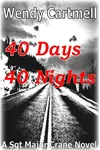
2. 40 Days 40 Nights (2011/2012)
The stakes are raised significantly in the second installment. Set against the backdrop of Olympic preparations, Crane must thwart a imminent terrorist threat targeting the military. While managing the high-pressure investigation, Crane faces intense personal anxieties as he prepares for the birth of his child, adding a rich layer of domestic suspense to the military action.
3. No Mercy (2012)
Although published third, this is a collection of crime and mystery short stories rather than a full-length novel. The titular story, 'No Mercy,' serves as a prequel introduction to Sgt Major Crane. The book is highly recommended for fans who want to explore Crane's early days and enjoy quick, twist-filled mystery vignettes.
4. Violation / Honour Bound (2012)
Originally published under the title Violation and later re-released as Honour Bound, this novel tackles sensitive and heavy themes within the armed forces, specifically focusing on sexual assault and cover-ups. Crane has to navigate intense military bureaucracy and institutional loyalty to bring justice to the victims, making this one of the grittiest and most emotional entries in the series.
5. Cordon of Lies (2013)
When Melanie Green, the wife of a high-ranking army officer, is brutally murdered on the street, Crane is tasked with finding the killer. The investigation forces Crane to peer behind the neat facades of officers' quarters, uncovering a web of secrets, infidelity, and betrayal within the military community.
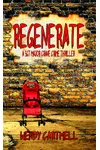
6. Regenerate (2014)
This installment sees Crane handling multiple complex, interwoven cases. He is tasked with stopping a highly organized drug-smuggling ring importing heroin directly from Afghanistan. At the same time, the disturbing discovery of a dead baby in a local church and another missing child forces Crane to coordinate closely with civilian police forces, testing his diplomatic skills.
7. Hijack (2014)
Moving away from the traditional procedural format, this novel is an action-oriented, high-stakes thriller. A group of heavily armed cyclists hijacks a passenger train, forcing it to stop on the iconic and precarious Ribblehead Viaduct. With bombs and hostages in play, Crane's close colleague, Sergeant Billy Williams, finds himself trapped in the middle of the crisis, forcing Crane to act quickly to prevent a catastrophe.
8. Glass Cutter (2015)
In this darker, serial-killer style thriller, Crane is confronted with a series of gruesome, calculated murders. The investigation tests Crane's psychological limits as he tries to get inside the mind of a cold-blooded killer who leaves a trail of glass shards behind, departing from typical military targets to threaten the wider civilian population.
9. Solid Proof (2016)
This novel serves as the grand finale to the original military-based Sgt Major Crane series. The plot kicks off with a devastating case: an Afghanistan veteran murders his wife and young son before taking his own life. When identical murder-suicides begin occurring across the country, Crane realizes they are dealing with a systemic conspiracy targeting veterans, leading to a dramatic conclusion that changes Crane's career forever.
The Spinoff Series: Crane & Anderson
If you finish the core novels and find yourself wanting more, Tom Crane's story does not end with Solid Proof. Wendy Cartmell continued his adventures in a civilian spinoff series co-starring DCI Derek Anderson, Crane's long-time civilian police counterpart. In this series, Crane has left the military and works alongside Anderson to solve complex crimes in the civilian world. This spinoff should be read after finishing the core series, in the following order:
- Death Rites (2016) — Originally published as 'Rules of the Earth'
- Death Elements (2016) — Originally published as 'Basic Element'
- Death Call (2017)
- A Grave Death (2018)
- A Cold Death (2019)
What to Know Before You Start: Realism and Tone
Wendy Cartmell's Sgt Major Crane books stand out in the crime fiction genre due to their authentic military atmosphere. The realism is no accident; Cartmell draws heavily on her husband's 22 years of service in the British Army to ground the procedures, terminology, and daily life of Aldershot Garrison in absolute reality. The series is not just about solving crimes; it explores the psychological impact of service, tackling themes like PTSD, institutional loyalty, and the friction between civilian authorities and military command. Readers who enjoy Lee Child's Jack Reacher or Angela Marsons' DI Kim Stone will find a similar balance of tough action, procedural grit, and compelling, flawed characters.