
The Recommended Reading Path: Stick to Publication Order
Unlike some sprawling fantasy series where chronological timelines and publication schedules diverge, Shadows of the Apt follows a straightforward, linear progression. The story spans a decade-long conflict, and the characters age, technology advances, and the geopolitical landscape shifts in real-time. Because of this continuous evolution, the only recommended reading order is the original publication order. Trying to jump around the main sequence will result in major plot spoilers and confusion regarding the rapid technological developments of the setting.
The Main Series Novels in Order
The core of the series is a ten-book decalogy published between 2008 and 2014. Below is the list of novels in the exact order they should be read:
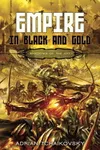
- Empire in Black and Gold (2008) – The starting point of the saga. It introduces the Lowlands, the spymaster Stenwold Maker, and the looming threat of the Wasp Empire.
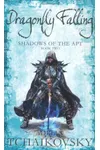
- Dragonfly Falling (2009) – War breaks out in earnest as the Wasp Empire launches a massive invasion, forcing the city-states to choose sides.
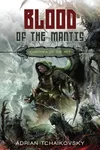
- Blood of the Mantis (2009) – A more focused, stealth-oriented entry centered around the hunt for the mysterious and dangerous artifact known as the Shadow Box.
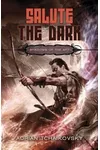
- Salute the Dark (2010) – The explosive climax of the first major war, bringing several character arcs and massive conflicts to a dramatic head.
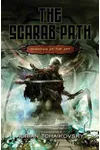
- The Scarab Path (2010) – A soft reset that takes the characters to the ancient, dust-swept city of Khanaphe, exploring new cultures and forgotten history.
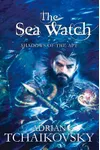
- The Sea Watch (2011) – A deep dive into the underwater city-states of the world, offering a unique aquatic perspective on the kinden races.
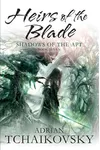
- Heirs of the Blade (2011) – Focuses heavily on the lethal Mantis kinden and their cultural traditions, taking place in the remote Commonweal.
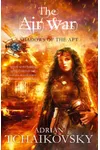
- The Air War (2012) – The beginning of the end. Industrialization reaches its peak with the introduction of early military aviation, transforming the face of warfare.
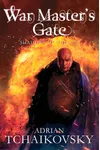
- War Master's Gate (2013) – A devastating, wide-scale war novel that sets the stage for the final confrontation.
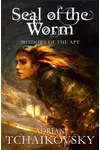
- Seal of the Worm (2014) – The epic conclusion to the entire ten-book series, wrapping up the struggle between technology and ancient, dark magic.
Understanding the Three Story Arcs
To make the ten-book commitment more manageable, it is helpful to think of the series in three distinct structural movements or story arcs. Tchaikovsky constructed the series with natural entry and exit points that allow readers to take breathing spells between blocks of books.
Arc 1: The First Wasp War (Books 1 to 4)
This initial block forms a self-contained epic. It introduces the main ensemble cast—including Stenwold, Cheerwell, Totho, and others—and tracks the rapid expansion of the Wasp Empire. The arc culminates in Salute the Dark, resolving the first major phase of the global conflict. If you want to test the waters, this four-book run is a perfect initial commitment.
Arc 2: World Expansion & Exploration (Books 5 to 7)
Following the massive events of the first war, the middle section of the series shifts to a more episodic format. Each book explores a different corner of the world. The Scarab Path looks at the Beetle and Beetle-adjacent cultures in the south; The Sea Watch takes readers into the oceans; and Heirs of the Blade focuses on the swordmasters of the Commonweal. These books expand the lore and set up the pieces for the final act.
Arc 3: The Second Wasp War & Resolution (Books 8 to 10)
The final three novels bring the global conflict to its ultimate head. The technological advancements that have been building throughout the series—such as assembly lines, advanced repeating crossbows, and flight—culminate in a devastating, modern-style world war. Seal of the Worm ties up all remaining threads, concluding the saga on a highly satisfying note.
The Companion Collections: Tales of the Apt
In addition to the ten main novels, Tchaikovsky has published several short stories and novellas set in the same universe. These were eventually collected into four anthologies published by NewCon Press. While they are not mandatory to understand the main plot, they add rich flavor and backstory to secondary characters and historical events.
- Spoils of War (2016) – A collection of stories detailing the immediate fallout of the wars and focusing on mercenary bands, soldiers, and spies.
- A Time for Grief (2017) – Focuses on the darker, more personal losses experienced by individuals across different kinden during the conflicts.
- For Love of Distant Shores (2018) – Chronicles exotic voyages and archaeological expeditions exploring the deeper mysteries of the world.
- The Scent of Tears (2018) – Includes several notable tales, including the prequel story "Old Blood," which takes place before the events of the first novel.
When to read them: It is strongly recommended to read these collections after finishing the main ten books. Because many of these stories rely on familiarity with the geography, history, and insect-kinden mechanics, they function best as a nostalgic return to the universe rather than an introduction.
What to Know Before You Start
The most unique aspect of Tchaikovsky's universe is the concept of "Kinden." Humans are divided into races based on insect affinities. Beetle-kinden are industrious and sturdy; Spider-kinden are manipulative schemers; Mantis-kinden are deadly, honor-bound warriors; and Wasp-kinden are militaristic conquerors. Each kinden can access "the Art," a semi-magical ability that allows them to perform feats related to their insect (such as flight, telepathy, or shooting chemical stingers).
Furthermore, the world is strictly divided between the Apt and the Inapt. The Apt (like Beetles and Ants) can understand and build complex machines, steam engines, and mechanical crossbows, but they are completely blind to magic. The Inapt (like Moths and Butterflies) can cast spells and read omens, but their minds literally slide off simple mechanical concepts, making them unable to operate even a basic geared latch. This technological revolution versus magical stagnation dynamic is the driving force of the series.