
Recommended Reading Order for The Sharing Knife
If you are planning to dive into Lois McMaster Bujold's beautifully realized world of Farmers, Lakewalkers, and dangerous malices, the recommended reading path is simple and linear. Because the original four novels tell one continuous, chronological story, they must be read in order. The follow-up novella should be read last as a companion story.
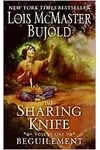
- Beguilement (2006) – The novel that introduces Fawn Bluefield and Dag Redwing Hickory. It establishes the central romance, the cultural friction between Farmers and Lakewalkers, and the threat of the malices.
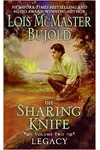
- Legacy (2007) – Picks up immediately after the events of the first book, focusing on the couple's return to Dag's Lakewalker home camp, where they face severe cultural disapproval and new magical challenges.
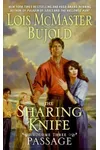
- Passage (2008) – A journey-focused story that sees Dag and Fawn traveling downriver. It expands the scope of the world, explores new communities, and delves into the history of the magical collapse.
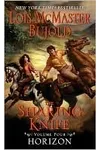
- Horizon (2009) – The conclusion of the main quartet, where Dag and Fawn attempt to build a lasting bridge between their divided societies while confronting a powerful malice threat.
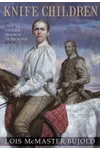
- Knife Children (2019) – A standalone sequel novella focusing on the Lakewalker patroller Barr Foxbrush and his search for his estranged daughter, Lily, set several decades after the events of the main series.
What to Know Before You Start
The Sharing Knife occupies a unique space in fantasy literature. Before you begin the series, it is helpful to keep a few key concepts in mind:
- A Thoroughly American Fantasy: Rather than drawing on traditional European medieval mythology, Bujold drew inspiration from the 19th-century American Midwest, south of the Great Lakes. The setting features a vast, agrarian frontier without gunpowder, creating a grounded, historical feel.
- A Single Story Split in Four: Bujold has openly shared that she conceived the narrative of the main quartet as a single, sprawling novel. Because it grew too large for a single volume, it was published in four parts. Consequently, the transition between books (especially between Beguilement and Legacy) is seamless, and you will get the best experience by reading them close together.
- An Intimate, Character-Driven Scope: While there are monsters and magical conflicts, this is not an epic fantasy about saving the entire world from a dark lord. Instead, the stakes are deeply personal: family relationships, trust, romance, and the slow, difficult work of cultural diplomacy.
- The Romantic Core: The relationship between the two main characters, Fawn and Dag, is the heart of the series. It features a prominent age gap and focuses on partnership, resilience, and mutual respect.
Breaking Down the Sharing Knife Universe
The Main Quartet (2006–2009)
The core series follows the unlikely partnership between Fawn Bluefield, a young Farmer woman fleeing a difficult situation, and Dag Redwing Hickory, a seasoned Lakewalker patroller. In this world, Lakewalkers possess "groundsense"—a form of magical perception that allows them to sense life force and work with magical tools, such as the titular sharing knives made from malice bones. Lakewalkers dedicate their lives to hunting "malices," ancient creatures that consume the life force of everything around them. Farmers, who make up the majority of the population, live simple, agrarian lives and deeply distrust the insular Lakewalkers.
The first book, Beguilement, establishes the core dynamic. Fawn and Dag's paths cross in the wilderness, leading to a bond that defies the rigid boundaries of their respective societies. In Legacy, the narrative shifts to the Lakewalker camps, where the couple must navigate the deep prejudices of Dag's people. Passage takes them on a wide-ranging river journey, introducing new regions and showing how both Farmers and Lakewalkers must adapt to survive. Finally, Horizon provides a satisfying conclusion, resolving the thematic conflict of cultural integration and showcasing Dag's efforts to reform Lakewalker society's approach to the outside world.
The Companion Novella: Knife Children (2019)
Published a decade after the conclusion of the main series, Knife Children is a standalone novella set in the same universe. Rather than continuing Dag and Fawn's direct story, it focuses on Barr Foxbrush, a Lakewalker patroller who was a minor character in the original books. Barr returns from a long patrol to discover that his daughter Lily—born from a brief relationship with a Farmer woman—has vanished. The story follows his journey to find her, dealing with the personal and cultural consequences of his past choices. While technically numbered as Book 4.5 in some listings, it is best read after finishing the core quartet, as it relies on the reader's pre-existing familiarity with the world's magic and social structures.
Can the Books Be Read Standalone?
Generally, no. The first four books are highly serialized and form one complete story arc. Reading Legacy, Passage, or Horizon without having read the preceding volumes will leave you confused by the character relationships, magic system, and plot progression. Beguilement is the only logical starting point for the main story.
The exception is the novella Knife Children. While it is set in the same world and features a returning character, its plot is self-contained. However, reading it first is not recommended, as it does not spend time explaining the complex cultural dynamics between Farmers and Lakewalkers or the mechanics of malice hunting, which are essential to fully enjoying the story.
How it Compares to Other Bujold Works
Lois McMaster Bujold is widely celebrated for her space opera series, the Vorkosigan Saga, and her fantasy series set in the World of the Five Gods (such as The Curse of Chalion and the Penric and Desdemona novellas). If you are coming to The Sharing Knife from these works, you will recognize Bujold's trademark character depth, witty dialogue, and thoughtful world-building. However, The Sharing Knife is gentler in its pacing, focuses far more heavily on romance, and lacks the theological complexity of the Five Gods series or the high-tech military intrigue of the Vorkosigan Saga. It is a cozy, warm, yet occasionally tense frontier fantasy that rewards readers who appreciate relationship development and detailed cultural exploration.