


The Recommended Sholan Alliance Reading Order
To experience the full emotional weight and complex political intrigue of Lisanne Norman’s space opera, you must read the books in order of their publication. Because the series follows a singular, continuous chronological story arc tracking the telepathic bond between human Carrie and the felinoid Sholan Kusac, jumping around will leave you completely lost in space.
Here is the recommended reading path for the core novels:
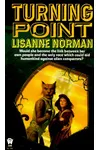
- Turning Point (1993): The saga kicks off on Keiss, a remote colony world occupied by the brutal, reptilian Valtegans. Carrie, a human telepath hiding her powers, rescues Kusac, a felinoid Sholan scout whose ship has crashed. When they touch, they accidentally forge a rare, life-linking telepathic bond. This psychic connection forces their two species into an uneasy alliance to fight the Valtegan occupation, setting the stage for the entire series.
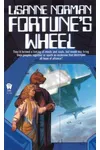
- Fortune's Wheel (1995): The action shifts to Shola, the homeworld of the feline Sholans. Carrie faces intense culture shock and political hostility from traditionalist Sholan clans who oppose a human bonding with one of their elite telepaths. As Carrie and Kusac struggle to stabilize their psychic connection, they must navigate deadly guild politics and court intrigue that threaten to tear their partnership apart.
- Fire Margins (1996): The war escalates as a new, biologically engineered hybridized race is discovered. This creation by the Valtegans threatens to tip the balance of power. Carrie and Kusac are dispatched on a high-stakes mission into the dangerous borderlands of the galaxy, where they must confront these new adversaries and the ethical dilemmas of the conflict.
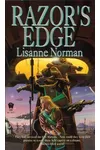
- Razor's Edge (1997): Human and Sholan joint operations face internal sabotage. Factions within both governments, fearful of the telepaths' growing influence, plot to dissolve the alliance. Carrie and Kusac must operate in the shadows, navigating a web of espionage, military posturing, and domestic unrest to keep the coalition from collapsing into civil war.
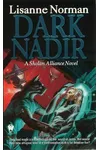
- Dark Nadir (1999): While investigating a mysterious distress signal, the crew is drawn to a hostile alien planet. Here, they discover ancient secrets and a new telepathic species. Carrie and Kusac must survive the planet's environmental dangers while outmaneuvering a Valtegan task force sent to secure the same alien technology.
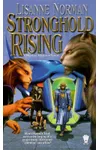
- Stronghold Rising (2000): In a devastating blow, Carrie is captured by Valtegan forces, putting her telepathic bond with Kusac to the ultimate test. Kusac launches a desperate rescue mission across enemy territory. Meanwhile, the Sholan Alliance must rally its fleets to defend key planetary strongholds against a massive Valtegan offensive.
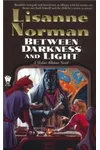
- Between Darkness and Light (2003): The scale of the conflict expands as Carrie and Kusac uncover the hidden history of the Valtegans and the mysterious forces manipulating them from behind the scenes. This volume delves deep into the lore of the universe, shifting the focus from simple survival to finding a permanent way to end the cycle of violence.
- Shades of Gray (2010): Published after a long seven-year hiatus, this novel focuses on the complex moral compromises of the war. As the alliance prepares for its final campaign, Carrie and Kusac must deal with political exhaustion, psychological trauma, and the internal fractures threatening to destroy their homeworlds from within.
- Circle's End (2017): The epic conclusion to the nine-book saga. Kusac travels to the Valtegan homeworld of M'zull to confront the enemy leadership directly. Wielding ancient alien artifacts and the full strength of his telepathic bond with Carrie, Kusac faces a final choice that will decide the fate of both the Sholan Alliance and the Valtegan Empire.
Publication Order vs. Chronological Order
Unlike some sprawling sci-fi universes that feature prequels, side novels, and timeline-jumping spin-offs, the Sholan Alliance timeline is straightforward. The chronological order matches the publication order exactly. The narrative flows continuously from the first meeting of Carrie and Kusac on Keiss to the final resolution on M'zull.
Trying to read these books out of order is not recommended, as each book builds directly on the character growth, political developments, and telepathic changes established in the previous volume. Reading them chronologically ensures you do not spoil major twists or get confused by the evolving state of the interstellar war.
Subseries, Spin-Offs, and Collaborative Works
Lisanne Norman wrote the entire nine-novel Sholan Alliance saga solo. There are no co-authored books, spin-off novels, or official subseries. However, Norman has contributed several short stories to various science fiction anthologies—predominantly published by DAW Books—some of which are set in the Sholan Alliance universe.
These short stories are not required reading to understand the main plot, but they offer extra flavor for dedicated fans. Additionally, the first book, Turning Point, originally began its life as a standalone short story about a black cat walking through snow, which Norman eventually expanded into the novel that launched the entire series.
What to Know Before You Start
Before diving into the Sholan Alliance, it helps to understand the unique blend of genres Lisanne Norman employs. This series is a true hybrid of hard space opera, political thriller, and planetary romance. A central element of the books is the telepathic connection between Carrie and Kusac. The Sholans themselves are a beautifully realized feline species, complete with their own intricate language, clan structures, and physical traits.
Readers who enjoy detailed world-building, heavy focus on empathy and telepathy, and species-to-species diplomacy will find themselves right at home. However, be prepared for some intense political subplots and romantic drama alongside the space battles.
Practical Reader Advice
The absolute best starting point is Turning Point. Because the books form a single, linear storyline, it is practically impossible to read them as standalones. If you start with a later book, the complex web of alien politics, telepathic ranks, and character relationships will likely be confusing.
It is also worth noting the pacing of the series: the first six books were published relatively quickly between 1993 and 2000, while the final three books saw gaps of seven years each (2003 to 2010, and 2010 to 2017). The final book, Circle's End, successfully wraps up the main plotlines, providing a satisfying conclusion to the long-running galactic conflict.