

The Recommended Reading Order for Silent Service
If you want to experience the tense, claustrophobic atmosphere of modern submarine warfare, the best way to read the series is in its original publication order. Because the narrative timeline moves forward alongside the publication dates, the publication order and the chronological order are identical. Starting with the first book ensures you capture the shifting geopolitical landscape from the late Cold War to the war on terror.
Here is the recommended reading path for the series:
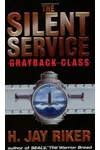
- Grayback Class (2000)
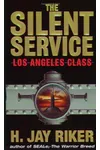
- Los Angeles Class (2001)
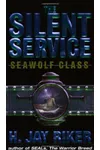
- Seawolf Class (2002)
- Virginia Class (2004)
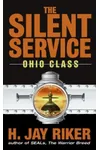
- Ohio Class (2006)
A Deep Dive into the Silent Service Books
1. Grayback Class (2000)
Set in 1985 at the height of the Cold War, the series kicks off with a high-stakes espionage mission. When U.S. intelligence learns that the Soviet Union has developed a highly advanced prototype attack submarine capable of tipping the global balance of power, the Navy must act fast. The crew of the USS Bluefin—a nearly obsolete Grayback-class submarine—is sent on a dangerous stealth run into the heavily guarded Severodvinsk shipyard on the White Sea. Their goal is to deploy a team of Navy SEALs to gather intelligence on the new Soviet threat and escape undetected. Written by J. Andrew Keith, this entry establishes the tactical realism and tense underwater duels that define the series.
2. Los Angeles Class (2001)
Moving forward to 1987, the second book focuses on the USS Pittsburgh, a Los Angeles-class attack submarine. Under the command of Tom Gorden, the crew is dispatched to the Kamchatka Peninsula to investigate a highly advanced and quiet Russian submarine operating in hostile waters. Tasked with inserting a team of Navy SEALs, Gorden faces extreme tactical pressures, made worse by the terrifying realization that there is a mole within the American ranks. As secrets leak to the enemy, the mission threatens to spiral into a deadly trap, raising the geopolitical stakes to a fever pitch.
3. Seawolf Class (2002)
Set in 2003, this novel focuses on Tom Garrett, a talented submarine commander who was sidelined after a controversial international incident in 1999 while commanding the USS Pittsburgh. Frank Gordon, a former submarine skipper turned naval intelligence officer, steps in to get Garrett a second chance as the executive officer aboard a state-of-the-art Seawolf-class attack submarine. Garrett is immediately thrown into a diplomatic and military firestorm as tensions flare between China and Taiwan. The crew must navigate the advanced tech of the Seawolf to prevent a localized conflict from escalating into a full-scale Pacific war.
4. Virginia Class (2004)
Focusing on the maiden voyage of the USS Virginia, this entry addresses the political and operational challenges of introducing a new class of submarine. As the high-tech program faces intense budget scrutiny from a skeptical U.S. Congress, a major crisis erupts in the South China Sea. A rogue Kilo-class submarine, supplied by a shadowy foreign backer, falls into the hands of al-Qaeda terrorists. After the terrorists launch brutal strikes that leave hundreds dead, the crew of the USS Virginia and an attached unit of Navy SEALs must hunt down the stealthy threat in a high-stakes game of cat-and-mouse.
5. Ohio Class (2006)
Set in 2008, the final book in the series features the USS Ohio, a ballistic missile submarine refitted for guided-missile and special operations support. Under the command of Keith Stewart, the Ohio is tasked with a dangerous mission championed by former commander Tom Garrett: covertly inserting a Navy SEAL team into Iran to investigate a highly secretive and heavily fortified military facility. The mission takes a dark turn when the crew realizes the Iranians are expecting them, forcing the crew to utilize every cutting-edge feature of the modified submarine to survive.
Publication Order vs. Chronological Order
For some military fiction series, chronological timelines are scattered, forcing readers to jump back and forth between publication years to follow the timeline. Fortunately, the Silent Service series does not have this problem. The timeline begins in 1985 with Grayback Class and progresses chronologically to 1987 (Los Angeles Class), 2003 (Seawolf Class), 2004 (Virginia Class), and 2008 (Ohio Class). Reading the books in the order they were published allows you to experience the natural evolution of naval warfare technology and geopolitical history as it transitioned from the Cold War into the modern era.
What to Know Before You Start
The Silent Service series is a product of its time, capturing the geopolitical anxieties of the early 2000s. Readers should prepare for a heavy dose of technical specifications, naval jargon, and tactical breakdowns. If you enjoy learning about sonar arrays, torpedo telemetry, and reactor designs, you will feel right at home. However, if you prefer character-driven dramas, you may find the characters a bit secondary to the technical detail and action sequences.
Additionally, because each book features a different class of submarine and often introduces new crew members, the series reads more like an anthology of submarine operations rather than a single continuous story following one crew. Characters like Tom Garrett and Frank Gordon do pop up in later books to provide connective tissue, but each novel stands remarkably well on its own.
Who is H. Jay Riker?
H. Jay Riker is a collective pseudonym (or house name) used by the Keith brothers. The series was initially conceived by J. Andrew Keith, who wrote the first installment, Grayback Class. Following Andrew's death, his brother William H. Keith Jr. took over the pen name and wrote the remaining four novels. As a retired U.S. Navy hospital corpsman who served during the Vietnam War, William brought a wealth of personal military experience and technical knowledge to the series, ensuring the crew interactions and shipboard protocols felt authentic to real-life submariners.
Practical Reading Advice
Because the books are mostly self-contained, you do not need to worry if you cannot find one of the middle entries. You can pick up any book in the series and enjoy a complete, self-contained techno-thriller. However, starting with Grayback Class or Los Angeles Class is highly recommended to appreciate the historical shift from the Cold War to modern naval diplomacy.